
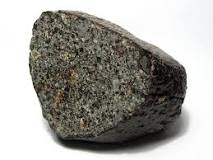
A meteorite is a piece of debris that comes from out space and lands on Earth’s surface. Before impact the object is known as a meteoroid. The size of a meteorite can vary, some are very small, while others can be meters long and weigh 60 tonnes. Meteorites that are smaller than 2mm are called micrometeorites.
When a meteoroid enters the Earth’s atmosphere, there are various factors at play (such as friction, pressure, and chemical interactions) that cause it to heat up and form a fireball – also known as a meteor or shooting star.
A meteorite on the surface of a celestial body is a natural object from space. There have been meteorites found on the Moon and Mars.
When a meteorite is recovered after being observed as they impact the earth are called a meteorite fall. All other meteorites are called finds.
There are three main categories of meteorites:
- Stony meteorites – mainly made up of silicate minerals.
- Iron meteorites – primarily composed of iron-nickel.
- Stony-iron meteorites – contain large amounts of both rocky and metallic material.
The names given to meteorites are always after the places that they were found – typically a nearby town or geographic feature. If a meteor is found in a place where there have been other meteorites then the name is typically followed by a letter or a number. The name that the Meteoritical Society gives meteorites is used by scientists.

The Hoba meteorite in Namibia. It is the largest known intact meteorite at 2.7 meters long and weighing 60 tonnes.
The majority of meteoroids disintegrate when they enter our planet’s atmosphere. Around five to ten meteoroids are observed to fall and are recovered every year. Not many meteorites are big enough to create large impact craters, most actually just create a small pit.
Below is an example of a crater that a meteorite created when it made impact in the northern Arizona desert of the United States:
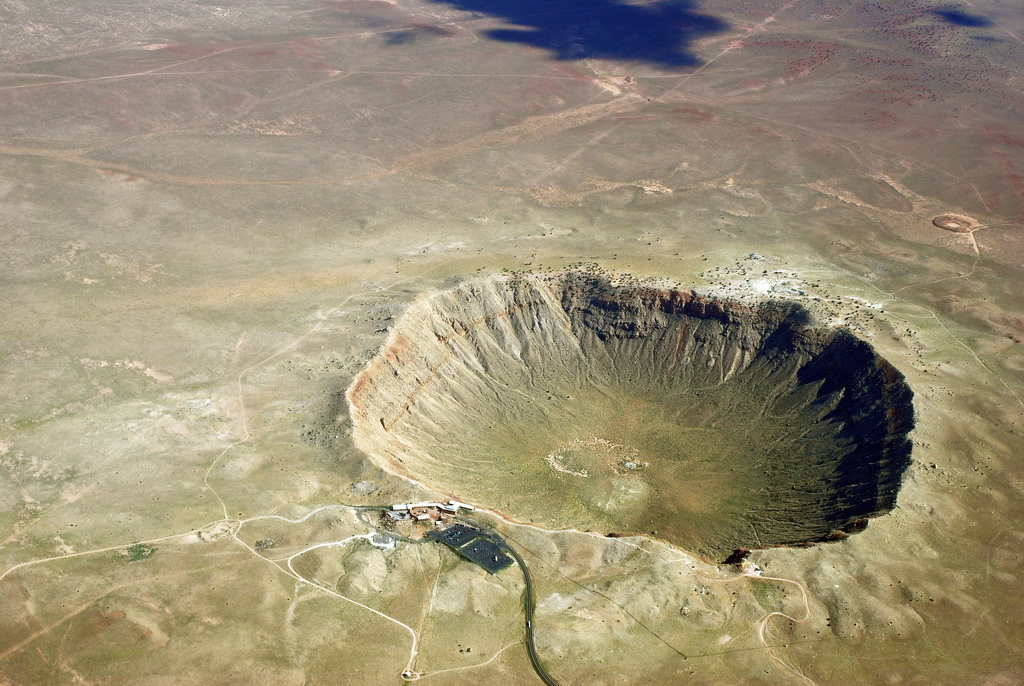
The Meteor Crater (also known as Barringer Crater).
The majority of meteorites that have been discovered are stony meteorites. Stone meteorites are classed as being either chondrites or achondrites.
Over 80% of the meteorites that fall on Earth are chondrites. Chrondites are stony meteorites that have not changed because of melting or differentiation of the parent body, they are characterized by the presence of chondrules (composed mostly of silicate minerals). Chondrites are believed to be “the building blocks of the planets” as they are some of the oldest and most primitive materials in the solar system.
Although Achondrites do not contain chondrules most of them are also ancient rocks.
