

Ed Miliband says he would like to reduce the cap on university tuition fees to £6,000 from £9,000 if Labour wins May’s general election. Professor Sir Christopher Snowden, President of Universities UK, says it would damage student education, access to higher education and also the British economy.
Mr. Miliband’s proposed policy would create a £10 billion hole in university revenues over five years, Sir Christopher said in a Letter to the Times. He described the plan as “implausible”.
Academics across the country are calling on Labour to scrap the plan.
Liam Byrne, Shadow universities minister says that under the current system “the student finance system is going bust.”
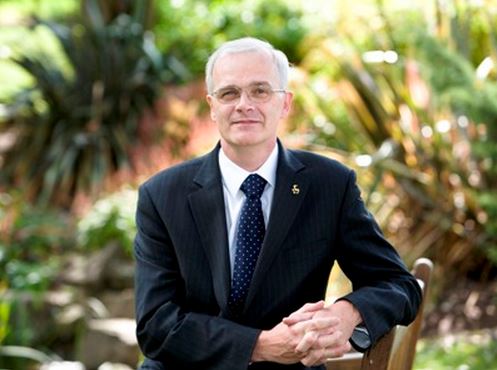
Sir Christopher says Ed Miliband’s proposal is “implausible”. (Photo: University of Surrey)
Sir Christopher wrote regarding the proposed reduction in the tuition fees cap:
“Were this to happen, at least £10bn of additional public funding would need to be found and ring-fenced over the course of the next parliament to close the gap.”
“Given the many pressures on public finances, and with all political parties committed to further public spending cuts, it is implausible that any incoming government would be able to do this.”
The letter, which was also signed by nineteen leaders of universities across the country (list below), pointed out that any move to limit the number of students attending universities as a way of cutting costs would take away opportunities for young adults and those seeking to return to education. It would also act as an obstacle to economic growth, they added.
Not only have university applications reached a record high, Sir Christopher explained, but also the proportion of applications from lower socio-economic groups has increased.
Labour’s policy would help higher-earning graduates more
Fees are not paid until the student graduate is earning at least £21,000. By just reducing the headline fee, Labour’s plan would be helping higher-earning graduates more than those earning less.
Universities UK suggests that students from poorer backgrounds would be better supported if the Government provided greater financial support for accommodation and everyday living costs.
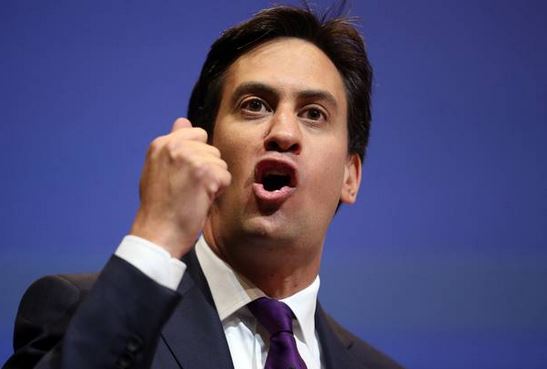
Ed Miliband, leader of the Labour Party, wants to reduce the cap on University tuition fees to £6,000.
Sir Christopher and colleagues wrote:
“Universities UK has consistently argued that our student funding system must be sustainable and support affordable, high-quality higher education.”
“Any evolution of the current system in England should ensure value for money for students, prevent students from poorer backgrounds from being deterred from study, and be financially sustainable for both universities and government. Cutting the fee cap does not help poorer students and risks the quality of education for all.”
The “Letter to the Times highlighting concerns with £6,000 tuition fees proposal” was signed by Professor Sir Christopher Snowden; Professor Janet Beer, Vice-Chancellor, University of Liverpool and Vice-President of Universities UK; Professor Michael Gunn, Vice-Chancellor and Chief Executive, Staffordshire University; Professor Steve West, Vice-Chancellor and Chief Executive, University of the West of England, Bristol; Professor Simon Gaskell, Principal and President, Queen Mary, University of London; Sir David Bell, Vice-Chancellor, University of Reading; Professor Sir Steve Smith, Vice-Chancellor, University of Exeter; Professor Sir Eric Thomas, Vice-Chancellor, University of Bristol; Professor Sir David Eastwood, Vice-Chancellor and Principal, University of Birmingham; Professor Paul O’Prey, Vice-Chancellor, University of Roehampton; Professor Nick Petford, Vice-Chancellor, The University of Northampton; Professor Julian Crampton, Vice-Chancellor, University of Brighton; Professor Julia Buckingham, Vice-Chancellor, Brunel University; Professor Graham Henderson CBE, Vice-Chancellor and Chief Executive, Teesside University; Professor David Latchman CBE, Master, Birkbeck, University of London; Professor Dame Julia King DBE, Vice-Chancellor, Aston University; Professor Dame Julia Goodfellow DBE, Vice-Chancellor, University of Kent; Professor Dame Glynis Breakwell DBE, Vice-Chancellor, University of Bath; Professor Chris Brink, Vice-Chancellor, Newcastle University; and Professor Barry Ife CBE, Guildhall School of Music and Drama.
