
Federal Reserve

Minneapolis Federal Reserve President stepping down in 2016

Written by Joseph Nordqvist

Published: 11:31, December 14, 2014

Narayana Kocherlakota announced that he would be stepping down as president the Federal Reserve Bank of Minneapolis when his term ends in February 2016.

He said in a statement Friday after informing the bank’s board of his decision earlier this week:

“I became president of the Minneapolis Bank in October 2009 so that I could be of service to my country in an economic emergency. I have been honored to play a role in shaping the response to that dire situation.”

He dissented against the Fed’s policy decision in October and said he would prefer keeping rates low until inflation expectations gain, he was also opposed to ending the Fed’s bond-buying program.

Kocherlakota, 51, is considered to be one of the central bank’s most dovish officials, he has been a proponent of keeping interest rates lower for longer to lift up sluggish inflation – an accommodative policy aimed at getting more Americans back to work.
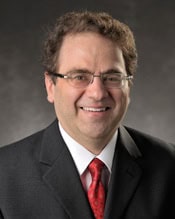
Narayana Kocherlakota

His vote at next week’s policy meeting will be his last.

Philadelphia Fed Chief Charles Plosser and Dallas Fed President Richard Fisher, policy hawks who have called for a retreat from the Fed’s easy monetary policy, have also announced that they will be stepping down early next year.

The Minneapolis Fed will next hold a voting seat on the FOMC in 2017.

Robert Stein, deputy chief economist at First Trust Portfolios LP in Wheaton, Illinois, said:

“I think of Kocherlakota as the iconoclast on the FOMC. He’s been an interesting speaker, sometimes in the mainstream, sometimes not. He’s very thought-provoking, so I’m actually kind of sad to see him leaving.”

These resignations mean that Chairwoman Janet L. Yellen is going to be dealing with new people at the policy-making table as she tries to increase interest rates – expected to occur in the middle of 2015.

Joseph Nordqvist Avatar

Other News

US industrial output stalls in August as manufacturing slips

Sep 18, 2026

Japan’s household financial assets hit a record ¥2,519 trillion. What that measures

Sep 17, 2026

Canada welcomes EU associate-member proposal, but terms are undefined

Sep 17, 2026

Softcat agrees $1.05B GDT acquisition to expand US data-centre services

Sep 17, 2026

Bank Rate held at 3.75% in the UK as energy prices sharpen inflation risk

Sep 17, 2026

East African Community trade reaches $52.3bn as exports drive surplus

Sep 16, 2026

Canada says its investment summit mobilised nearly C$500bn. What does that actually mean?

Sep 16, 2026

May Mobility agrees $1.4B SPAC deal, bets on asset-light robotaxi model

Sep 16, 2026

Fed raises rates to 3.75% to 4.00% as inflation remains elevated

Sep 16, 2026

IBM-backed Anderon finalizes up to $1B US quantum foundry award

Sep 16, 2026

WTO puts the cost of trade fragmentation at up to 10% of global GDP

Sep 15, 2026

Salesforce launches Koa, a CRM reasoning model built on Nvidia’s Nemotron

Sep 15, 2026

Could humanoid AI companions ever replace human partners?

Sep 15, 2026

IEA forecasts record global coal demand after gas prices climb

Sep 15, 2026

UK government to pursue public acquisition of Speciality Steel UK

Sep 15, 2026

IMF says global current-account gaps widened in 2025, led by China and the United States

Sep 14, 2026

Alan Lovell takes over as British Steel chair as government pursues turnaround

Sep 14, 2026

Plumbing or college: weighing pay, training and AI exposure

Sep 13, 2026

Why more advanced VR equipment does not always feel more real

Sep 13, 2026

VR pilot training shows promise before a student’s first real flight

Sep 13, 2026