
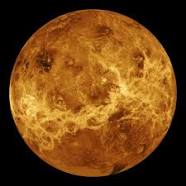
NASA is planning on sending a solar-powered airship to explore Venus. The space agency said that even though Venus is an extremely hostile planet made of metal melting high-pressured gas, it is still a very interesting planet to explore.
It is difficult to grasp the notion of a mission to Venus, given that that the planet is known to have sulphuric acid rain, lightning bolts and temperatures of nearly 1000F. However, the mission would not involve landing on the actual surface of the planet.
“Traditionally, say if you’re going to Mars, you talk about ‘entry, descent, and landing,’ or EDL,” explained NASA scientist Dale Arney. “Obviously, in our case, ‘landing’ would represent a significant failure of the mission, so instead we have ‘entry, descent, and inflation,’ or EDI.”
Aerospace engineer at NASA Langley Research Center Chris Jones told IEEE Spectrum that not many people have observed the “relatively much more hospitable atmosphere and how you might tackle operating there for a while.”
“The vast majority of people, when they hear the idea of going to Venus and exploring, think of the surface, where it’s hot enough to melt lead and the pressure is the same as if you were almost a mile underneath the ocean,”
“Venus has value as a destination in and of itself for exploration and colonization,” said Jones. “But it’s also complementary to current Mars plans.” He added, “There are things that you would need to do for a Mars mission, but we see a little easier path through Venus.”
NASA says it will be sending solar-powered airships to explore Venus’ atmosphere and plans on eventually establishing a permanent human colony in a floating cloud city above the planet.
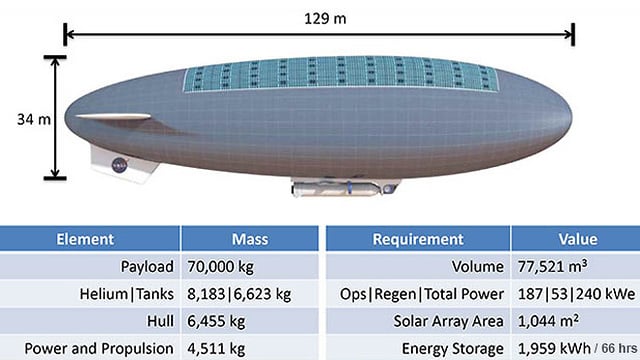
Photo Credit: NASA Langley Research Center
NASA has developed a High Altitude Venus Operational Concept (HAVOC), which is a solar powered aircraft resembling a blimp, to travel to the atmosphere of Venus. The aircraft makes sense given that there is plenty of sun above the clouds in Venus’s upper atmosphere. As the planet is closer to the sun than earth, Venus gets 40 percent more solar power than Earth and 240 percent more solar power than Mars.
Scientists at NASA believe that humans can inhabit floating cloud cities (at around 50km above the planet’s surface) in Venus’s atmosphere.
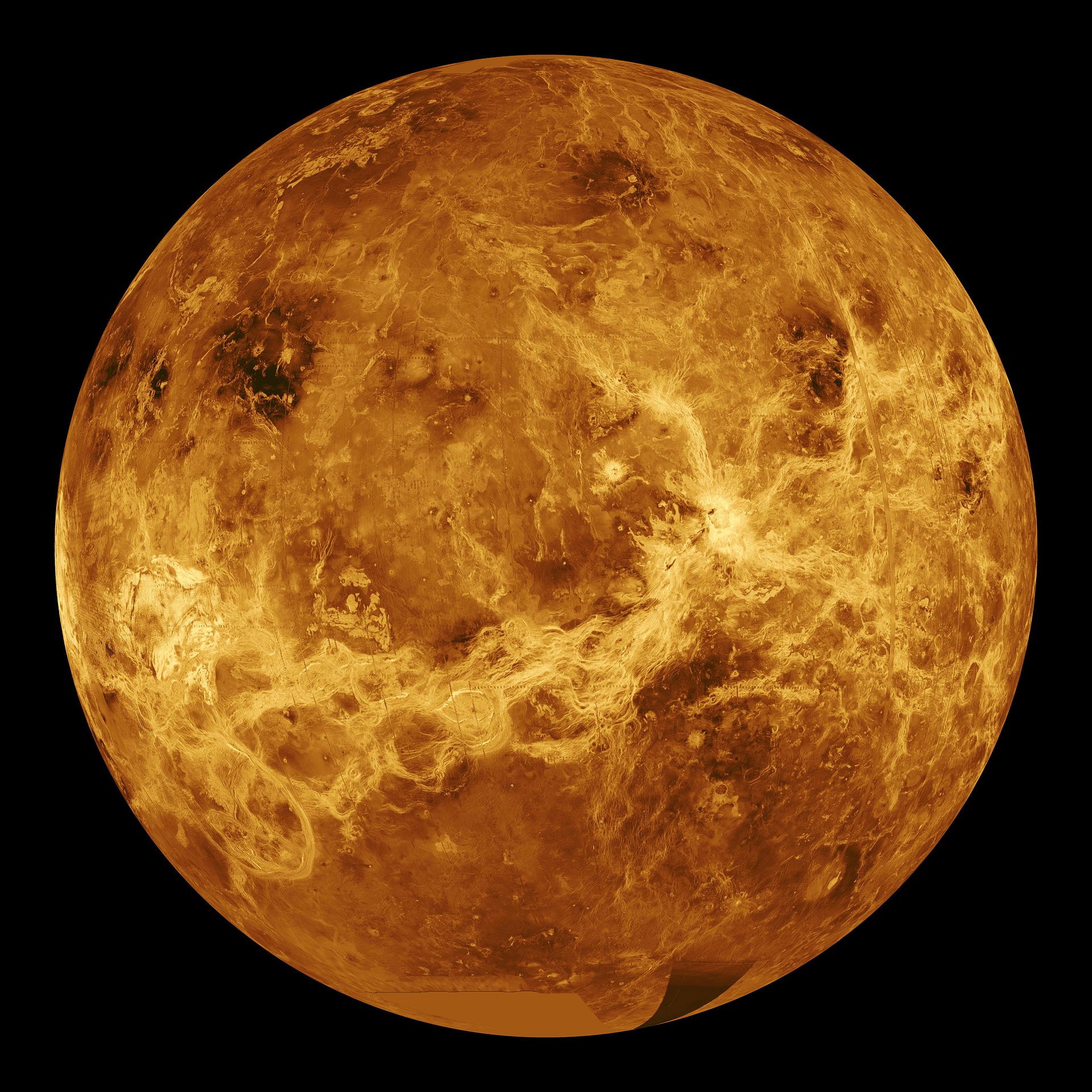
Radar image of the surface of Venus. Photo Credit: NASA/Jet Propulsion Laboratory
In its initial phase the HAVOC mission will send a robot to explore the atmosphere of the planet. NASA will then deploy a shuttle with two astronauts on a month mission to Venus. This will help scientists collect data on whether there is a possibility of creating a colony.
Next, the space agency will send a crew of two more astronauts to spend a year in the atmosphere and one day a human colony in a cloud city could be established.
