
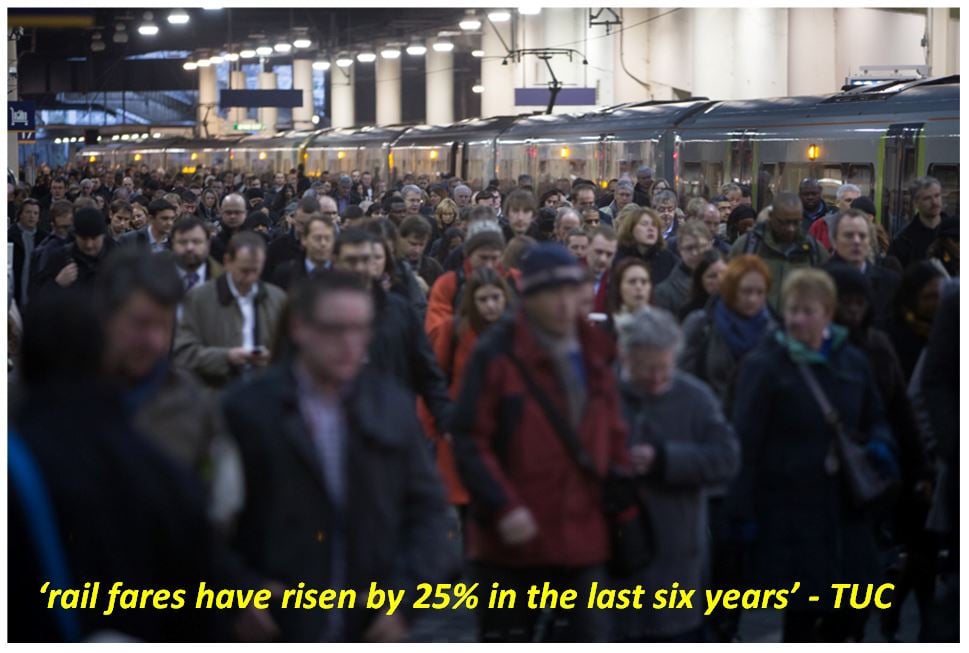
Rail fares have increased at twice the speed of wages in the last 6 years says new research by trade unions, released as the UK government is due to announce another round of regulated increases.
The TUC and the Action for Rail campaign analysis reveals that rail fares have gone up by 25 percent while average weekly earnings have risen by only 12 percent since 2010.
The research also finds that dividends paid to shareholders of private rail companies have risen by 21 percent in the last year to £222 million.
The news comes on the day rail travellers in England, Scotland and Wales will discover how much more they will have to pay for their journeys in 2017.
The increase will be tied to July’s Retail Price Index inflation rate, due to be announced later today. It was 1.6 percent in June.
The exact fares for 2017 will not be published until December, but commuters will know what the average rises will be.
 Rail fares have risen at twice the speed of wages in the last 6 years says new research by trade unions. Image: Network Rail
However, while the government sets the limit for rises in regulated fares, the rail companies can charge what they like for unregulated tickets, such as off-peak leisure journeys.
The news follows reports from the RMT rail union that Virgin East Coast are raising more than half their fares by an average of 1.4 percent for journeys after 4 September.
Middlesbrough MP Andy McDonald described the increases as “blatant profiteering” at passengers’ expense.
Paul Plummer, chief executive of the Rail Delivery Group, representing Network Rail and train operating companies, says they know people are not getting the service they are paying for, “But increases to regulated fares are set by government.”
“For every pound paid in fares,” he adds, “97p goes back into running and improving services and it’s the rail industry’s job to make sure that money is spent well.”
He says the money from fares helps sustain investment in a modernized railway. Passenger numbers have doubled in the last 20 years, and the rail system has not “been this important to our nation’s prosperity since the Victorian era.”
‘Time for rail services to be publicly owned’
Meanwhile, commenting on the new research, Frances O’Grady, General Secretary of the TUC says rail travellers are paying more and getting even less. “Fares go up while trains remain overcrowded, stations are unstaffed, and rail companies cut the guards who ensure journeys run smoothly and safely,” she says, adding:
“Enough is enough. It’s time for rail services to be publicly owned, saving money for passengers and taxpayers alike.”
Leaders of rail and transport workers’ unions make similar comments. TSSA General Secretary Manuel Cortes says UK rail fares are the highest in Europe and “It’s time that ministers gave rail passengers a break and actually froze fares in real terms.”
“Fares on the most popular routes have jumped by more than 245 percent since rail was privatized 20 years ago,” he adds.
