
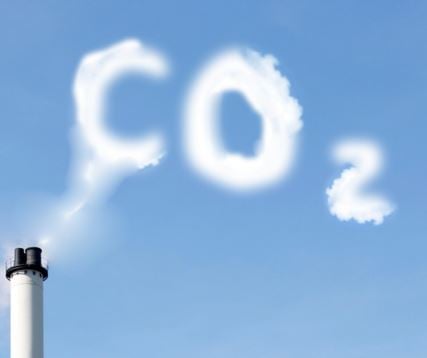
According to a new study, taxing carbon emissions induces energy-saving efficiency improvements, leading to a more-efficient consumption of energy.
The research, published in Joule, was carried out by Carnegie’s Rong Wang (now at Fudan University), Harry Saunders, and Ken Caldeira, along with Juan Moreno-Cruz of the University of Waterloo.
“It has long been theorized that raising carbon prices would provide an incentive to reduce emissions through energy efficiency improvements,” explained lead author Rong. “So, we looked to history to determine how cost increases have affected energy use efficiency in the past.”
The team used their own version of the productivity model created by Nobel Prize-winning economist Robert Solow to determine the relation between historical rates of various efficiency changes and energy’s share of costs.
According to the abstract of the study, the team found that a 1% rise in energy cost share increases energy-use efficiency by about 1.2% in the following 20 years – a higher gain compared to previous bottom-up estimates.
When they incorporated this relationship into an integrated assessment model, they found that carbon prices save up to 30% more energy by 2120, relative to model configurations without the inducing mechanism.
“A carbon tax induces energy-saving efficiency improvements and could therefore be a more effective mitigation tool than previously recognized,” the authors said.
“Other studies have examined how taxing carbon emission would drive innovation in renewables,” explained Caldeira.
“But we show that it would also lead to more-efficient consumption of energy–not just by getting people to use better existing technology, but also by motivating people to innovate better ways to use energy. This means that solving the climate problem, while still hard, is a little easier than previously believed.”
Journal Citation
“Induced Energy-Saving Efficiency Improvements Amplify Effectiveness of Climate Change Mitigation”
Rong Wang, Harry Saunders, Juan Moreno-Cruz, Ken Caldeira
Joule
Published: August 22, 2019
DOI: https://doi.org/10.1016/j.joule.2019.07.024
