

The use of software by automaker giant Volkswagen to evade emission standards in over 482,000 diesel cars sold in the United States will contribute directly to 60 premature deaths across the nation, a team of scientists has found.
The US Environmental Protection Agency (EPA) discovered that the Wolfsburg-based carmaker had developed and installed ‘defeat devices’ (software) in light-duty vehicles sold from 2008 to 2015.
Volkswagen (VW) engineers designed the software to sense when a vehicle was undergoing an emission’s test, and only then engage the car’s full emissions-control system. When not being tested, the system would be disabled.
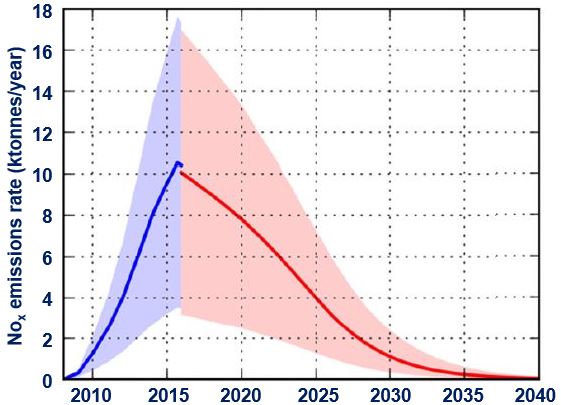
The deception allows vehicles to spew out 40 times more emissions than permitted by the Clean Air Act.
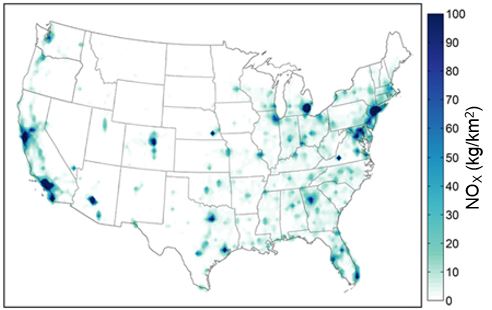
The resulting excess pollution, multiplied by the number of affected cars sold in the United States, and extrapolated over health risk factors and population distributions across the country, will have a considerable effect on public health, the researchers reported in the journal Environmental Research Letters.
Assessing the health consequences
The study, which was carried out by researchers at Harvard University and the Massachusetts Institute of Technology (MIT) predicts that the excess emissions from VW’s defeat devices will cause approximately 60 premature deaths in the US – the affected people will probably die 10 to 20 years before they would have done had the carmaker been honest.
If every affected vehicle is recalled by the end of 2016, over 130 extra early deaths could be avoided.
“If, however, Volkswagen does not order a recall in the U.S., the excess emissions, compounding in the future, will cause 140 people to die early.”
Other consequences apart from early deaths
VW’s excess emissions will also contribute directly to 34 hospital admissions involving cardiac and respiratory conditions, and 31 cases of chronic bronchitis.
The scientists calculate that US citizens will experience approximately 120,000 minor restricted activity days, including absences from work, and around 210,000 lower-respiratory symptoms days.
A total of $450 million in additional health expenses and other social costs will be generated because of VW’s excess emissions. However, if all affected vehicles are recalled and fixed by the end of 2016, there will be a saving of up to $840 million in further social and health costs.
Lead author, Steven Barrett, an associate professor of aeronautics and astronautics at MIT, says the study findings may help regulatory officials better estimate the effects of Volkswagen’s cheating.
Prof. Barrett said:
“It seemed to be an important issue in which we could bring to bear impartial information to help quantify the human implications of the Volkswagen emissions issue,” Barrett says. “The main motivation is to inform the public and inform the developing regulatory situation.”
Cheating (and) death
To estimate what the health effects of VW’s excess emissions have been (and will be), Prof. Barrett and colleagues based their calculations on measurements carried out by scientists at West Virginia University, who reported that the vehicles produced up to forty times the emissions allowed by law.
They then calculated how much (average) each vehicle would be driven over its lifetime, and combined these results with sales information between 2008 and 2015 to estimate total excess emissions during this period.
Three possible scenarios
The researchers then calculated the resulting emissions under three scenarios:
-
- Current Scenario: where 482,000 vehicles have already spewed out excess emissions into the atmosphere.
- Total Recall Scenario: where VW recalls every affected vehicle by the end of next year.
- No Recall Scenario: where every affected vehicle remains on the road, emitting excess pollution throughout the course of its lifetime.
They then worked out what the health effect would be under each scenario, using a method they had developed to map emissions estimates to public exposure to ozone and fine particulate matter.
Diesel automobiles emit nitrogen oxides, which react in the air to form ozone and fine particulate matter. Prof. Barrett’s approach essentially maps emissions estimates to public health risk, accounting for the atmospheric chemistry and transport of the pollutants.
Prof. Barrett explained:
“We all have risk factors in our lives, and [excess emissions] is another small risk factor. If you take into account the additional risk due to the excess Volkswagen emissions, then roughly 60 people have died or will die early, and on average, a decade or more early.”
The authors say that per kilometer driven, this figure is about 20% of the number of deaths caused by road accidents.
Prof. Barrett said:
“So it’s about the same order of magnitude, just from these excess emissions. If nothing’s done, these excess emissions will cause around another 140 deaths. However, two-thirds of the total deaths could be avoided if the recalls could be done quickly, in the course of the next year.”
In an Abstract in the journal, the authors concluded:
“When monetizing premature mortality using EPA-recommended data, we find a social cost of ~$450m over the sales period. For the current fleet, we estimate that a return to compliance for all affected vehicles by the end of 2016 will avert ~130 early deaths and avoid ~$840m in social costs compared to a counterfactual case without recall.”
Citation: “Impact of the Volkswagen emissions control defeat device on US public health,” Steven R H Barrett, Raymond L Speth, Sebastian D Eastham, Irene C Dedoussi, Akshay Ashok, Robert Malina and David W Keith. Environmental Research Letters, Volume 10, Number 11. Published 29 October 2015. DOI: 10.1088/1748-9326/10/11/114005.
