
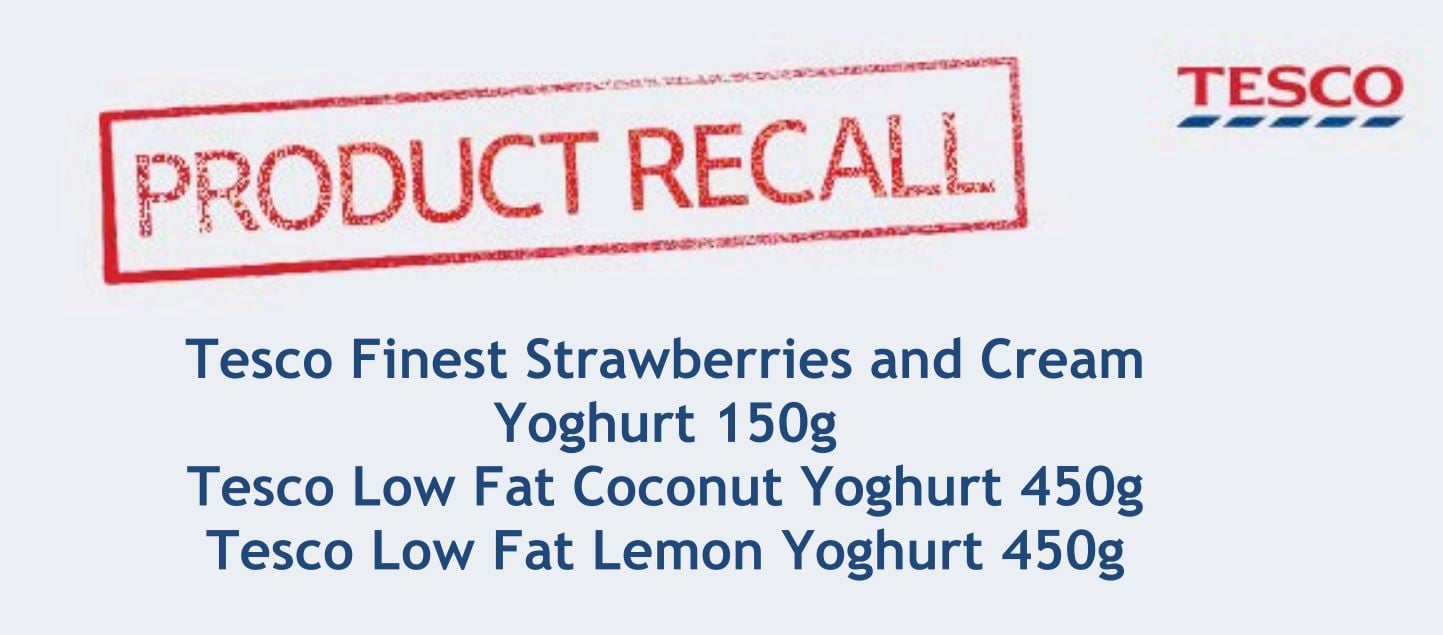
The recent recall by five UK supermarket chains of 18 own-brand fruit yogurts – because they could contain pieces of rubber – highlights the threat to food safety posed by today’s longer and more complex food chain.
The news follows similar recalls only last month, when Tesco and Sainsbury’s recalled own-brand pasta products made by Belgian manufacturer Noliko, because they may also have contained pieces of rubber.
And earlier this year, the confectionery giant Mars recalled millions of chocolate bars from 55 countries because of fears they could contain pieces of plastic.
As we place food products in our shopping baskets, most of us do so in complete ignorance of the length and complexity of the food chain behind each one.
Take a well-known grocery item like the Kit Kat: it is the end-product of a food chain that circles the globe.
The popular chocolate-covered wafer biscuit contains cocoa from Africa, wheat from Europe, milk products from the UK and New Zealand, palm oil from Asia, and sugar from South America.
In the recent supermarket yogurt recall, Yeo Valley, who make own-brand fruit yogurts for Tesco, Sainsbury’s, Asda, Waitrose and the Co-Op, confirmed that a piece of rubber was found in a fruit conserve from one of their suppliers.
 Five supermarket chains have recalled a total of 18 own-brand fruit yogurts made by Yeo Valley, because of a risk they could contain pieces of rubber. Three of the products are made for Tesco. The other 15 are produced for Sainsbury’s, Asda, Waitrose and the Co-Op. Image: Tesco customer notice.
Inferior quality rubber in gaskets and seals
While Yeo Valley gave no details of how pieces of rubber may got into the fruit conserve, one plausible explanation is the presence of inferior-quality rubber in the seals and gaskets used in the processing plant.
Andrew Onions, a director of UK-based MacLellan Rubber, who specialize in the manufacture and distribution of rubber to the food industry and other sectors, says they believe less than 10 percent of the rubber used in gaskets and seals in our food industry is bought from the UK or Europe, which means most of it comes from the Far East and less likely to comply with European or American standards for food-grade rubber (Food Contact Regulation EU 1935:2003, 2023/26, and FDA CFR Part 177, respectively).
“There has definitely been a decline in the quality of imported rubber sheeting from the Far East and Asia,” says Onions, “That’s not guess work, that’s results from independent tests revealing that high levels of chemicals leach from the material or are released when temperatures are raised.”
When something like the yogurt recall happens, the main producers are rarely the cause, he explains. They spend a lot of money ensuring their own plants are fully compliant, but unfortunately this same focus is not applied all along the food chain.
The problem is that the people responsible for purchasing from suppliers are basing their decisions on price and not on quality, says Onions, “They need to dig deeper into the supply chain and obtain the necessary documentation and evidence to prove compliance.”
‘Need to manage risk along the entire food chain’
Last year, the World Health Organization (WHO) drew attention to the increased risk to food safety arising from today’s longer and more complex food chain. They were speaking mainly about contamination by toxic chemicals and common microorganisms such as Salmonella and Campylobacter.
“Contamination from a single source may become widespread and have enormous health and economic consequences,” say WHO, citing the example of the 2011 E.coli outbreak in Germany and France linked to imported contaminated fenugreek seeds. That outbreak spread led to nearly 4,000 cases of infection in 16 countries, including 900 cases of severe complications and 55 deaths. “The estimated loss for farmers and industries was US$ 1.3 billion,” note WHO.
WHO say countries need to “think globally and act locally to ensure that food produced domestically is as safe as possible internationally,” and urges policy makers to “respond to and manage food safety risks along the entire food chain.”
Foodborne illnesses, diseases we get from the food we eat, are a growing problem globally. We refer to viruses, bacteria, and other microorganisms that make our food dangerous for human consumption as ‘food contaminants.’
