
andy rubin

Android co-founder Andy Rubin leaves Google

Written by Joseph Nordqvist

Published: 12:39, November 1, 2014

Andy Rubin, co-founder of the Android project (the most popular mobile operating system in the world) has announced he will be leaving Google after nine years at the company.

Google said that Rubin created “something truly remarkable” in Android.

Andy Rubin is reportedly set to create an incubator for start-up hardware firms after he leaves the company.

An incubator or incubator firm is a company that helps startups through their developmental stage.

Google’s chief executive and co-founder Larry Page, said:

“I want to wish Andy all the best with what’s next. With Android he created something truly remarkable – with a billion plus happy users. Thank you,”

In March 2013 Rubin stepped down from the internet giant’s Android division and focused on the company’s robotics project.

He was involved in the acquisition of several robotics companies within a six month period as part of a plan to develop a drone delivery system that could compete with Amazon.
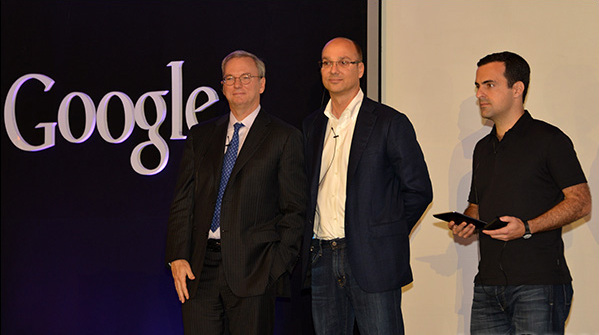
eric schmidt and andy rubin

Eric Schmidt and Andy Rubin at a Google conference.

The robotics division will now be led by James Kuffner.

Sunder Pichai, who has worked with Google Chrome and Apps, became in charge of Android when Rubin left.

The mobile operating system that Rubin founded is used in Google’s smartphones and tablets. Google acquired Android in 2005.

The operating system was introduced in 2007 to compete with the iPhone.

There are now more than one billion active Android users.

Mr Rubin’s departure from Google comes at a time when Twitter is demoting its head of product, Daniel Graf, the former director of Google’s Mobile Apps.

Kevin Weil will be Twitter’s new head of product. This is the second time that Twitter has changed its head of product since its IPO.

Joseph Nordqvist Avatar

Other News

A low upfront price can obscure the cost of refills, study finds

Nov 24, 2026

How medical device startups describe their products may affect clearance times

Nov 23, 2026

Why cheaper grocery products can face faster inflation when costs rise

Nov 23, 2026

One office day a month was followed by more calls handled in a remote-work experiment

Nov 23, 2026

An AI shopping assistant increased sales in a livestream experiment

Nov 23, 2026

Starting an idea without AI changed employees’ sense of ownership in an H&M test

Nov 23, 2026

Showing the extra cost of a larger pack changed buying choices in an online test

Nov 23, 2026

Looking at products together can help identify competitors, camera study finds

Nov 23, 2026

Removing unauthorized book copies produced an uncertain sales result in a field experiment

Nov 23, 2026

Warnings did not consistently undo the influence of product lineups

Nov 23, 2026

Demographic ad targeting can change how fairly consumers view a brand

Nov 22, 2026

Matching online and store prices had mixed effects at one electronics retailer

Nov 22, 2026

Meal-kit displays showed no clear sales lift for plant-based products in Belgian stores

Nov 22, 2026

High switching costs weakened price competition in a laboratory market

Nov 22, 2026

A digital product passport changed toothbrush valuations in a lab study

Nov 22, 2026

Purchase-linked donations can change direct giving in a small experiment

Nov 22, 2026

Volunteer recruitment emails were followed by more donations in a nonprofit experiment

Nov 22, 2026

Customer-created content was linked to brand perceptions in a survey of Pakistani shoppers

Nov 22, 2026

Shopping games can frustrate customers when rewards and rules are hard to understand

Nov 22, 2026

Text-message business training helped Kenyan entrepreneurs briefly, but gains faded

Nov 22, 2026

Comments are closed.