
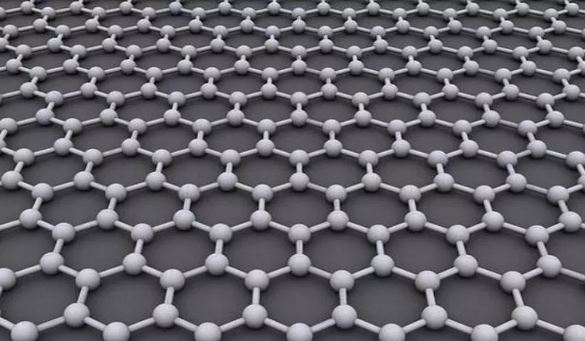
Scientists have managed to make artificial channels the size of just one atom for the first time. The new capillaries are very similar to aquaporins – integral membrane proteins that serve as channels in the transfer of water. The atomic-scale capillaries block the flow of the tiniest ions like CL– and Na+. However, they allow water to pass through freely.
The structures will improve our fundamental understanding of molecular structures at the atomic scale, say researchers at the University of Manchester’s National Graphene Institute in the United Kingdom. They could also be ideal in filtration and desalination technologies.
The researchers, from the University of Manchester’s National Graphene Institute, the Skolkovo Institute of Science and Technology, Southwest Jiaotong University, the University of Science and Technology of China, Sharif University of Technology, and the Indian Institute of Technology Gandhinagar, wrote about their work in the journal Science (citation below).
Team leader, Sir Andre Geim, said:
“Obviously, it is impossible to make capillaries smaller than one atom in size. Our feat seemed nigh on impossible, even in hindsight, and it was difficult to imagine such tiny capillaries just a couple of years ago.”
Aquaporins, and other naturally-occurring protein channels, block hydrated ions bigger than about 7 A in size. However, they allow water to permeate through them freely. They do this thanks to mechanisms such as electrostatic repulsion and steric (size) exclusion.
Scientists’ quest for tiny artificial capillaries
Scientists have been attempting to make artificial capillaries that work like their natural counterparts for a long time. However, all the structures so far have been significantly larger than biological channels. That is, until now.
Sir Andre Geim and colleagues have now created channels that are approximately just 3.4 A in height. This is approximately half the size of the smallest hydrated ions, such as Cl– and K+ (diameter 6.6 A). The symbol ‘A‘ stands for ‘Angstrom,’ a unit of length equal to one ten-billionth of a meter.
These channels, like protein channels, are small enough to block these ions. Water molecules have a diameter of about 2.8 A. Therefore, the channels are large enough to allow water molecules to flow through.
For desalination technology researchers, these structures could be the holy grail. They could help in the development of cost-effective high-flux filters for desalination as well as other related technologies.
Lego on an atomic scale
The researchers created their structures using a technique called ‘atomic-scale Lego.’ Scientists developed the technique thanks to research on graphene.
Co-author Dr. Radha Boya explained:
“We cleave atomically flat nanocrystals just 50 and 200 nanometre in thickness from bulk graphite and then place strips of monolayer graphene onto the surface of these nanocrystals.”
“These strips serve as spacers between the two crystals when a similar atomically-flat crystal is subsequently placed on top. The resulting trilayer assembly can be viewed as a pair of edge dislocations connected with a flat void in between. This space can accommodate only one atomic layer of water.”
This is the first time scientists have used graphene monolayers as spacers. It is also what makes the new channels different from structures scientists had made before, said Dr. Boya.
2D capillaries assembled atop silicon nitride membrane
The researchers designed their two-dimensional capillaries to be several microns in length and 130 nm wide. They assembled the capillaries atop a silicon nitride membrane. The membrane separated two isolated containers. Thus, the channels were the only pathway through which the ions and water could flow.
Before, scientists had only been able to measure water flowing through capillaries that had significantly thicker spacers (about 6.7 A high).
In a press release, the University of Manchester wrote:
“While some of their molecular dynamics simulations indicated that smaller 2D cavities should collapse because of van der Waals attraction between the opposite walls, other calculations pointed to the fact that water molecules inside the slits could actually act as a support and prevent even one-atom-high slits (just 3.4 A tall) from falling down. This is indeed what the Manchester team has now found in its experiments.”
Measuring water and ion flow
Dr. Radha said:
“We measured water permeation through our channels using a technique known as gravimetry. Here, we allow water in a small sealed container to evaporate exclusively through the capillaries and we then accurately measure (to microgram precision) how much weight the container loses over a period of several hours.”
To do this, the scientists built more than one hundred channels in parallel. They did this to increase their measurements’ sensitivity.
The researchers also used thicker top crystals to prevent sagging, and with plasma etching, they clipped the top opening of the capillaries. They did this to remove any potential blockages by thin edges that might be present there.
To measure ion flow, the scientists forced the ions to move through the capillaries by adding an electric field. They then measured the resulting currents.
One-atom-high capillaries blocked all ions
Dr. Radha said:
“If our capillaries were two atoms high, we found that small ions can move freely through them, just like what happens in bulk water. In contrast, no ions could pass through our ultimately-small one-atom-high channels.”
“The exception was protons, which are known to move through water as true subatomic particles, rather than ions dressed up in relatively large hydration shells several angstroms in diameter. Our channels thus block all hydrated ions but allow protons to pass.”
As these capillaries behave in the same way as natural protein channels, they will help us gain a better understanding of how ions and water behave on the molecular scale.
Sir Andre Geim said:
“For example, it becomes strongly layered, has a different structure, and exhibits radically dissimilar dielectric properties.”
Citation
“Complete steric exclusion of ions and proton transport through confined monolayer water,” K. Gopinadhan, S. Hu, A. Esfandiar, M. Lozada-Hidalgo, F. C. Wang, Q. Yang, A. V. Tyurnina, A. Keerthi, B. Radha, A. K. Geim. Science, 11 JAN 2019 : 145-148. DOI: 10.1126/science.aau6771.
