

The New York Attorney General has filed a lawsuit alleging dark pool fraud lawsuit against Barclays. The complaint claims that investors were not told how many predatory traders there were in the dark pool, and that Barclays falsified documents and set up the system for the benefit of high-frequency traders.
The lawsuit relates to “Barclays’ LX Liquidity Cross ‘dark pool’ alternative trading system“, in which customers can privately trade large blocks of shares. In dark pools, private markets are set up by financial institutions away from prying eyes.
In dark pools investors’ movements are not scrutinized by the “light markets”, such as the New York or London Stock Exchanges, which are highly regulated and transparent.
Lied about who was in the dark pool
Barclays, a British multinational, is accused of misrepresenting the types of investors that were utilizing the dark pool.
Attorney General Eric Schneiderman alleges that Barclays significantly augmented the market share of its dark pool through a series of false statements to investors and clients “about how, and for whose benefit, Barclays operates its dark pool.”
Rather than implementing special safeguards to protect clients from predatory or “aggressive” high-frequency traders, the bank is accused of using its dark pool for the benefit of high-frequency traders.
Deliberately attracted predators
Attorney General Schneiderman said:
“The facts alleged in our complaint show that Barclays demonstrated a disturbing disregard for its investors in a systematic pattern of fraud and deceit. Barclays grew its dark pool by telling investors they were diving into safe waters. According to the lawsuit, Barclays’ dark pool was full of predators – there at Barclays’ invitation.”
A Barclays spokesman, said:
“We take these allegations very seriously. Barclays has been cooperating with the New York Attorney General and the SEC and has been examining this matter internally. The integrity of the markets is a top priority of Barclays.”
According to the lawsuit, Barclays falsified marketing documents claiming to show the extent and kind of high frequency trading within its dark pool. For example, one marketing document intended for institutional investors, which had details of a trading firm the bank knew engaged in predatory behavior in the dark pool, had been removed by Barclays.
The complaint quotes one employee who said “I had always liked the idea that we were being transparent, but happy to take liberties if we can all agree.”
Lied about “Liquidity Profiling” service
Barclays told clients it had a service called “Liquidity Profiling”, which the bank claimed was a surveillance system that monitored every trade in its dark pool so that predatory traders could be identified and rated according to the objective characteristics of their trading behavior, and thus hold them accountable for engaging in predatory behavior.
The complaint alleges that, contrary to those assurances:
- No matter how predatory a trader was determined to be, Barclays never stopped any trader from taking part in its dark pool.
- The ratings of high-frequency trading firms tracked by Liquidity Profiling were not regularly updated by Barclays.
- traders that should have been determined as toxic were assigned “safe ratings”.
Dark pool for the benefit of predatory traders
The Attorney General also alleges that rather than claiming to protect its clients from predatory or aggressive high-frequency trading within its dark pool, Barclays did the opposite. He alleges its dark pool was operated for the benefit of high-frequency traders. The bank is accused of actively seeking to attract them by making the system more advantageous for them than for other traders in the dark pool.
Barclays allegedly:
- removed documents to seemingly dilute the concentration of aggressive high-frequency trading in its dark pool,
- did not use its “Liquidity Profiling” service to protect investors from predatory behavior – it did not provide many of the heavily-marketed benefits it claimed were part of the service,
- “claiming that Barclays does not favor its own dark pool when routing client orders to trading venues, while in fact doing just that. As alleged in our Complaint, Barclays falsified an analysis of how it routed a major client’s orders.”
The Attorney General said some ex-employees of Barclays who had witnessed much of the conduct laid out in the complaint significantly helped in the investigation.
Mr. Schneiderman said:
“No regulator – no matter how broad their authority – can succeed on its own. I want to personally thank those that have courageously reported wrongdoing to our office and encourage others to do the same.”
“Flash Boys” – “markets are rigged?”
This lawsuit is the highest profile case yet in the United States, as authorities push to protect investors from dishonest dealers.
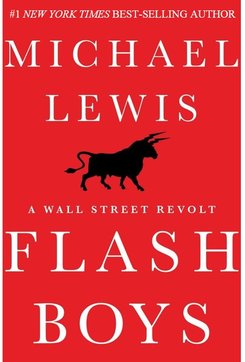
The claim that “markets are rigged” has become much more widely discussed globally since best-selling author Michael Lewis’ book “Flash Boys: A Wall Street Revolt” was published.
One day after the book was released, the FBI announced it was launching an investigation into high frequency trading. Even though the FBI said the timing had nothing to do with the release of “Flash Boys”, many people wondered.
In the book, Eric Schneiderman commented on his ongoing investigation.
Mary Jo White, chairwoman of the Securities and Exchange Commission (SEC), stated to Congress in April that the financial markets in the US are not rigged, in response to a question Lewis wrote in his book.
Just one month later, the SEC fined the New York Stock Exchange and two affiliated exchanges $4.5 million, on charges mentioned in Lewis’ book. The exchanges did not admit the charges, but did not deny them either.
Mr. Lewis estimates that the cost to investors of the abuses are between $5 billion and $15 billion annually, or even higher.
