
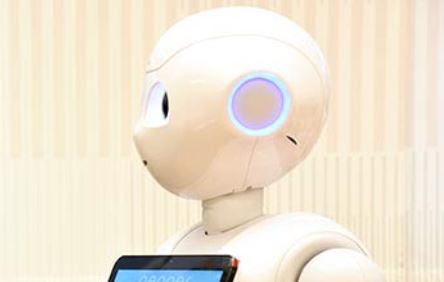
Caregiving robots in the future will assist the elderly while adapting to their culture. Roboticists are testing prototype caregiving robots in retirement homes within the scope of ‘CARESSES.’ CARESSES is an interdisciplinary project that focuses on AI. Örebro University in Sweden is one of many research centers that is participating in the project.
AI stands for artificial intelligence. The term refers to software technologies that make robots, computers, and other devices think like human beings. AI also makes them behave like humans.
Regarding robots, Alessandro Saffiotti, a Professor of Computer Science at Örebro University, said:
“Already today, robots are present in our lives. They’re found in our schools, hospitals, our homes, and businesses, and we believe that if they are also culturally competent, they will more easily be accepted by the people they interact with.”
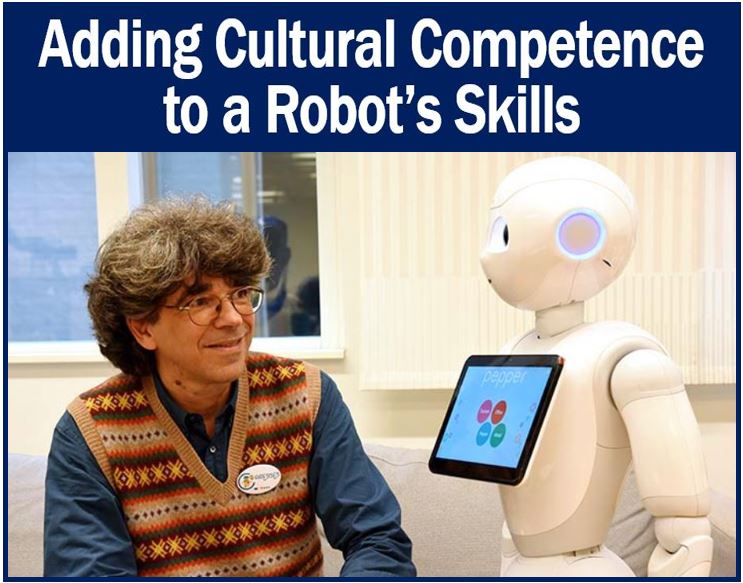
Adding cultural skills to a robot
Prof. Saffiotti has been working with researchers from Europe and Japan. For two years, they have been adding cultural skills to a robot. This has never been done before.
The robot will eventually adapt the way it gestures, moves, talks, and how it suggests appropriate topics. A caregiving robot with these skills, for example, would adapt to the culture of the person it is caring for.
Prof. Saffiotti said:
“The idea is that robots should be capable of adapting to human culture in a broad sense, defined by a person’s belonging to a particular ethnic group.”
“At the same time, robots must be able to adapt to an individual’s personal preferences, so in that sense, it doesn’t matter if you’re Italian or Indian.”
Robots will play a more prominent role in our lives in the future, Prof. Saffiotti believes. Therefore, their ability to factor in cultural differences when they communicate will be crucial.
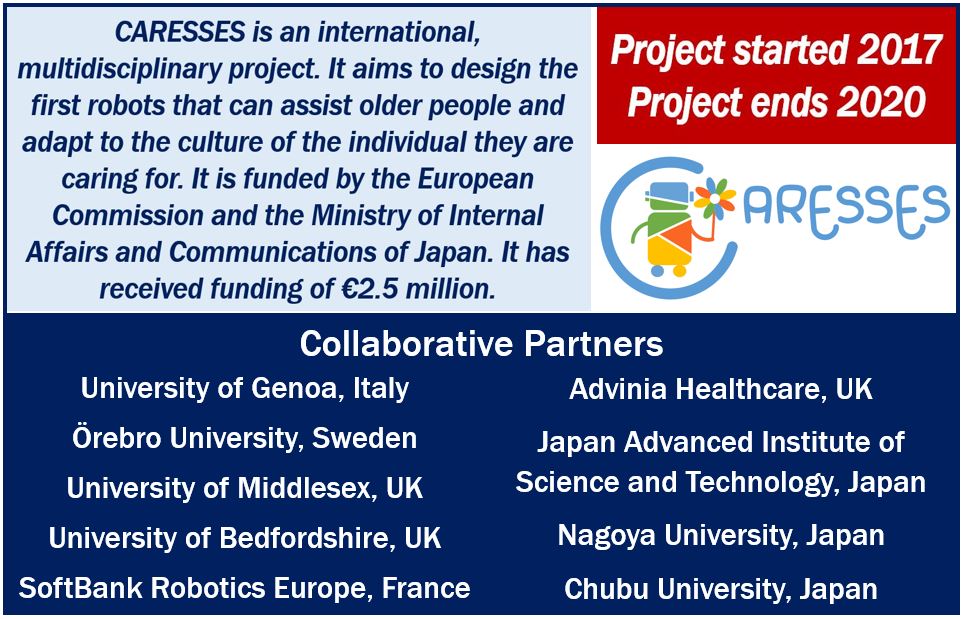
Testing caregiving robots with elderly humans
Researchers will test these caregiving robots with elderly humans from different cultural backgrounds. Engineers, psychologists, and health researchers will observe them in retirement homes in Japan and England.
Prof. Saffiotti said:
“We’ll be examining if people feel more comfortable with robots that take into account their culture and if their presence increases the quality of life of the elderly.”
This newly-developed type of AI allows robots to adapt to the habits and culture of different people. We should be able to install the AI in all types of robots eventually.
This specific robot that researchers within the CARESSES framework are testing can hold a simple conversation. It can also encourage older adults to stay active, keep in touch with family and friends, and take their medication.
Regarding testing caregiving robots outside the lab, Prof. Saffiotti said:
“The testing of robots outside of the laboratory environment and in interaction with the elderly will without a doubt be the most interesting part of our project.”
Future robots will be more complex
Prof. Saffiotti believes that in the future, robots will be more complex. He also thinks that they will play a much more prominent role in our lives. They will need to be able to take into consideration cultural differences.
Regarding robots that will interact with humans, such as caregiving robots, Prof. Saffiotti said:
“It will add value to robots intended to interact with people. Which is not to say that today’s robots are completely culture-neutral.”
“Instead, they unintentionally reflect the culture of the humans who build and program them.”
“Companies should also be interested in selling robots to people of different cultural backgrounds in different countries.”
