
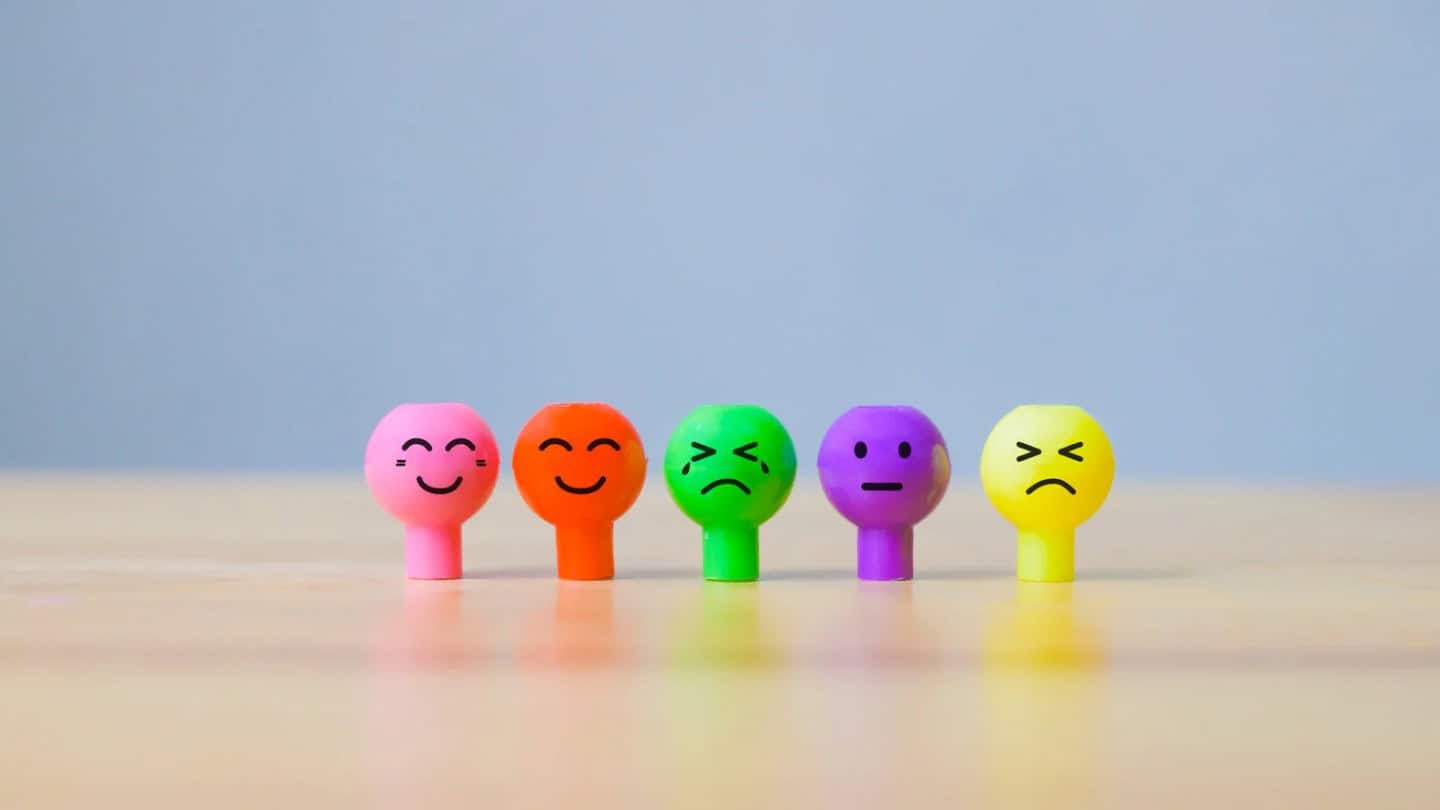
According to a new study published in the Journal of Applied Psychology, authentic behavior at work leads to higher levels of productivity.
Chris Rosen, management professor in the Sam M. Walton College of Business at the University of Arkansas and co-author of the study, said: “We found that people who put forth effort to display positive emotions towards others at work – versus faking their feelings – receive higher levels of support and trust from co-workers.”
“These people also reported significantly higher levels of progress on work goals likely due to the support they received,” Rosen added.
The researchers used data from 3 complementary studies spanning over 2,500 full-time employees to analyze two types of emotion regulation people use in the workplace: surface acting and deep acting.
Surface acting is the faking of positive emotions when interacting with others in the work environment.
Deep acting is when someone tries to change how they feel internally. Deep actors try to feel more positively to be more pleasant around others.
The team adopted a person-centered approach and demonstrated four different profiles of emotion regulation in coworker exchanges: deep actors, nonactors, low actors, and regulators.
Some employees regulate their emotions with coworkers for prosocial reasons (deep actors), while other employees regulate their emotions for impression management motives (regulators).
Nonactors and deep actors both incur well-being benefits (i.e., lower emotional exhaustion and felt inauthenticity), however, the study found that deep actors alone experience social capital gains in the form of higher receipt of help from coworkers, in addition to increased goal progress and trust in their coworkers.
The was study led by Allison Gabriel, associate professor of management and organizations at the University of Arizona.
Journal Citation
Gabriel, A. S., Koopman, J., Rosen, C. C., Arnold, J. D., & Hochwarter, W. A. (2019). “Are coworkers getting into the act? An examination of emotion regulation in coworker exchanges.” Journal of Applied Psychology. Advance online publication. https://doi.org/10.1037/apl0000473
