

Early exposure to violent media content during childhood has been linked to a higher risk of antisocial behavior a decade later, a new study has found.
The researchers, from Canada, Italy, and the US, wrote about their study and findings in the International Journal of Environmental Research and Public Health (citation below).
Study leader, Linda Pagani, a Professor at the Université de Montreal’s School of Psychoeducation (in Canada), said:
“Although past evidence showing causal links between modelling and getting rewarded for violence had an immediate impact on aggressive behavior in 4-year-old children, few studies have investigated long-term risks with antisocial behavior.”
“We studied such risks in mid-adolescence, explained Pagani, who is also a researcher at the Centre de recherche Azrieli du CHU Sainte-Justine. It was ideal to study this question with typically developing middle-class children because, as a population, they have the lowest chances of engaging in aggression and behavior harmful to others.”
1,945 children
The researchers gathered and analyzed data from 963 girls and 982 boys who were born between the Springs of 1997 and 1998. They were all enrolled in the Quebec Longitudinal Study of Child Development, a large-scale research project aimed at understanding various factors influencing children’s development over time, including their physical, cognitive, emotional, and social growth, by following them from birth into adulthood.
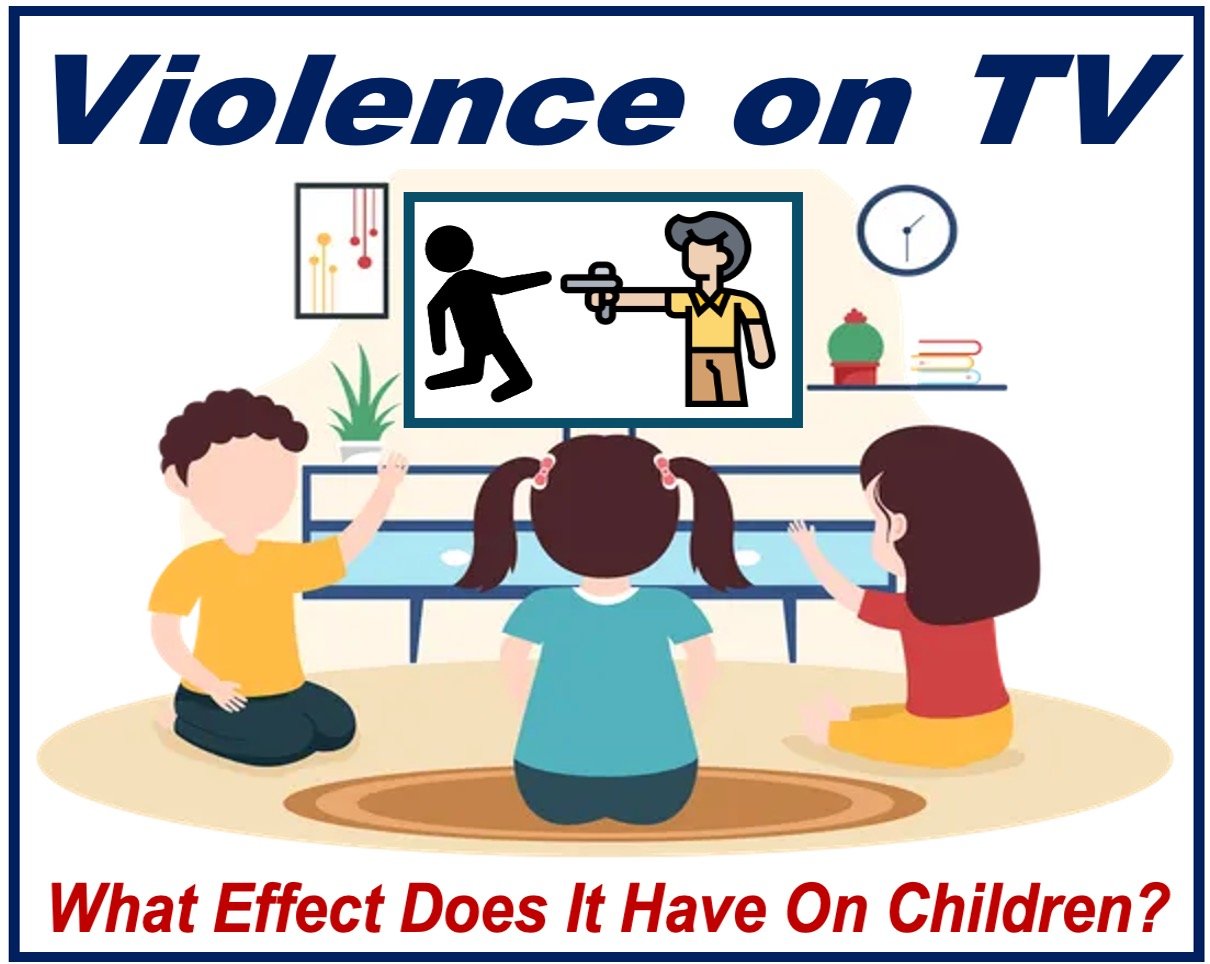
In the longitudinal study, parents reported how often their children were exposed to violent media, which in this case was violence on TV, between the ages of 3.5 and 4.5 years. At the age of 15 years, the children self-reported on various aspects of antisocial behavior.
What is Violent Media?
The researchers had the following definition of violent media or screen violence in the study: “(Anything) characterized by physical aggression, verbal aggression, and relational aggression […] depicting situations that intentionally attempt or cause harm to others.”
According to the study, children are:
“Attracted to fast-paced, stimulating violent content, which often features appealing characters like superheroes who commit and are rewarded for aggressive acts, thus increasing the likelihood of exposure.”
Prof. Pagani and colleagues then carried out analyses to determine whether exposure to violent content on TV when they were very young was associated with antisocial behavior eleven years later.
Prof. Pagani explained:
“We statistically took into account alternative child and family factors that could have explained our results, to be as close as possible to the truth in the relationships we were looking at.”
In other words, they accounted for other potential influences, such as differences in family environment, parenting styles, and socioeconomic status, to ensure that their findings accurately reflect the true relationship between early exposure to violent media and later antisocial behavior.
Exposure to On-Screen Violence Affected Boys
The study findings showed that fifteen-year-old boys who had been exposed to preschool violence on TV were more likely to exhibit antisocial behaviors. Examples included hitting or attacking someone to get something, stealing for no clear reason, or stealing with a specific intent.
Other risks involved making threats, using insults, and participating in gang fights. The study also identified weapon use as a possible outcome of early exposure to violent television.
Interestingly, they did not observe any similar effects in girls, likely because boys tend to watch more violent content than girls.
Prof. Pagani said
“Our study provides compelling evidence that early childhood exposure to media violence can have serious, long-lasting consequences, particularly for boys.”
“This underscores the urgent need for public health initiatives that target campaigns to inform parents and communities about the long-term risks and empower them to make informed choices about young children’s screen content exposure.”
The authors made the following comment in the academic journal:
“Preventive intervention campaigns that target parents and communities about the potential repercussions of preschool exposure can potentially promise more optimal long-term child development.”
Citation
Pagani, L. S., Gilker Beauchamp, A., Kosak, L.-A., Harandian, K., Longobardi, C., & Dubow, E. (2025). Prospective associations between preschool exposure to violent televiewing and externalizing behavior in middle adolescent boys and girls. International Journal of Environmental Research and Public Health, 22(1), 129. https://doi.org/10.3390/ijerph22010129
