

About 31% of all US seniors used Facebook in 2014, i.e. 56% of all online adults aged 65+ years, says a new survey carried out by the Pew Research Center. The authors say Facebook remains by far the most popular social media site in the country.
Pew Research says its report is based on 81% of US adults who use the Interent.
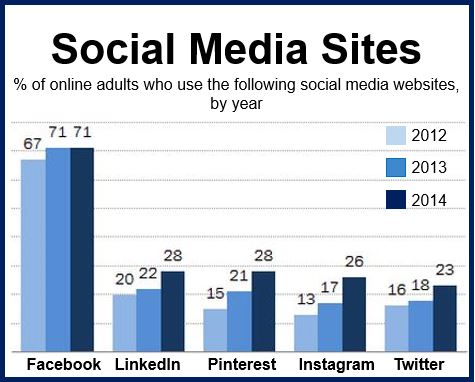
Although growth has slowed, the level of usage of the social media website has increased. Other platforms, such as Pinterest, Instagram, Twitter and LinkedIn saw considerable increases over the past 12 months in proportion to online adults who now use their websites.
The survey also found that 52% of all US online adults used at least two social media sites in 2014, a considerable increase on the 42% of internet users in 2013.
Source: Pew Research Center.
For the first time, 53% of 18 to 29 year-old Americans used Instagram in 2014, and 49% of Instagram’s users utilized the site on a daily basis.
Also for the first time ever, the proportion of Internet users with a college degree using LinkedIn reached 50%.
Although only 13% of online men used Pinterest in 2014, forty-percent of online women did.
While Facebook continued being the dominant social networking site, its membership numbers were virtually the same in 2014 compared to 2013. Overall, seventy-one percent of internet users had a Facebook account in 2014, a proportion that remained unchanged since August 2013.
All the other social media platforms saw considerable growth over the same period. Instagram posted a 9 percentage point increase in overall subscriber numbers, with significant growth seen in nearly every demographic group.
LinkedIn continued growing strongly among professionals and college graduates, while Pinterest and Twitter reported increased memberships across a wide range of demographic groups.
Seventy percent of Facebook users in 2014 said they engaged with the site daily, while 45% did so many times a day. In 2013, just 63% claimed to use the site daily.
Forty-nine percent of Instagram users used the site daily in 2014, compared to 17% of Pinterest subscribers – in both cases, the proportions were similar to the previous year.
Among Twitter users, only 36% said they used the platform daily, compared to 46% in 2013.
Thirteen percent of LinkedIn users claimed to use the site daily in 2014, which was similar to the proportion in 2013. However, the percentage of users saying they used the site weekly or less frequently increased considerably.
Fifty-two percent of online adults in 2014 said they had accounts in at least two social media sites, compared to 42% in 2013. Only 28% of adults claimed to use just one site in 2014, versus 36% in 2013. Seventy-nine percent of those saying they used just one site in 2014 were Facebook subscribers.
The vast majority of Pinterest, Instagram and Twitter users said they also had a Facebook account.
