
The untold miles of manmade fibre-optic cables that are buried in the Earth’s crust could be used to monitor ground vibrations and predict earthquakes, according to unprecedented new research.
Scientists from GFZ German Research Centre for Geosciences in Potsdam, and other establishments in Iceland and the United Kingdom, have demonstrated and tested the use “conventional fibre-optic cables deployed for telecommunication” to measure “dynamic strain” in the ground.
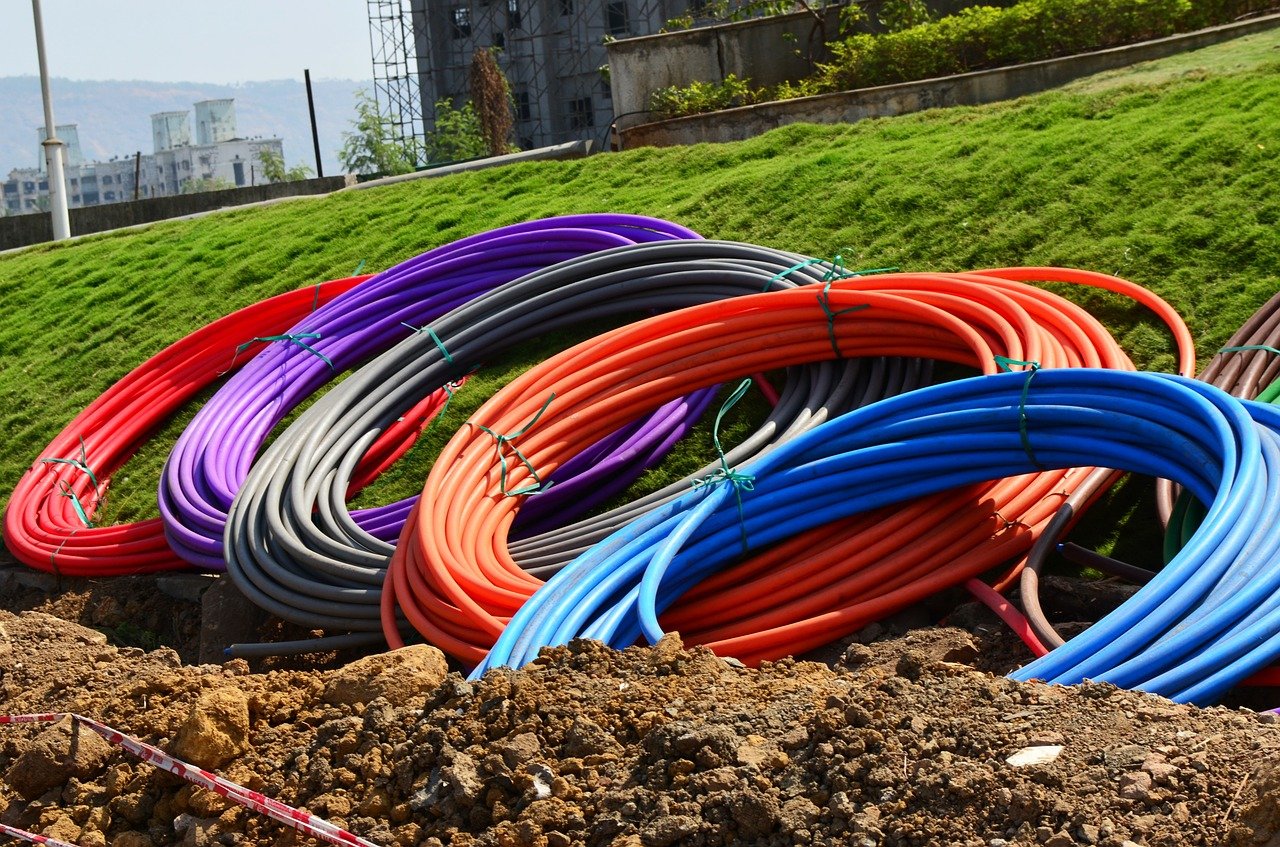
 The world’s incalculable miles of buried fibre-optic cables could help to detect earthquakes, say researchers. Image: pixabay-166802
They report their findings in a paper published in Nature Communications.
First study author Dr. Philippe Jousset, of GFZ, says that when he has presented the preliminary results at recent conferences, the reaction has been that the method could be a “game changer for seismology.”
The vast telecommunications network of fibre-optic cables around the globe is “denser than any seismological network worldwide,” he explains.
‘Astonishing results’
The scientists tested their dynamic strain method on a 15-kilometer stretch of fibre-optic cable that was installed underground in Iceland in 1994 as part of a telecommunication network.
The team chose that section of the network – which is situated in the Reykjanes Peninsula in southwest Iceland – because it traverses a fault zone where the Eurasian and American tectonic plates are moving away from each other.
They were astonished to discover what happened when they directed pulses of laser light along the optic fibre.
“Our measurements,” says Jousset, “revealed structural features in the underground with unprecedented resolution and yielded signals equalling data points every 4 meters.”
Detected all kinds of signals
The fibre-optic cables picked up signals from quakes, tremors and other ground movements such as ocean waves.
They even detected manmade vibrations, such as those made by passing vehicles, pedestrians, explosions, and even from “fluid circulating in pipes of nearby geothermal power stations.”
The scientists analyzed the laser light signals as they travelled along the fibre-optic cable and compared the results to data recorded at the same time with “conventional seismometer” machines.
Not only did the fibre-optic cables pick up “normal faults and volcanic dykes,” but they also revealed an underground fault that had not been spotted before with conventional methods.
The fibre-optic cables were able to record waves from small earthquakes nearby, waves that originated in quakes much further away, and small disturbances on the ocean floor.
“We only need one strand of a modern fibre-optic line,” says co-senior study author Prof. Charlotte Krawczyk, Director of GFZ’s Geophysics Department.
Seismic detection in high-risk cities
The researchers see huge potential for using the world’s many fibre-optic telecommunication networks as “seismometers opening a new window for Earth hazard assessment and exploration.”
Large cities that live constantly with the threat of earthquakes – such as Mexico City, Tokyo, Istanbul, and San Francisco – also sit on top of dense fibre-optic networks that could be harnessed as additional seismic detectors.
The scientists now want to study deep-sea cables to find out whether they might also be used as seismometers, and maybe even to detect changes in water pressure. Should these tests also yield positive results, then they might not only interest seismologists, but also oceanographers.
