
Authorized stock is the number of shares a corporation is permitted to issue under its governing charter. It is a legal ceiling, potentially divided among different share classes, rather than the number already held by investors or an amount of money raised.
The term authorized shares is often used for the same concept. The applicable law and charter determine the details. “Capital” can have several legal and accounting meanings, so it should not always be treated as another word for shares.
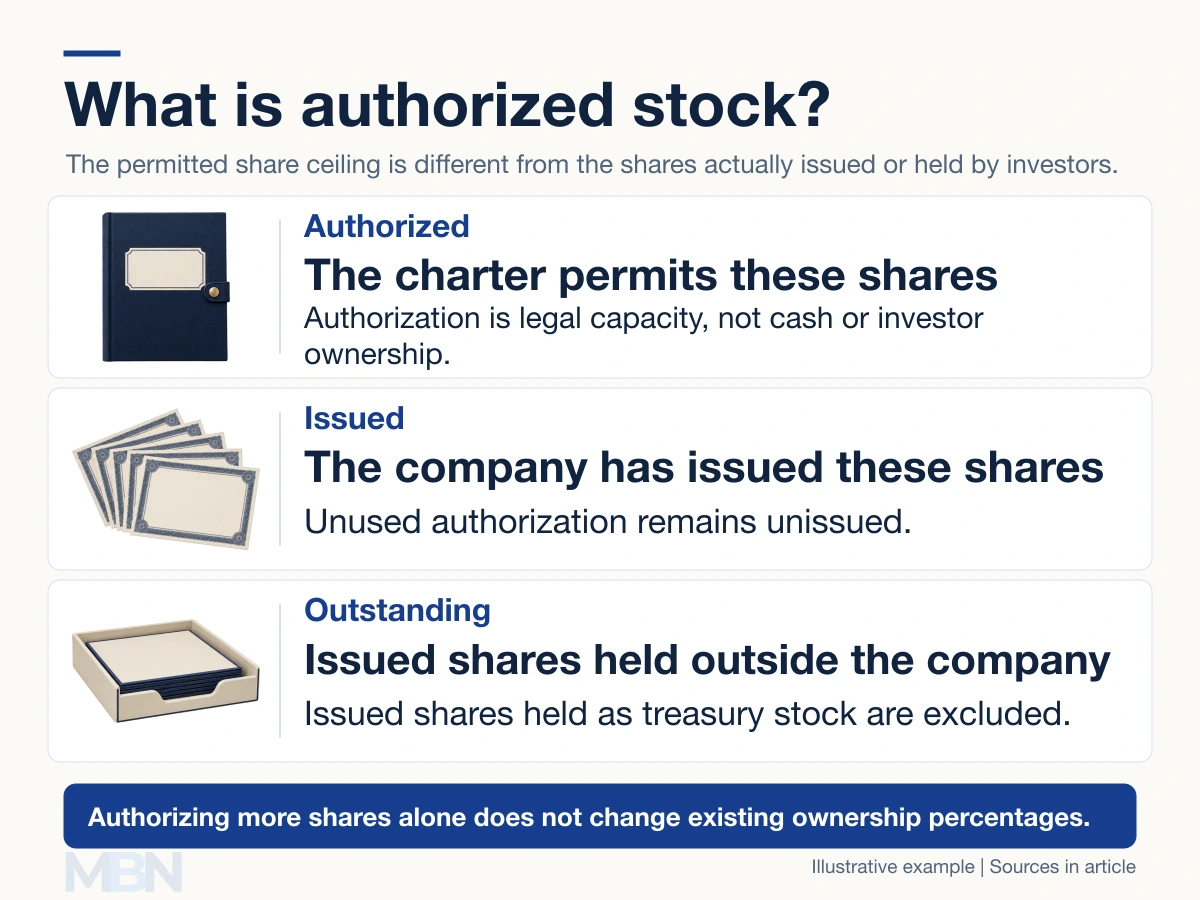
Authorized, issued and outstanding shares
Stripe Atlas’s share-count explanation also separates these three measures:
Authorized shares are the permitted total. Issued shares are those the company has actually issued. Outstanding shares are issued shares held outside the company, excluding shares it has reacquired and holds as treasury stock.
For example, issuing 800 shares out of an authorization of 1,000 leaves 200 unissued. If the company later buys back 50 issued shares and holds them in treasury, 800 remain issued but only 750 are outstanding. Retiring shares is a separate action.
Delaware’s stock provisions distinguish authorized issuance, share rights and company-held shares. Section 243 addresses retirement, including when retired shares return to authorized and unissued status.
What a new share issue can raise
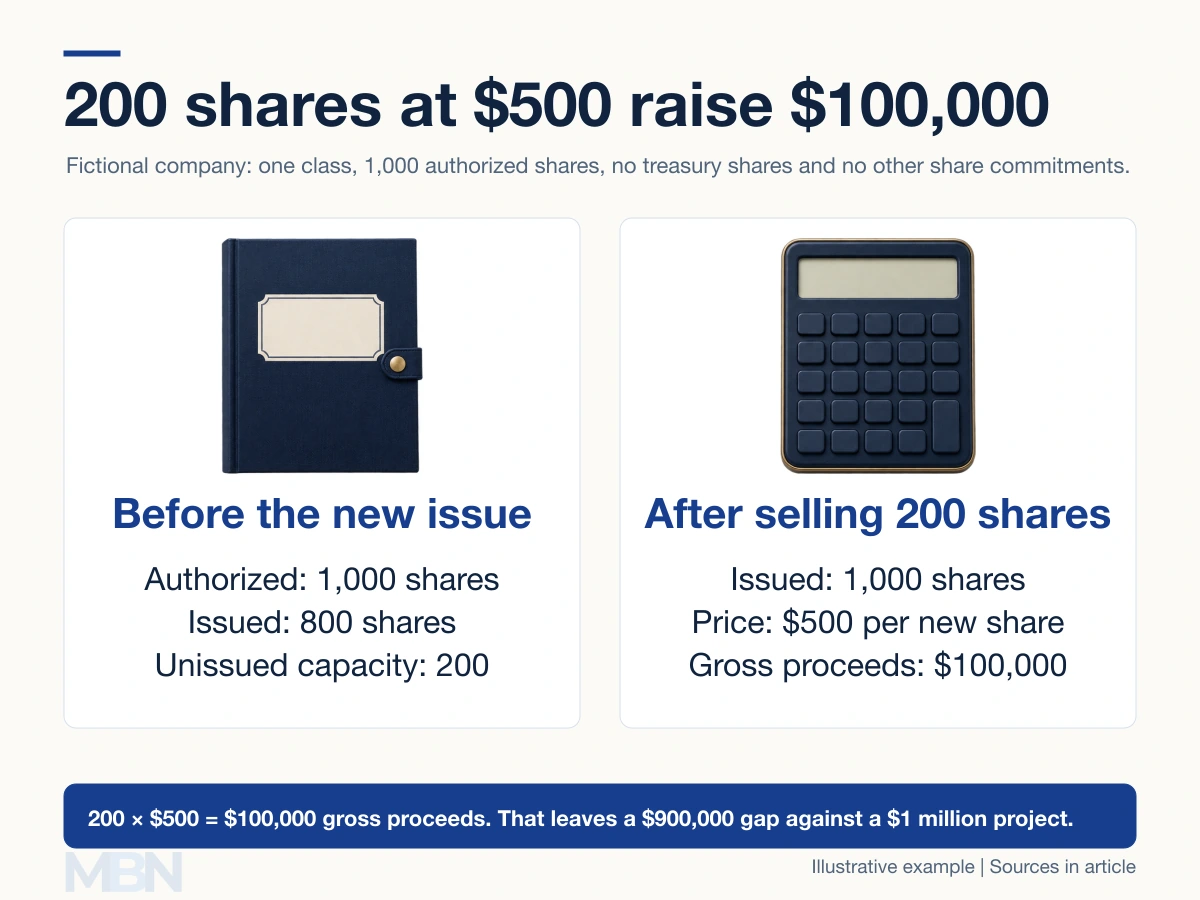
Suppose a fictional company has 1,000 authorized shares and 800 outstanding shares, with no treasury shares or other commitments. It wants $1 million for a factory.
If it sells the remaining 200 shares for $500 each, it raises $100,000 before issue costs. It remains $900,000 short of the project budget. Authorization alone does not establish the selling price or guarantee that buyers will subscribe.
An investor holding 80 shares owns 10% of the original 800 outstanding shares. If the investor buys none of the new issue, the same 80 shares represent 8% of the subsequent 1,000. This is percentage dilution.
That percentage decline does not automatically mean an equal loss of economic value: the company also receives the new investors’ cash. The issue price, rights, costs and use of funds matter.
Authorization is not unrestricted permission to issue
Under Delaware section 161, directors can issue additional shares within charter authorization, subject to shares already issued, subscribed for or otherwise committed. Available capacity is therefore not necessarily the entire authorized total minus currently outstanding shares.
Issuance must also comply with applicable corporate and securities law, share rights and required approvals. Increasing the charter ceiling follows the relevant amendment rules. Delaware section 242 includes different voting procedures and exceptions, so a single approval rule should not be generalized to every company.
The UK position is different
HMRC confirms that the UK requirement for authorized share capital ended on October 1, 2009. The Companies Act 2006 did not make every company free of restrictions: section 28 treats certain older memorandum provisions as articles provisions, which can preserve an existing limit.
A company’s constitution, directors’ allotment authority and other applicable rules still matter. A UK memorandum and articles of association should not be described as interchangeable documents or simple universal equivalents of a US incorporation charter.
Last checked and updated on November 4, 2026 by the MBN editorial team.