
Britain in the future, in about 100 years’ time, will be full of high-rise farms, floating cities, basements six-storeys deep, 3D houses, and Moon & Mars spaceports, says a group of futurologists and engineers in a series of TV programmes – Impossible Engineering.
A panel of experts, including distinguished scientists from the Royal Academy of Engineering, eminent architects and other engineers, says that in the next century Britain’s architectural landscape will be unrecognizable.
New technologies will allow us to build amazing structures – on Earth, in space, on other planets, and on the Moon.
There will be 3D-printed spaceports from which spacecraft will travel to and from Mars, space stations, and the moon.
Dr. Rhys Morgan, Director of Engineering and Education at the Royal Academy of Engineering, says buildings, shopping centres and other structures will have their own microclimates.
Breakthroughs will culminate in incredible achievements
Dr. Morgan said:
“There is rarely a ‘eureka’ moment. As such, engineering feats which are currently out of reach require time for the pieces to fit together and the minds responsible for developing the ideas to work through all the wrong avenues before achieving what is currently impossible.”
“Breakthroughs in engineering work in the same way as breakthroughs in literature, music and lifestyle – an accumulation of different discoveries (or influences) is required to create the final catalyst for a new discovery.”
Civil engineering will advance rapidly, allowing us to create buildings far taller, bigger and more complex than anything we could imagine today.
As urban space becomes scarcer, technologies will focus on ways to address that problem. Cities will be built under water and on top of it. Urban areas will be connected by colossal bridges.
The housing crisis will be solved by the invention of collapsible temporary living pods.
Structures will have basements several storeys deep, with gardens, play areas, swimming pools, gyms, and even panic rooms.
In London, where creating basements is currently a bureaucratic nightmare with local councils, buildings will have as many floors below ground as they do above. It will be interesting to see how councils respond to the rapidly growing demand for subterranean urban space.
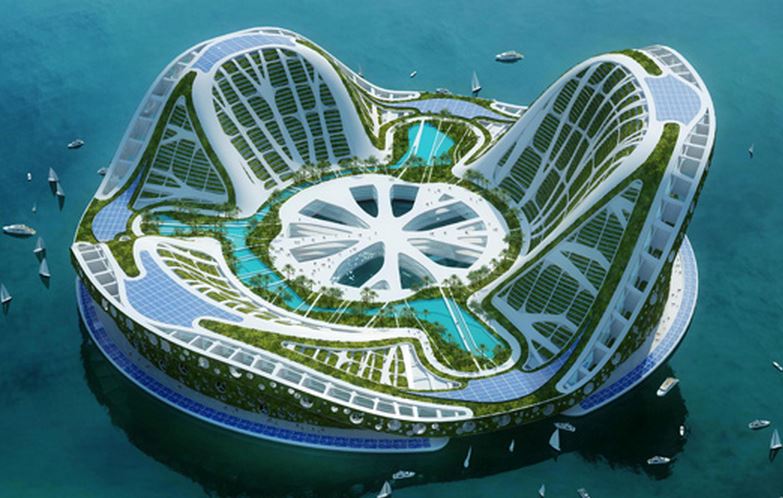
French architect and director of the award-winning architecture practice Mamou-Mani Architects, who is also a lecturer at the University of Westminster, Arthur Mamou-Mani, predicts there will be floating cities, powered by tidal and solar energy.
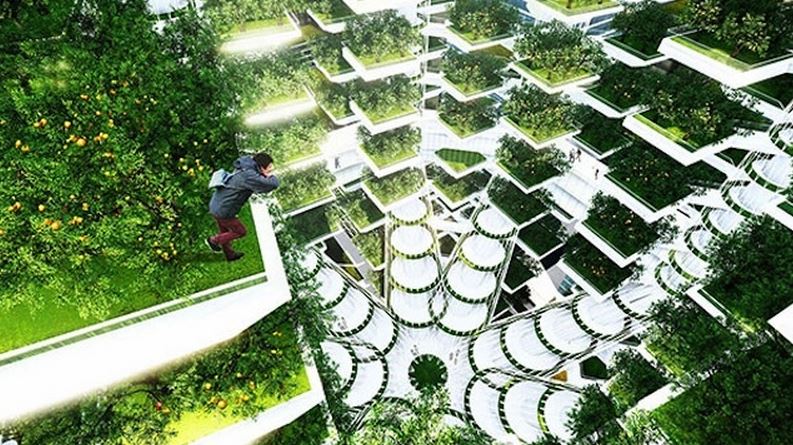
High rise farms will emerge, with cows and sheep grazing several hundred feet above ground level.
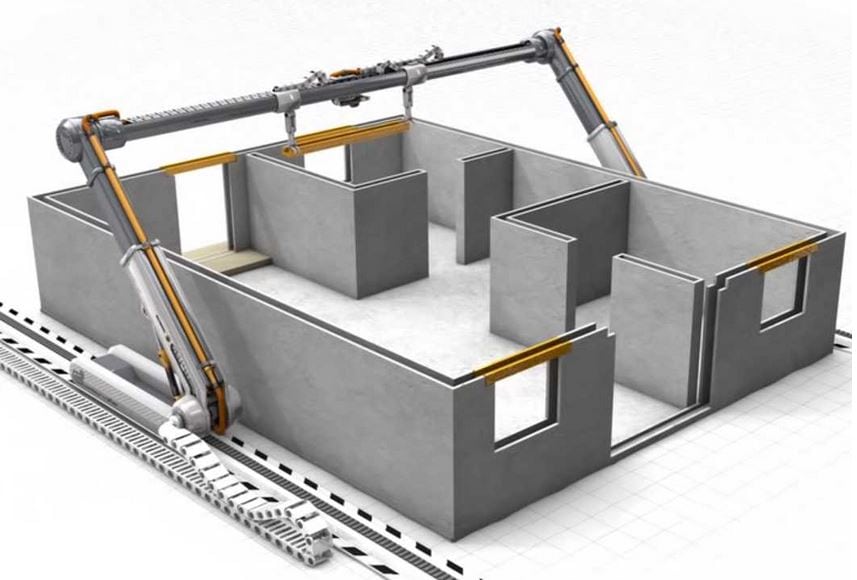
3D-printed homes will be the norm
According to the panel, in 100 years’ time you will be able to buy a 3D-printed home with its own microclimate ‘off the shelf’. Creating structures with their own microclimate means humans will be able to build and live in previously uninhabitable locations.
General Manager of the Yesterday channel, Adrian Wills, said:
“Rapid technological advances coupled with increases in population and global warming will have a huge influence on how we live, with underground, super high rise and even floating homes likely to feature in our future cityscapes.”
“Impossible Engineering shows how a series of seemingly unconnected breakthroughs can be put together to create amazing feats of engineering, but anything could happen in the next 50 years.”
