
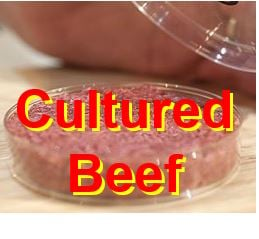
If all goes according to plan, lab-grown burgers could be on the market for public consumption within the next five years, says a team of scientists from Maastricht University in The Netherlands. Would vegetarians who do not eat meat because they do not want to kill animals and/or are worried about the environment consider consuming lab-grown meat (also known as cultured beef)?
Team leader, Mark Post, Professor of Vascular Physiology, and colleagues say they have set up a company – Mosa Meat – that will find ways of making the burger cheaper and tastier.
In an interview with the BBC, Peter Verstrate, a food technician specialized in identifying, structuring and implementing sustainable improvements in primary processes, who will be heading the new company, said:
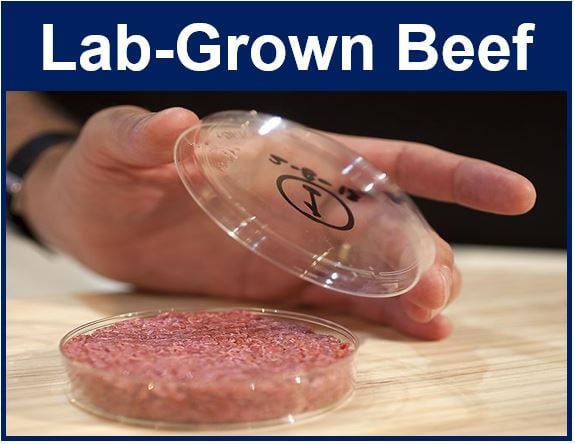 A burger made from cultured beef. (Image: culturedbeef.net. Credit: David Parry / PA Wire)
“I feel extremely excited about the prospect of this product being on sale. And I am confident that when it is offered as an alternative to meat that increasing numbers of people will find it hard not to buy our product for ethical reasons.”
Two years ago, the researchers cooked a prototype, which was consumed in London. Bringing the cost down will be crucial because the one eaten two years ago cost £215,000 ($332,832 or €293,834) to make.
The meat is made from stem-cells – cells that have an ability to become various types of cells, such as skin, muscle, or nerve cells.
The majority of scientists working in this area are trying to create human tissue for transplantation to replace diseased or faulty cartilage, nerve cells or muscle. Prof. Post and colleagues use them to grow fat and muscle for their burger.
Lab-grown burgers more environmentally friendly
If we already get meat from cattle, why try to replace it with food grown in the laboratory?
The team says demand for meat globally continues to grow. Expanding demand means using up more land, water and other limited resources, and a subsequent increase in greenhouse gas emissions which warm up our planet.
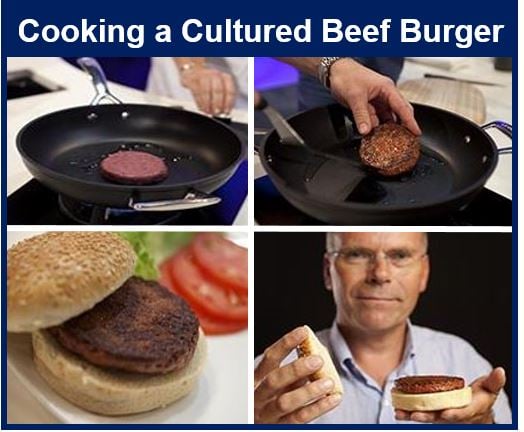 Cooking a burger made from cultured beef. In the final picture, Prof Post holds the cooked burger in a bun. (Images: culturedbeef.net. Credit: David Parry / PA Wire)
Cultured beef is greener than traditional meat
Prof. Post and team refer to an independent study showing that laboratory-grown beef uses forty-five percent less energy compared to beef that comes from farming cattle. It also emits 96% less greenhouse gas and uses up 99% less land.
Mosa Meat aims to develop lab-grown minced meat that costs no more than cattle-meat and is just as tasty.
The company will employ twenty-five researchers, lab technicians and managers.
 Cultured beef is much more environmentally friendly than cattle-sourced beef.
They need to be able to mass-produce the meat. Prof. Post says they will also look into ways of making steaks and chops using 3-D printing technologies.
The team members are presenting their research at the First International Symposium on Culture Meat, held in Masstricht (Oct 18-20).
