
Microsoft testing K5 robot security guards by Knightscope

Written by Joseph Nordqvist

Published: 22:38, November 22, 2014

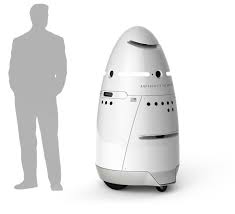
Microsoft is testing out the “K5” robot security guards that can move autonomously and are equipped with advanced cameras and sirens and alarms that chime off when there are signs of trouble.

The K5 robots, developed by Knightscope, are 5 feet tall and weigh 300 pounds. The machines can read license plates, share live videos it records, track and analyze human faces, and monitor the activity of other nearby K5 robots.

Although the robot won’t be able to chase criminals it can instantly report a problem to authorities and provide important data, such as a video of the incident.

Stacy Stephens, Knightscope’s co-founder and vice president of sales and marketing, told the MIT Tech Review that K5 robots have been created to work alongside human security guards and not replace them.

The robots are capable of doing mundane security detail, which allows their human counterparts to focus on strategic operations.

K5 robot

Stephens said:

“I believe robots are the perfect tools to handle the monotonous and sometimes dangerous work in order to free up humans to more judiciously address activities requiring higher-level thinking, hands-on encounters, or tactical planning.”

The K5 robot can run for a full day with a single battery charge – which only takes 20 minutes to recharge.

The company is primarily set on focusing on businesses, but could move into actually working in law enforcement.

Joseph Nordqvist Avatar

Other News

Marketing strategy can influence whether companies buy or partner, research finds

Nov 7, 2026

Some discounts can reduce sales when customers struggle to qualify

Nov 7, 2026

Large text can make busy social images less engaging, study finds

Nov 6, 2026

AI shopping agents missed better unit prices when product details were costly to inspect

Nov 6, 2026

Asking for online reviews can affect what customers spend next, hotel study finds

Nov 6, 2026

Repeated marketing tests reveal why customers respond differently to offers

Nov 6, 2026

A coupon lifted the promoted product’s value without an equal gain for the retailer

Nov 6, 2026

Hotel reviews changed when ChatGPT became available, study of Italian ban finds

Nov 5, 2026

Immediate subscription access was linked to longer commitment in four studies

Nov 5, 2026

AI video ads prompted emotional reactions in a small laboratory study

Nov 5, 2026

Retailers expanded online sales faster than customer management tools, OECD data show

Nov 5, 2026

A small trial fee drew more interest than a free offer in a Korean study

Nov 4, 2026

Helping small retailers set up payment devices increased adoption in Mexico study

Nov 4, 2026

Retail display ads can shape what shoppers expect before they inspect a product

Nov 3, 2026

Grocery price displays can change what shoppers buy without changing the price

Nov 3, 2026

Product reviews can influence how shoppers assess environmental claims

Nov 3, 2026

Discounts for infrequent buyers can affect how regular customers feel

Nov 3, 2026

Sponsored post frequency has an uneven relationship with influencer engagement

Nov 3, 2026

Regular giving can affect how customers view corporate donations, study finds

Nov 2, 2026

How describing the same food as having few ingredients can change interest

Nov 2, 2026