

PepsiCo posted a 5% increase in profits for the 3rd quarter, driven by strong sales overseas, despite a difficult environment, the company announced on Thursday. PepsiCo shares, which have risen by 18% over the last year, surged by 1% to $95.25 in early trading on Thursday.
In its outlook for the year, the Purchase, New York-based multinational food and beverage corporation forecasts a 9% increase in full-year adjusted earnings, compared to its previous guidance of 8%.
PepsiCo’s Chairman and CEO, Indra Nooyi, said in a statement:
“We delivered good third quarter results in the face of an ongoing challenged macroeconomic environment driven by increasing volatility in the emerging markets and continued sluggish consumer demand in developed markets. Our organic revenue grew three percent and we achieved positive effective net pricing through strong price/pack revenue management. Together with our relentless focus on productivity, this translated to both gross margin and operating margin expansion.”
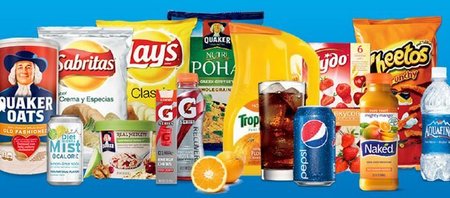
PepsiCo has a wide range of drinks, snacks and foods.
The world’s second largest food and beverage business registered earnings of $2.01 billion ($1.32 per share) for Q3 (ending September 6), compared to $1.91 billion ($1.23 per share) during the same period last year.
Revenue overall rose by 2% to $17.22 billion in Q3 2014 compared to $16.91 billion in Q3 2013.
Sales in Africa, the Middle East and Asia surged by 11%, and in Latin America by 6% in the third quarter.
Sales in Mexico down
However, in Mexico, which has the world’s highest consumption of sodas per head of the population, things did not go so well. Mexico’s President Enrique Peña Nieto introduced a new tax on junk food and sugar-laden drinks, which resulted in a -3% decline in snack sales.
Several lawmakers have been impressed by President Nieto’s tax and are considering introducing similar levies in their own countries.
At the beginning of October, PepsiCo said it plans to sell Pepsi True, the mid-calorie stevia-stweetened soda, via Amazon.com.
Along with Coca-Cola and Dr. Pepper, PepsiCo committed to reducing the calorie content of its sugar-laden drinks by 20% by 2025.
PepsiCo has resisted calls from activist investor Nelson Peltz’s Trian Fund Management LP to break up the firm’s snack and beverages businesses, arguing that the company has a better future if the two stay together. For the past five years, PepsiCo has been losing market share to arch-rival Coca-Cola
