
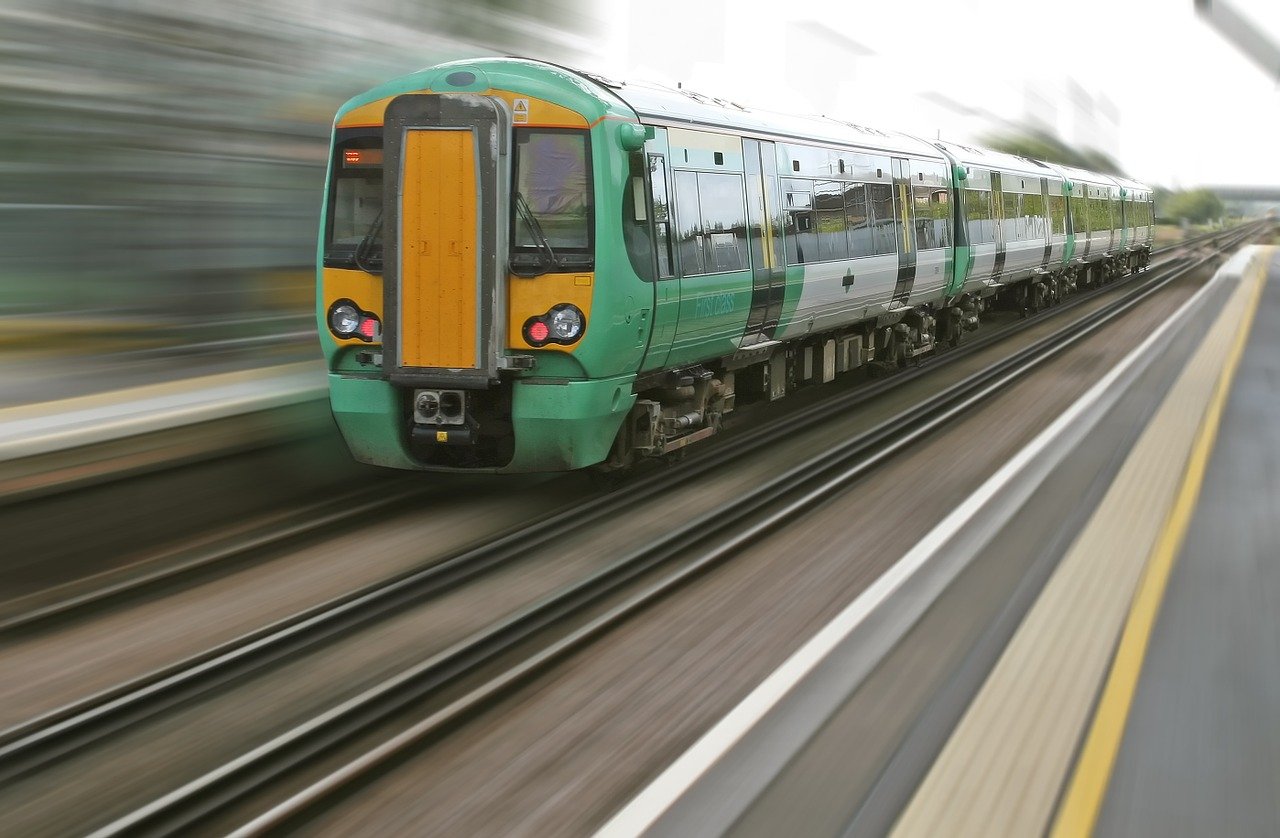
A new project is to investigate the feasibility of using track-side solar panels to power railway trains in the United Kingdom.
The Renewable Traction project is a collaboration between Turbo Power Systems (TPS), Imperial College London, 10:10, Network Rail, and Community Energy South.
 Increased electrification and more use of renewable energy such as solar could significantly reduce the carbon footprint of railway journeys. Image: pixabay-1239439
The team will be looking at how to connect track-side solar panels directly to the lines that supply power to trains.
The idea is to bypass the electricity grid and manage the power demand from the trains more efficiently.
It will be the first project in the world to test the concept, which if proved to be feasible, is expected to have commercial implications for electrified railways worldwide.
It could also spur the development of thousands of small and medium sized renewable energy sites that do not need to connect to the grid.
Project leader Leo Murray, of 10:10 – a charity that aims to help people take practical action on climate change – says the initiative is “a real opportunity for some innovative thinking.”
Network Rail – the government organization that owns and runs most of the rail network in Britain – is investing billions of pounds in electrifying railways in England, Scotland, and Wales.
Increased electrification means fewer trains running on diesel fuel, a move that – coupled with increased use of renewable energy – could do much to reduce the carbon footprint of rail journeys.
However, there is a problem in that in many rural areas the grid has already reached its limit in being able to bring in distributed power sources and supply power to the train companies.
“What is particularly galling,” says Murray, “is that peak generation from solar and peak demand from the trains more or less match but we can’t connect the two.”
First step will focus on the ‘third rail’ option
The project is first going to look at the feasibility of converting the existing third electrical rail that runs on the ground alongside the track to supply electricity from the track-side solar panels.
Although only about a third of Britain’s rail network has a third track, the team feels this would be a good start and would keep the project simple to start with.
One of the advantages of using the third rail is that the team can focus on matching the direct current (DC) generated by the track-side solar panels to the DC needed to power the trains without having to convert to alternating current (AC) in the middle.
Professor Tim Green, Director of Energy Futures Lab at Imperial College London, says, “Many railway lines run through areas with great potential for solar power but where existing electricity networks are hard to access.”
“I think that focusing on the basics of integrating distributed energy generators into a railway’s system with the third-rail network brings a lot of benefits,” he adds.
Technical and financial expertise
However, even such a simple plan presents many challenges. For example, the third rail is also used for signalling, and adding power from the track-side solar panels could disrupt communication.
There are also numerous safety issues around managing a secondary power source, such as when the solar panels can come online and go offline.
It will be important to ensure, for instance, that autonomous systems do not connect the grid back to the power source before the maintenance engineer has finished working on it.
TPS has expertise in solving the third rail problems, while Imperial has experience in managing renewable energy sources in electricity grids.
10:10 and Community Energy South both have experience in community energy schemes and will be looking at the financial sustainability of the system.
The project, which officially launched at the start of February, expects to report its findings by the end of 2017.
