

Vladimir Putin

Putin is extremely popular in Russia despite economic meltdown

Published: 11:11, December 19, 2014

Despite heading an economy that is entering a severe recession and a currency which fell by more than 50% this year, Russia’s President Vladimir Putin is still extremely popular domestically, a poll carried out by The Associated Press-NORC Center for Public Affairs Research found.

The vast majority of the 2,008 Russian adults polled from November 22 to December 7 accept the economy is in a bad way, and believe sanctions are damaging the country, but most of them still like Mr. Putin.

Trevor Tompson, director of the AP-NORC Center, said:

“We are excited to release the AP-NORC Center’s first international survey. Russia is at the center of many matters of contention, both in the domestic and international arenas, and we wanted to explore the state of the Russian public’s opinions on a variety of economic and political issues.”
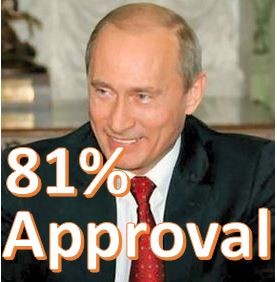
Mr. Putin Approval Rating

Mr. Putin’s approval rating is miles ahead of any other leader’s globally.

According to the AP-NORC Center poll:

Enviable rating: 81% of the Russian people have rallied around their leader Mr. Putin. His approval rating today has soared compared to the 58% registered in the last AP poll in 2012.

Economy: for most Russians, the country’s economic situation is their top concern, although very few so far report being directly affected by the problems.

Sanctions: the majority of people believe sanctions are harming their economy, although only those with higher incomes reported any impacts on their personal finances.

Ukrainian separatists: two-thirds of the citizens polled say that efforts to support those who wish to separate from the Kiev government should continue.

President Barack Obama’s rating is currently 45%, according to the latest NBC News/WSJ poll, his highest rating since October 2013.

What are Sanctions?

Christian Nordqvist Avatar

Other News

Sponsored post frequency has an uneven relationship with influencer engagement

Nov 3, 2026

Regular giving can affect how customers view corporate donations, study finds

Nov 2, 2026

How describing the same food as having few ingredients can change interest

Nov 2, 2026

Suggested prices can change what marketplace sellers earn, Mercari experiment finds

Nov 2, 2026

A change of month can make a sale feel farther away, marketing study suggests

Nov 2, 2026

New and established brands drew different responses to advertising appeals in study

Nov 2, 2026

Community promotions gave lesser-known authors a sales lift in Quebec study

Nov 2, 2026

Believable price guarantees linked to greater trust in retailer survey

Nov 1, 2026

Where customers receive free samples can affect what they do next

Nov 1, 2026

Branded search ads showed no clear sales lift in small business tests

Nov 1, 2026

Tokenized markets promise faster trades, but legal rights and liquidity remain unresolved

Nov 1, 2026

Internet coverage alone cannot close the digital divide, World Bank says

Nov 1, 2026

Energy upgrades can save businesses money, but financing the work remains a hurdle

Nov 1, 2026

Why tighter credit can disrupt supply chains before orders disappear

Oct 31, 2026

South Africa plans a more open payments system as digital transactions grow

Oct 31, 2026

African cities face a jobs test as urban populations grow

Oct 31, 2026

Online platforms can open foreign markets, but sellers still face costs

Oct 31, 2026

Trade barriers beyond tariffs can keep Balkan exporters from growing

Oct 31, 2026

Off-grid solar reaches more customers, but affordability limits its growth

Oct 31, 2026

World Bank survey finds a wide gap in business innovation across economies

Oct 30, 2026