
RemoveDEBRIS is a satellite research project that aims to capture space junk. In other words, it intends to reduce the amount of space debris that orbits the Earth. Leading space companies and research institutions participate in the project. Scientists at the Surrey Space Centre, at the University of Surrey in the UK, lead the project, which the European Commission co-funded.
A team of engineers at Surrey Satellite Technology in Guildford, UK, operate the spacecraft while it is in orbit.
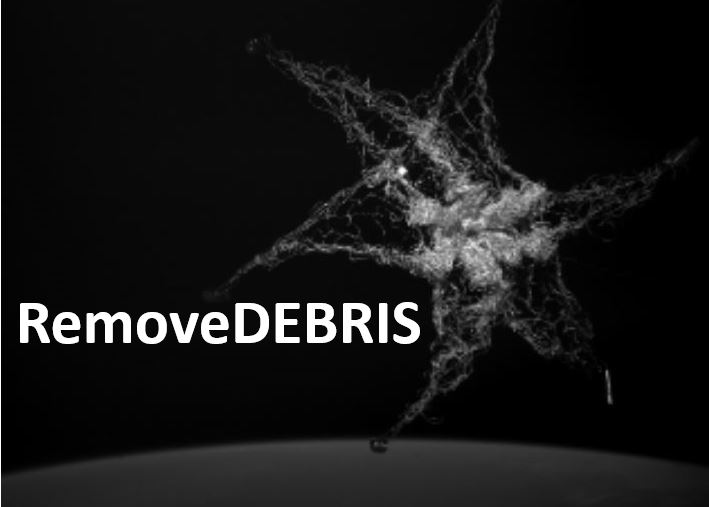
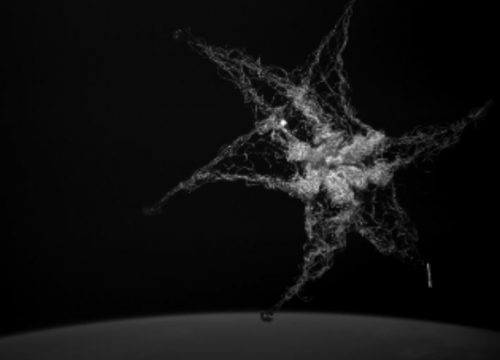
The RemoveDEBRIS satellite has used its on-board net technology in orbit successfully. It began the experimental phase of its mission on 16th Sepember. This is the world’s first ever demonstration of active debris removal technology.
RemoveDEBRIS took many years to complete
Professor Guglielmo S. Aglietti, Surrey Space Centre Director, said:
“We are absolutely delighted with the outcome of the net technology. While it might sound like a simple idea, the complexity of using a net in space to capture a piece of debris took many years of planning, engineering, and coordination between the Surrey Space Centre, Airbus and our partners – but there is more work to be done. These are very exciting times for us all.”
Ingo Retat, who heads the Airbus RemoveDEBRIS project team, said:
“To develop this net technology to capture space debris we spent 6 years testing in parabolic flights, in special drop towers and also thermal vacuum chambers.”
“Our small team of engineers and technicians have done an amazing job moving us one step closer to clearing up low Earth orbit.”
Testing new ADR technologies
RemoveDEBRIS will test more ADR technologies in the coming months. ADR stands for Active Debris Removal. It will test, for example, a vision-based navigation system that uses LiDaR technology and cameras to analyze and observe potential pieces of space junk.
The spacecraft will also test the first orbiting harpoon capture technology and a drag-sail that will finally bring the spacecraft back to Earth’s atmosphere.
When RemoveDEBRIS hits Earth’s atmosphere, it will be destroyed, and the mission effectively will come to a close.
Lots of junk orbiting Earth
The US Space Surveillance Network tracks approximately forty-thousand objects. It has been tracking objects for over sixty years.
Experts estimate that there are over 7,600 tonnes of space junk in and around Earth’s orbit. Some pieces of space debris are approaching speeds of 30,000 miles per hour (48,280 km/h).
The following entities make up the RemoveDEBRIS consortium:
– Surrey Space Centre (UK) – Mission and consortium coordination.
– ArianeGroup (France) – Satellite system engineering.
– SSTL (UK) – Platform, avionics and spacecraft operations.
– Airbus (UK)- Harpoon.
– Airbus (Germany) – Net.
– CSEM (Switzerland)/ INRIA/ Airbus (France) – Vision-based navigation.
– Innovative Solutions in Space (Netherlands) – CubeSat dispensers.
– Surrey Space Centre (UK)/ Stellenbosch University (South Africa) – Target CubeSats.
– Surrey Space Centre (UK) – Dragsail.
A consortium is an alliance of organizations, companies, individuals, and other entities that get together to achieve a common objective.
Video – The RemoveDebris Mission
This video, from the Surrey Space Centre, talks about the RemoveDEBRIS mission. It aims to be at the forefront of capture technologies in space.
