
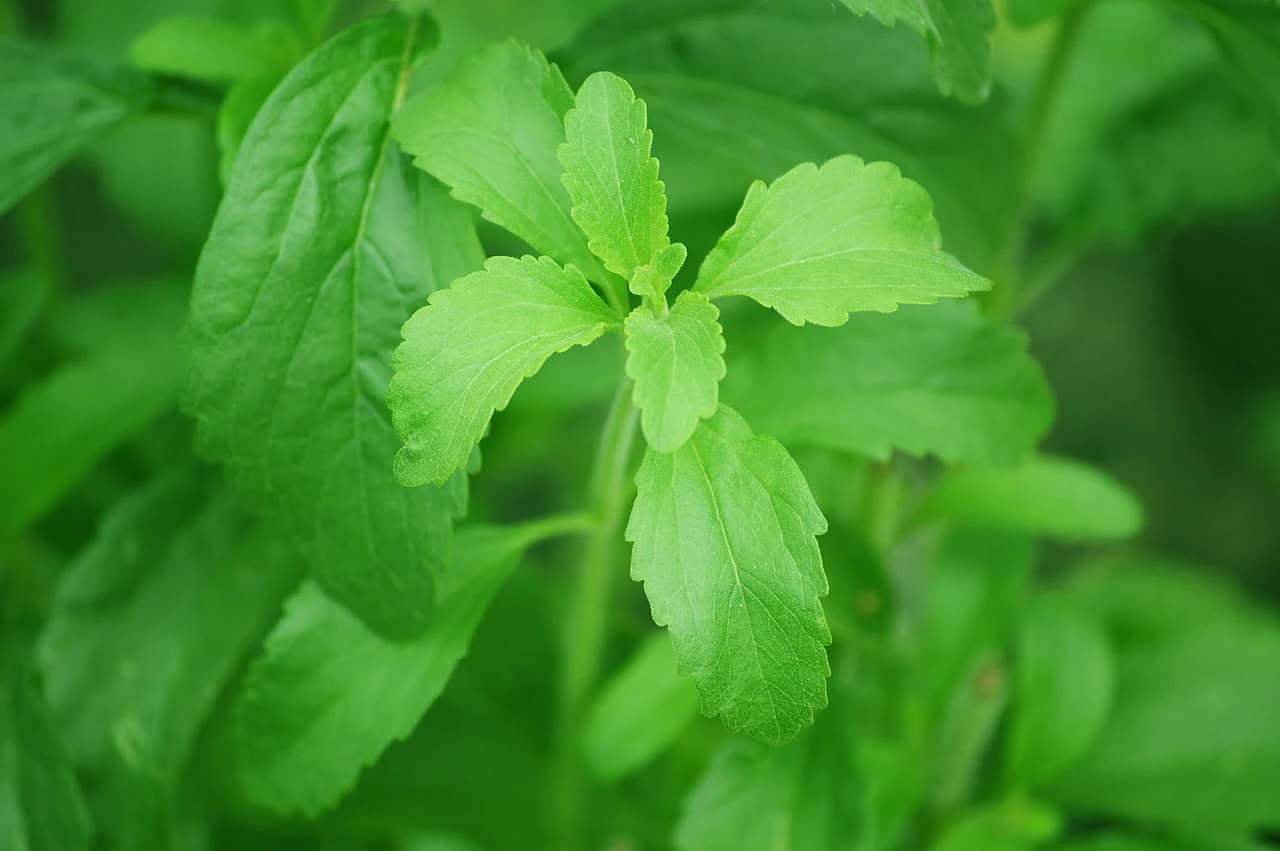
Stevia’s flavor is shaped by genes in the leaves’ cell-specific activity, say researchers from the University of Toyama in Japan. They published details of their study in the academic journal New Phytologist on May 14, 2026.
Stevia is a widely-used natural sweetener, a substitute for sugar, which comes from the leaves of the Stevia rebaudiana plant. It is today one of the most popular sweeteners globally.
The plant contains steviol glycosides, which are natural compounds that are extremely sweet but have very few or no calories.
What is stevia?
Stevia is a popular sweetener worldwide. However, not all varieties taste the same. Some have a cleaner and more sugar-like taste than others.
Variations in specific glycosyltransferase genes, as well as their cell-specific activity within leaves, are generally linked to stevia’s sweetness.
In a new study, Professor Tsubasa Shoji and colleagues combined genetic analysis with cell-level imaging. They discovered how stevia produces its high-value sweet compounds. They have opened the door to food and drink sweeteners that have a better taste.
The stevia plant’s steviol glycosides (natural sweet compounds) are up to three-hundred times sweeter than regular sugar. Each plant variety has its own taste; some we like for their clean, sugar-like flavor, and some we don’t due to their bitter aftertaste.
According to Professor Shoji, researchers had long known that the premium sweet molecules derived from stevia, such as Rebaudioside D and M, are more desirable. However, what controls their production was unclear. This latest study suggests that stevia’s intensity of sweetness and quality of taste is determined by specific genes within the plant’s leaves—it is not a matter of chance.
The study
The research team began by creating a high-quality reference genome, which gave them a complete map of stevia’s DNA. This enabled the scientists to identify the genes that were involved in the production of sweet compounds.
Then, they used single-nucleus RNA sequencing and other advanced techniques to analyze the activity of the genes in individual cells. They mapped the distribution of the relevant chemical compounds within the leaf tissues using imaging mass spectrometry.
Professor Shoji said:
“We identified a group of UGT76G glycosyltransferase genes that play a key role in enhancing the sweetness. These enzymes attach glucose molecules to steviol glycosides in the leaf, influencing the balance of compounds associated with sweeter and cleaner taste profiles.”
The researchers also found that UGT76G was only active in a specific group of cells inside the leaf, particularly in the inner photosynthetic tissue (mesophyll) and the outer protective cells (epidermal cells). Cell-type-specific activity could be one reason why compounds such as Rebaudioside D and M, that is, the desirable ones, are produced in limited amounts.
The study authors explained that small genetic differences, which we call haplotypes, may help explain the differences in how sweetness-related genes function across stevia varieties.
Professor Shoji concluded that stevia’s taste depends both on its genes and on where those genes are expressed in the plant.
Industry implications
The food and drink industries will be interested in this study’s findings and future related R&D. If scientists can now identify the “taste genes”, we should soon be able to develop next-generation stevia varieties that provide the nicest-tasting and cleanest sweetness with the minimal aftertaste.
Stevia, unlike many alternatives to sugar, is a natural product. Consumers are interested in nicer-tasting natural sweeteners. Most of us are trying to minimize our consumption of sugar, and would like to do so without adding artificial chemicals to our diet.
Citation:
Shoji, T., Fukushima, A., Morinaka, H., Takagi, H., Nakashima, Y., Mori, T., Kawamura, A., Shi, D., Torii, K., Iwase, A., Takeda-Kamiya, N., Toyooka, K., Morita, H., Hirai, M.Y., Sugimoto, K., Saito, K. and Hirai, T. (2026), Multi-omics dissection of steviol glycoside synthesis reveals haplotype-linked specialization of UGT76G genes in Stevia rebaudiana. New Phytol. https://doi.org/10.1111/nph.71191
