

The gap between the UK’s best- and worst-performing cities has widened dramatically over the past ten years, creating a two-tier economy of decline (mainly in the North) and dynamism (mainly in the South), says the Centre for Cities’ report “2015 Cities Outlook.“
The authors report that for every twelve net new jobs created between 2004 and 2013 in the South of England, just one was created in cities across the rest of the UK.
The report urges whoever wins May’s general election to make sure their visions for growing cities are based on considerable devolution of both fiscal and structural power, providing inducements for cities to promote economic growth, and giving greater flexibility to make sure funds are channeled to where they are most needed.
Cities Outlook looks at the economic performance of the UK’s 64 largest cities. This year’s report shows how cities have fared over a ten-year period, through years of boom and bust, during which three parties – Labour, Conservatives and Liberal Democrats – have held power.
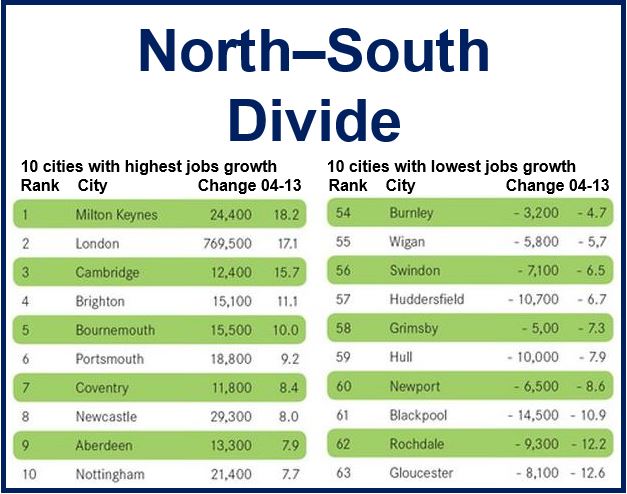
Source: “2015 Cities Outlook,” Centre for Cities.
It shows that GDP (gross domestic product) growth between 2004 and 2013 was mainly driven by a handful of cities, nearly all of them in the South of England.
These cities’ populations have boomed, their number of businesses have soared, and thousands of new jobs have been created. In other cities during the same period, however, young and skilled workers have moved out, there has been a serious lack of business growth, job prospects have dwindled, and their economies have shrunk.
Between 2004 and 2013, the number of jobs in London rose 17.1, but declined by more than 10% in Rochdale, Blackpool and Gloucester. Milton Keynes saw its population rise by 16.5%, while that of Sunderland shrank by 1.4%.
The number of net additional businesses rose 29% in Swindon, but fell by 5.5% in Grimsby.
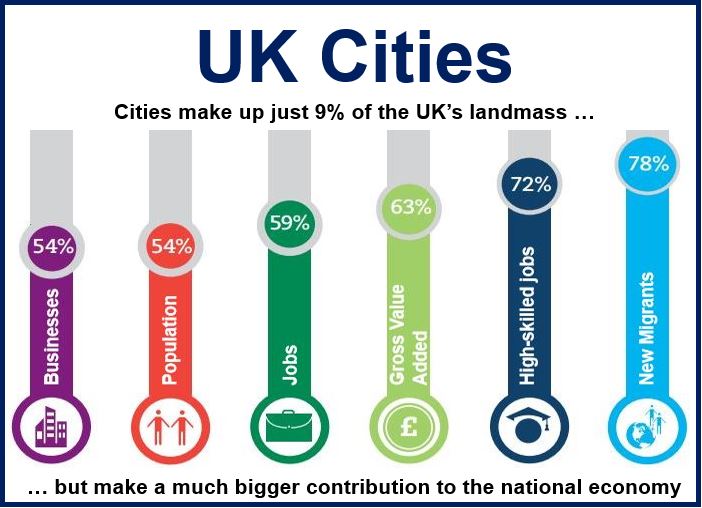
Source: “2015 Cities Outlook,” Centre for Cities.
Even the thriving cities in the South are facing a new threat to their further progress – the dramatic rise in housing prices, which their leaders are unable to address in a decisive and targeted way, the authors say.
According to the report, the UK is the most centralized country among the advanced economies. Successive Governments’ efforts to address this changing landscape have failed to rebalance the national economy.
The authors say policy interventions and funding have been consistently too small, badly prepared, complicated and costly for cities to implement.
The global financial crisis and the Great Recession that followed it, the shift to knowledge-intensive businesses, and the increasing integration of technologies in workplaces, have helped some cities, such as Cambridge, London and Brighton reach new heights of prosperity, while others have been left with a weaker business base from which to create jobs and drive growth.
Centre for Cities’ Acting Chief Executive, Andrew Carter, said:
“Five months out from the Election, this report makes the strongest economic case yet for the next Government to step up to the challenge of investing in the long-term success of our cities, and build a brighter future in which more people and places can contribute to, and share in, prosperity and growth.”
An Oxfam study reported that the richest 1% in the world are set to own more wealth than everybody else on the planet combined.
