
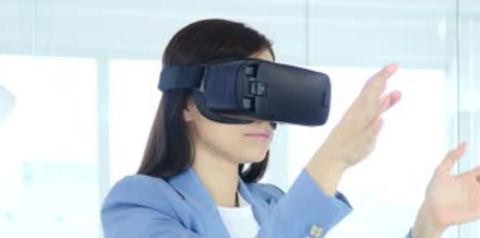
Virtual and augmented reality is expected to have potential applications in several business sectors as technologies leap forward. Economists at TUM carried out a study on the potential applications of virtual and augmented reality. TUM stands for TUM – Technische Universität München (Technical University of Munich).
Their study showed that seven different sectors of the economy will face drastic disruption due to virtual and augmented reality. They will impact current products, production process, and business models.
The retail, real estate, and manufacturing sectors are among the seven that the researchers believe will face drastic disruption.
New technologies, when they are integrated into a wide range of applications, rather than merely generating single products, can revolutionize whole industries.
Virtual and augmented reality are technologies that have the potential to revolutionize entire industries.
What is virtual and augmented reality?
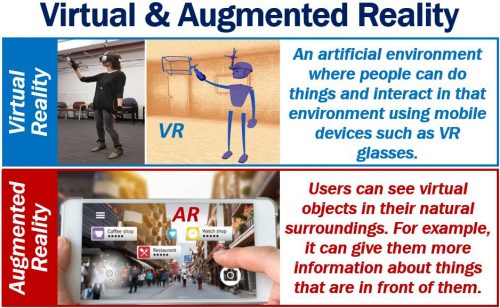
Virtual reality technology or VR creates a virtual environment. People can interact in those environments using mobile devices such as VR glasses.
Augmented reality technology or AR presents us with virtual objects in their natural environment. VR glasses, for example, might display information about something in the user’s field of vision.
Prof. Thomas Hutzschenreuter and his team at the Chair of Strategic and International Management at TUM set out to determine what charges are in store for businesses that are not involved in developing virtual and augmented reality.
The researchers evaluated current VR and AR research. They also analyzed startups and interviewed experts. They then estimated when these technologies would emerge and increase, and also in which sectors.
Virtual and augmented reality – disruption after 2020
The researchers forecast that of the 41 industries they studied, VR and AR developments will cause radical changes in seven of them. The changes will occur between 2020 and 2040.
Below is a list of the seven sectors and what the researchers believe will happen to them:
Manufacturing
Manufacturing companies will be able to reduce costs and boost productivity thanks to virtual and augmented reality. The product development process will be transformed by the application of virtual models.
Production workers will see hints, instructions, and other data displayed in their field of vision. Teams in different locations will work together interacting in virtual environments.
Automotive workshops
Tasks have become increasingly complex in automotive workshops with the growing sophistication and differentiation of cars today.
VR and VA technologies will make tasks easier for people who work in this sector. There will be augmented manuals that display step-by-step instructions for repairing a wide range of vehicles in the service bay.
Retail
Online sales still play a very minor role in total retail sales. Virtual and augmented reality will bring about “a massive transformation,” the researchers predict. The word ‘online,’ in this context, means ‘with an Internet connection.’
In the furniture business, for example, customers will create visualizations of furniture from the comfort of their living rooms. When they are happy with what they have created, they will then place their order online.
Segments that are already selling online will be able to reduce costs. There will be fewer returns of fashion items (clothing) because customers will be able to ‘try on’ garments using avatars.
Communications and IT services
Social VR services will become a mass medium. Companies will offer a huge range of virtual worlds where people can meet and interact face-to-face.
A user will be able to meet with others in, for example, a virtual cafe. Other options will include games, vacation destinations, and dating services. This transformation will bring disruption to several sectors.
Music industry
Virtual and augmented technology will have a huge impact on the music industry.
Pop fans and other music lovers will be able to choose where they want to sit in a concert hall, stadium, or festival venue. They may even have the option of being on stage.
Demand for real-life concert tickets will probably decline.
Education
The researchers forecast an increase in the market share for universities offering online degree courses. Virtual reality classrooms will make it more attractive to study at home. There will be better interactions between students and teachers.
The term ‘market share’ refers to how big your slice of the total market pie is. We usually calculate market share in percentage terms.
The technological advances in virtual and augmented reality will open the doors for new learning methods, and also more user-friendly learning materials.
Businesses will have to find strategic partners
Prof. Hutzschenreuter said:
“Virtual and augmented reality are disruptive technologies: They will relentlessly and rapidly eliminate existing products, business models, and production processes. This process will be moving full speed ahead in just a few years.”
“To remain competitive, companies in the industries we have identified will have to develop new strategies. Most of them will need to find partners because they lack the necessary expertise in virtual and augmented reality. Those that succeed will have excellent chances of achieving growth by boosting productivity while lowering their costs.”
