
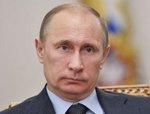
New Year holidays for government workers, which traditionally last from January 1 to 12, have been cancelled this year, Russian President Vladimir Putin announced on Thursday.
The almost two-week long vacation is a luxury the country cannot afford this year as it faces a crumbling currency, inflation exceeding 10%, and a severe recession coming into 2015.
Mr. Putin said in a televised government session:
“For the government, for your agencies we cannot afford this long holiday, at least this year – you know what I mean.”
The Russian economy is likely to contract by at least 3% in 2015, most economists have forecast. It will be the first time in six years that GDP has shrunk.
The ruble recovered to 52 per dollar on Friday, after plunging to 80 per dollar earlier in the month. Since the beginning of the year, its value has fallen by more than 40%.

Despite his country’s economic mess, Mr. Putin has an approval rating of over 80%.
On Thursday, the Russian Central Bank said its currency reserves declined to below $400 billion for the first time in more than five years as it desperately sold the currency to support a freefalling ruble.
Russia’s monetary authorities say their number one priority is to stabilize the ruble, which has been one of the worst performing currencies worldwide in 2014.
The Russian Central Bank recently pushed up its benchmark interest rate to 17%. It said it would offer euro and dollar loans to banks in order to assist exporters that need foreign currencies to operate.
Economic sanctions imposed by the US, EU and their allies ever since Russia annexed Crimea and allegedly sent military equipment and troops to Ukrainian separatist rebels, means many companies in Russia are locked out of Western capital markets.
New Military Doctrine
A new military doctrine signed by Mr. Putin on Friday identifies NATO as Russia’s number one military threat. It raises the possibility of a broader use of precision conventional weapons to deter aggression from abroad.
NATO insists it is not a threat to Russia, and accuses the country of undermining security in Europe.
