
Volvo Cars have announced that every new Volvo car that they launch from 2019 will have an electric motor.
It is the first big car manufacturer to say it will no longer be making cars that run only on internal combustion engines – the majority of which use petrol and diesel.
Volvo Cars intend to have sold 1 million electrified cars by 2025.
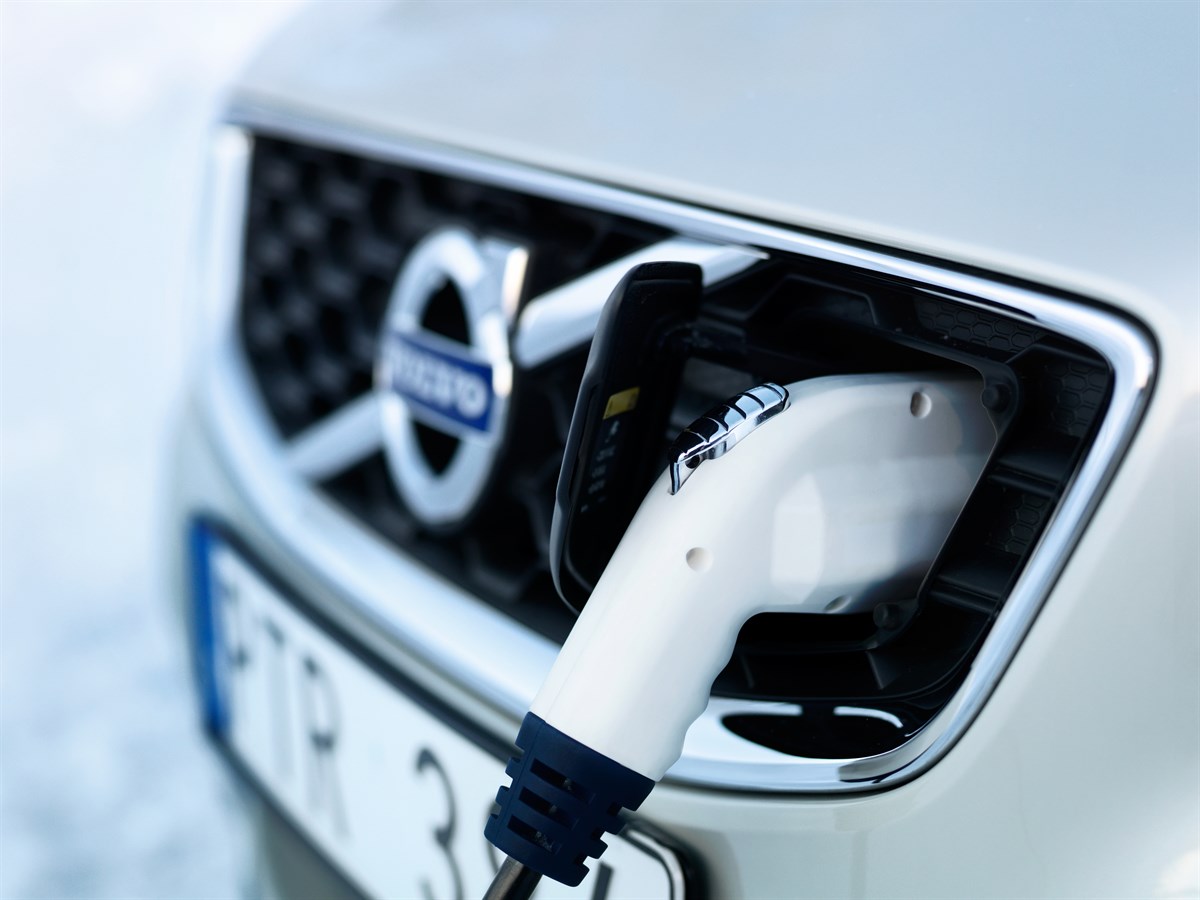
Image: charging the Volvo C30 electric car
Håkan Samuelsson, president and chief executive of the Chinese-owned Swedish firm, says that the announcement “marks the end of the solely combustion engine-powered car.”
He says that the reason for the bold move is customer demand – more and more are asking for electric-powered vehicles.
From part to fully electric
Across all of Volvo’s models, cars launched from 2019 onwards will range from mild hybrids to plug-in hybrids to fully electric vehicles.
Mild hybrids are cars that run on internal combustion engines supported by batteries to achieve greater fuel efficiency. They cannot run very far in electric-only mode.
Plug-in hybrids can run for significant distances without using the internal combustion engine. The best makes in the current generation are typically capable of 20 to 30 miles in electric-only mode.
A fully electric vehicle has no internal combustion engine at all. It runs only on electricity stored in its batteries.
Five new fully electric models in pipeline
At present, Volvo Cars do not have a model that is fully electric. They plan to introduce five fully electric vehicles between 2019 and 2021.
Three of the fully electric cars will be Volvo models, and the other two will be high performance models from the company’s performance brand Polestar.
All five models will also come with a range of plug-in and mild hybrid versions. Volvo say that this will be one of the “broadest electrified car offerings of any car maker.”
Last year, Volvo Cars sold a record number of 534,332 cars in around 100 countries worldwide, an increase of 6.2 percent on 2015.
The company, which started in 1927, remained part of the Swedish Volvo Group until it was bought by Ford of the United States in 1999. Ford later sold it to the Chinese multinational car maker Geely Holding in 2010.
Volvo Cars have previously stated that they plan to have sold 1 million electrified cars by 2025.
“When we said it we meant it,” declares Samuelsson: “This is how we are going to do it.”
