

Waitrose was by far top UK supermarket for own brand products in 2015, followed by Aldi, Sainsbury’s and M&S, says Which?, Britain’s Consumer Association. Tesco, Asda and Iceland products came bottom of the table, while Morrisons slipped badly from top spot in 2014.
Forty-seven percent of products tested from Waitrose were worthy of its Best Buy award in 2015, 40% in Aldi, 37% in Sainsbury’s and 36% in M&S.
More than 160 supermarket own brand goods were tested in 2015, including cleaning products, sunscreens and batteries – to advise consumers which ones to leave on the shelf.
 If you want to save money and get quality from a supermarket’s own brands, Waitrose is definitely the place to shop, and clearly not Iceland. (Image: staticwhich.co.uk)
Many branded products cost twice as much as the supermarket versions, so knowing which supermarket’s own brands are good value is useful if you want to save money and still get quality goods.
Waitrose and Aldi fared well
Waitrose and Aldi gained Best Buys for their own brand drinks in 2015. Waitrose also came top for food, while Aldi topped the table in cleaning product tests.
Both M&S and Sainsbury’s had at least one third of their products tested last year named as Best Buys. Lidl and Sainsbury’s were the only supermarkets awarded Best Buys for household products, drink and food.
While Morrisons came top in 2014, last year was a bit of a disappointment, with just 20% of its tested products rated Best Buys.
Asda and Tesco come badly, gaining one Best Buy each from 20 and 19 products tested respectively last year.
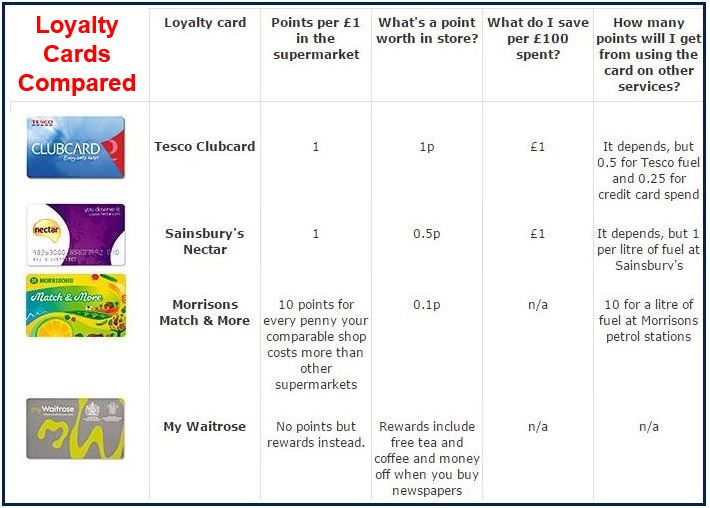 Do not use your loyalty card to decide where to shop, but bring it with you when you shop – that is the advice from Which? (Image: which.co.uk)
Are loyalty cards worth it?
Which? says it is not worth changing where you shop just because you have a loyalty card. Shoppers commonly get £1 or 50p back for every £100 they spend, which is easily cancelled out by the retailer selling its products for marginally more in the first place.
However, for the supermarket you use, the loyalty card is worth having.
“If you simply take the money off your supermarket shop, it’s better than nothing. But you’ll make bigger savings if you use your loyalty card for vouchers that can be spent on meals out, for example.”
