
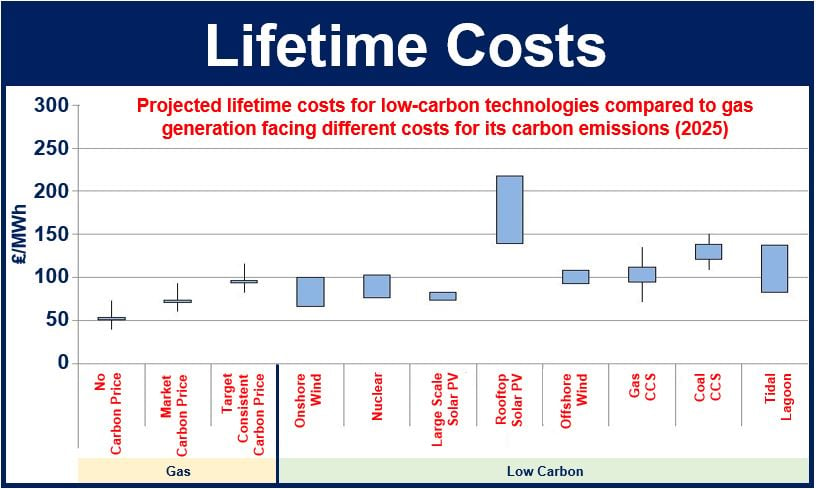
Generating power from solar and onshore wind farms will probably become competitive with gas-fired power generation by 2020, if gas pays what it should through a carbon price, says the Committee on Climate Change, an independent body that advises the British and devolved Governments on tackling and preparing for climate change.
Investors need to focus on all low-carbon sectors involved in energy production over the next few years if we are to meet these expectations, and the government must introduce policy to encourage investment, said Committee Chief Executive, Matthew Bell.
The Committee concluded that new low-carbon electricity generation is a cost-effective way forward for British energy sector investment in 2020 and beyond.
In the Committee’s new report – ‘Power Sector Scenarios for the Fifth Carbon Budget’ – it lays out a range of future options to minimize Britain’s emissions from electricity in 2030.
The Committee’s findings
Assessing Britain’s obligations under the Climate Change Act, as well as the requirement to ensure competitiveness, affordability and security of the nation’s power supply, the Committee finds that:
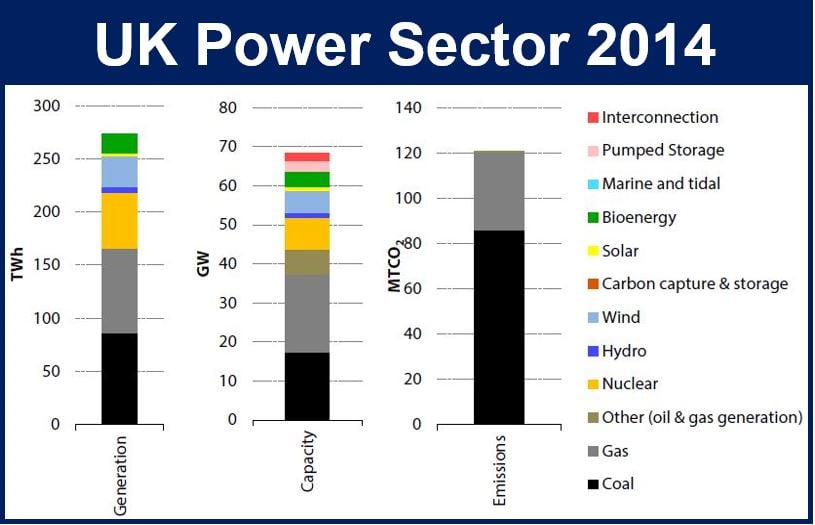
- Most investments to 2020 are already committed. They will reduce power sector carbon intensity by approximately 450 gCO2/kWh (grams of CO2-equivalent per kilowatt-hour) now to about 200-250 gCO2/kWh. Households today are paying about £45 annually on their electricity bill to support this investment – this will increase to approximately £105 by the end of the decade (to a total bill of c. £500).
- Power generation will need new investment in the 2020s to replace retiring nuclear and coal power, and to meet increasing energy demand.
- A number of low-carbon sources will likely become cost competitive with new gas-fired generation facing a carbon price in the 2020s. Onshore wind and solar power are already at that stage. Less mature options, like offshore wind and carbon capture storage will need continued investment and support into the next decade if they are to reach maturity. They both represent good-value investments for a nation committed to climate targets.
- Power emissions of below 100 gCO2/kWh are achievable and feasible by 2030, the Committee believes. “The range of scenarios examined suggest that power sector emissions towards the upper end of the carbon intensity range of 50-100 gCO2/kWh, previously identified as being suitable for 2030, are appropriate. Emissions would be around 55 MtCO2 lower than if investment in the 2020s was focused solely on gas-fired generation,” the Committee wrote.
- There will be extra costs on bills from low-carbon investment in the next decade. The impact on yearly household bills for supporting investments in low-carbon electricity generation will increase from about £105 in 2020 to about £120 (peak) in 2030.
- Increasing system flexibility will be crucial to ensure security of electricity supply at lowest cost. Developing a more flexible electricity system with responsive demand, interconnection with other markets and greater electricity storage will enhance security of supply, decrease emissions, and lower costs.
Government must clarify direction of future energy policy
Lord Deben, Chair of the Committee on Climate Change, stated:
“The 2020s are crucial in setting the direction for UK power generation, and to ensure the UK can meet its 2050 climate change commitments cost-effectively. The key tools are already in place to deliver the investment in low-carbon generation that is required.”
“The Government must now urgently clarify the direction of future policy to ensure the power sector can decarbonise at lowest cost to businesses and households.”
Citation: “Power sector scenarios for the fifth carbon budget,” Committee on Climate Change. October 2015. (PDF)
