

Bankers are not inherently dishonest, they are not born that way. However, they work in a culture than encourages them to behave dishonestly, says a new report from the University of Zurich and published in the prestigious journal Nature.
Over the past few years there has been a steep increase in the number of fraud cases coming to light in the banking industry, which have significantly undermined the image of the whole sector.
The researchers, Michel Maréchal, Ernst Fehr, and Alain Cohn, wanted to determine whether the banking sector favors dishonest behavior, or whether bank employees by nature tend to be less honest anyway.
Their study results demonstrated that in principle, people who work in banks are no more dishonest than their peers in other industries.
The researchers did find, however, that the banking sector’s business culture “implicitly favors dishonest behavior”. They suggest that the implementation of an ethical business culture is vital if the banking industry is serious about restoring trust.
The team recruited 128 employees of large international banks and 80 from other banks. Each participant was randomly selected to one of two experimental conditions. In the experimental group, they were reminded of their occupational role and related behavioral norms with a set of appropriate questions.
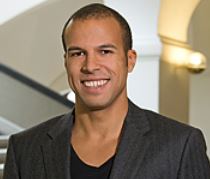
Bankers are not born more or less dishonest than other people, says Michel Maréchal.
In the control group, on the other hand, they were reminded of their non-occupational role in their free time and related norms. The control group, in all experiments or trials, is the one that carries on as normal – it receives no intervention.
Then, they were all asked to complete a task that would allow them to raise their income by up to $200, but only if they became involved in dishonest activity.
The study showed that those in the experimental group, where they were reminded to behave like bankers, dishonesty was significantly more prevalent.
The team then carried out another very similar study involving non-banking employees. The researchers found that those in other industries did not behave more dishonestly when reminded of their occupational role.
Michel Maréchal, a Professor for Experimental Economic Research, said:
“Our results suggest that the social norms in the banking sector tend to be more lenient towards dishonest behavior and thus contribute to the reputational loss in the industry.”
Bankers should take an oath
Public trust in bank employees’ behavior is crucial for the long-term stability of the whole financial sector, the authors emphasized.
Alain Cohn urges banks to take concrete action to address the problem.
Mr. Cohn said:
“The banks could encourage honest behavior by changing the industry’s implicit social norms. Several experts and supervisory authorities suggest, for example, that bank employees should take a professional oath, similar to the Hippocratic Oath for physicians.”
The oath should be backed up with a training program in * ethics and appropriate financial incentives, the authors wrote. They believe “this could lead bank employees to focus more strongly on the long-term, social effects of their behavior instead of concentrating on their own, short-term gains.”
* Ethics refers to the moral principles that govern how human beings conduct themselves at work and in their everyday lives.
“Business culture and dishonesty in the banking industry,” – Alain Cohn, Ernst Fehr & Michel André Maréchal, Nature (2014), doi:10.1038/nature13977. Published November 19, 2014.
Video – Banking and Greed, According to Science
