
Heavy rain and snow temporarily interrupted copper operations in Chile. Mining companies that operate in the region have provided updates that suggest the immediate effect may be limited, but the storm shows how closely AI growth depends on mines, power systems and transport links.
AI runs on chips, software, electricity and copper. Copper distributes power inside data centres and is used in electrical equipment and some cooling systems. It also forms part of the wider power network needed to keep those facilities running.
Before copper reaches a data centre, it must be mined and processed. The US Geological Survey describes a chain that begins with mining and concentrating ore, followed by smelting and refining.
A disruption near the beginning of that chain can eventually affect businesses far beyond the mining industry.
What happened at the Chilean mines
A severe winter weather system brought heavy rain, flooding, snow and power cuts to parts of Chile.
At least 13 people had been reported dead in the wider emergency by July 22, according to Chilean authorities cited by Reuters. The disruption to mining was one part of a much larger disaster.
In a July 21 operational update, Lundin Mining said heavy rain had affected mining at its Candelaria complex in the Atacama Region.
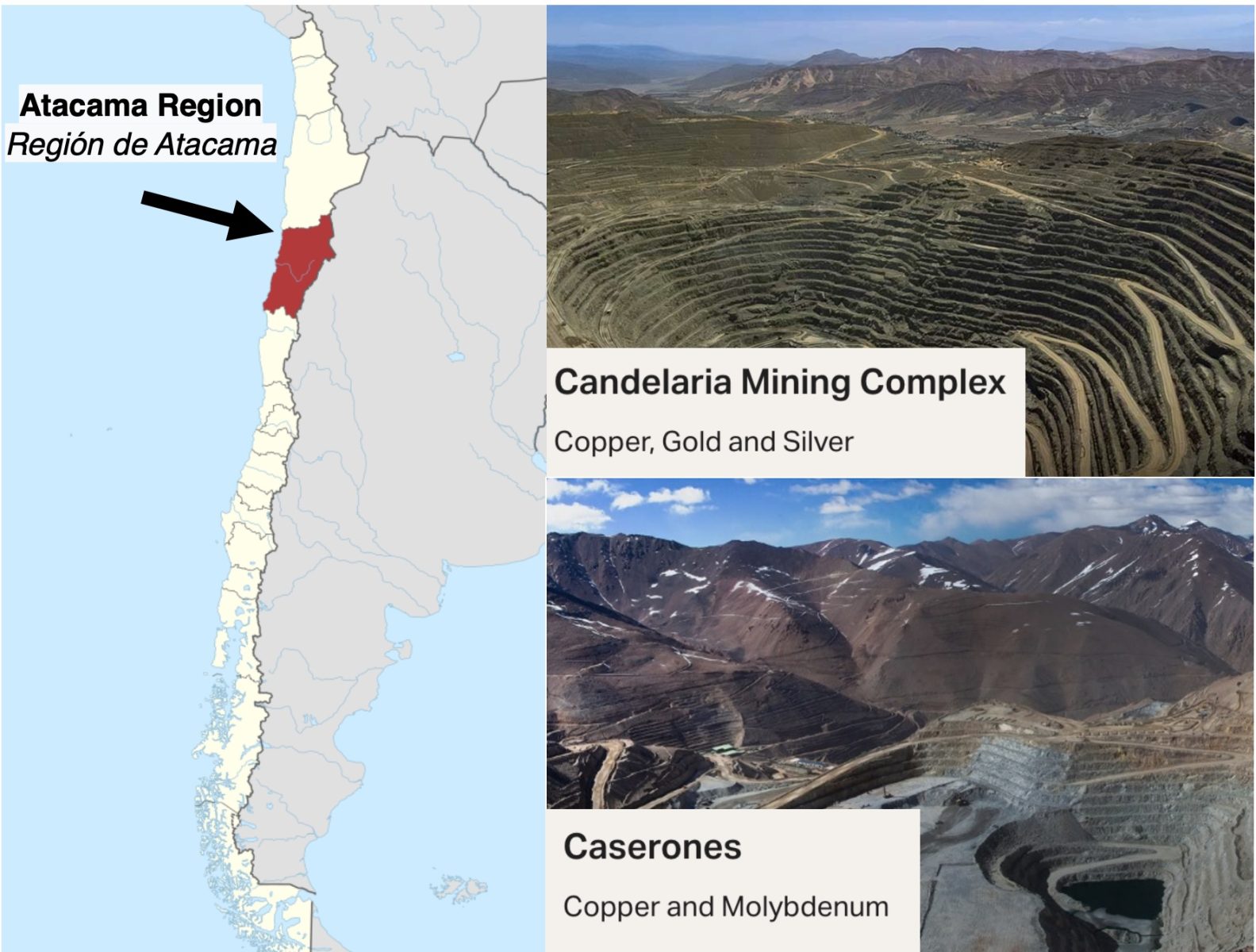
The mill continued operating by processing ore that had already been stockpiled at the site.
Conditions were more difficult at Caserones, another Lundin copper operation in the region. The company suspended work there on July 18 after heavy snow limited access and disrupted the site’s electricity supply.
Backup generators were used to support critical work. As of Lundin’s July 21 statement, Caserones remained temporarily suspended while the company waited for access and power to improve.
Lundin kept its full-year production forecast unchanged and said it remained on track to meet its targets.
Antofagasta also temporarily stopped mining and processing at Los Pelambres after intense rain and intermittent power outages. In its July 24 update, the company said the operation had restarted on July 23.
Antofagasta reported no material damage to important equipment or infrastructure and also kept its annual production forecast unchanged.
The available company updates point to a temporary production problem. They do not provide evidence of an immediate global copper shortage.
“There has been no material impact to equipment or key infrastructure. This includes the El Mauro tailings dam, which has a series of surge ponds downstream of the dam that form part of the overall water management system currently in use and includes the controlled discharge of excess rainwater,” Antofagasta said in a news release.
Why disruptions in Chile attract attention
Chile is the world’s largest producer of mined copper.
That means almost one in every four tonnes of newly mined copper comes from Chile.
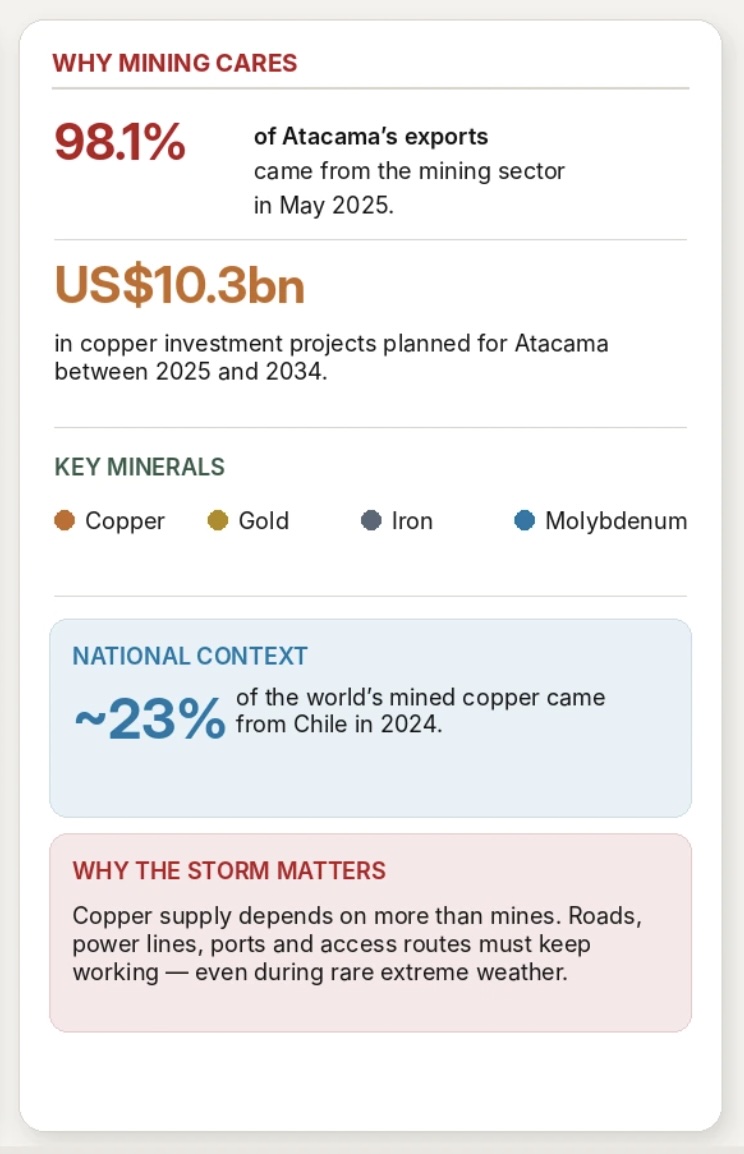
A short shutdown at a few sites does not remove a quarter of the world’s supply. Chile’s mines cover a large area, and each operation faced different conditions during the storm.
However, the country’s importance means that snow, flooding, blocked roads or power cuts at major Chilean mines are closely watched by manufacturers, commodity traders and investors.
How AI creates demand for copper
The connection between AI and copper begins with electricity.
Data centres used approximately 415 terawatt-hours of electricity worldwide in 2024, according to the International Energy Agency. That was around 1.5% of global electricity use.
The IEA expects data-centre electricity consumption to more than double to around 945 terawatt-hours by 2030, with AI providing the largest source of growth.
Supplying that electricity requires more than servers. Data centres need internal power systems, cooling equipment, backup systems and connections to the wider grid.
The US Geological Survey says electrical uses, including power generation, transmission, wiring, telecommunications and electronics, account for about three quarters of total copper use.
A 2026 study from S&P Global estimates that copper demand connected to data centres could rise from 1.1 million tonnes in 2025 to 2.5 million tonnes a year by 2040.
The estimate covers copper used inside data centres as well as related power delivery and grid connections.
S&P Global also provided a possible range of between 1.7 million and 2.7 million tonnes in 2040. The wide range reflects uncertainty about how quickly AI develops, how many data centres are built and whether other materials replace copper in some uses.
The figures are forecasts rather than guaranteed outcomes. They still show why the technology industry is becoming more exposed to the copper market.
New copper supply takes years to develop
Demand for computing power can increase quickly. Copper production is harder to expand at the same speed.
The IEA says a new copper project takes around 17 years to move from discovery to production.
Mining companies must find a suitable deposit, study it, obtain permits, arrange financing and build the mine and its supporting infrastructure.
In its 2026 critical minerals outlook, the IEA estimated that currently planned projects could still leave a copper supply gap of approximately 25% in 2035.
That forecast can change. New projects, recycling, slower demand growth and the replacement of copper with other materials could reduce the gap.
The long development period still makes the market sensitive to problems at mines that are already operating.
Stockpiles and backup power can limit the damage
The company updates also show how mines prepare for short interruptions.
Candelaria kept its mill running with stockpiled ore even though rain affected mining. Caserones used backup generators for critical work. Los Pelambres carried out an orderly shutdown and restarted after conditions improved.
These measures cannot prevent every production loss, but they can stop a short weather event from becoming a much larger operational problem.
For investors, the most useful details are the length of the shutdown, whether equipment was damaged, whether access and electricity have been restored, and whether the company has changed its annual production forecast.
In this case, Los Pelambres restarted within days, while both Antofagasta and Lundin maintained their full-year forecasts. That suggests the immediate production effect may remain limited, based on the information released so far.
The longer-term risk comes from the combination of rising demand, concentrated production and the time needed to develop new mines.
No immediate copper shortage has been established by the Chilean disruption. The episode still shows how long and physical the AI supply chain really is.
It reaches through substations, cables, refineries and mines.
