

The UK government have named 197 employers who failed to pay their workers the national minimum wage. The list is the longest published since the new “name and shame” scheme started in October 2013.
Between them, the firms owed their employees £465,291, in arrears. The offenders include football clubs, care homes, hairdressers, and hotels.
The top three employers who failed to pay were: the high-end London restaurant San Lorenzo (they were found to owe just under £100,000 to 30 workers); Premier Recruitment Ltd, Derby (£35,000 to 424 workers); and the hairdresser chain Regis UK Ltd, Coventry (£26,000 to 604 workers).
 The UK government have published the names of nearly 200 employers who failed to pay their workers the national minimum wage.
All the employers named in the list were thoroughly investigated by HM Revenue and Customs (HMRC). The government say all the money owed has now been paid to the workers.
Employers who pay their workers less than the minimum wage not only have to pay back the shortfall – at current minimum wage rates – but also face financial penalties of up to £20,000 per worker.
In the most serious cases, employers who fail to comply may also face prosecution.
Since the modified scheme was introduced in October 2013, a total of 687 employers who failed to pay their employees the minimum wage have been “named and shamed,” and found to owe their workers over £3.5 million between them.
‘Not acceptable’ that some employers fail to comply
Business Minister Margot James says:
“It is not acceptable that some employers fail to pay at least the minimum wage their workers are entitled to. So we’ll continue to crack down on those who ignore the law, including by naming and shaming them.”
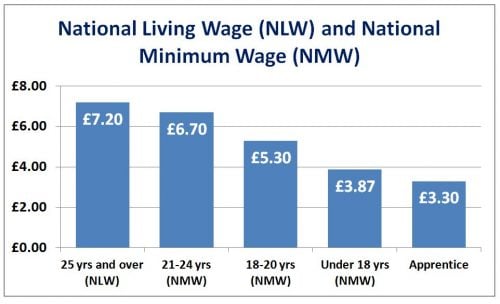 The national living wage – made law on 1 April 2016 and currently £7.20 per hour – is for all working people aged 25 and over. The national minimum wage still applies for those under the age of 25.
The government say it is an employer’s responsibility to make sure all their eligible workers are paid at least the minimum rate they are entitled to and to know which rates apply to which workers.
The UK national living wage for employees aged 25 and over came into force on 1 April this year. This effectively gave eligible full-time workers who were on the national minimum wage a pay rise of over £900 a year.
Workers under the age of 25 are still entitled to the national minimum wage.
Advice and guidance
Employers can get guidance on how to implement the national living wage and the national minimum wage from Acas (Advisory, Conciliation and Arbitration Service). Experts from Acas can visit employers and help them understand their obligations surrounding pay and contracts.
A non-departmental public body of the UK government, Acas provide free and impartial information and advice to employers and employees on all aspects of employment law and workplace relations.
They also offer training courses on the fundamentals of employing people and how to set up employment contracts.
In the following video – aimed at employers and employees – Stewart Gee, Head of Information and Guidance at Acas, explains the national living wage and the national minimum wage. He also highlights some of the issues to bear in mind when implementing them.
