
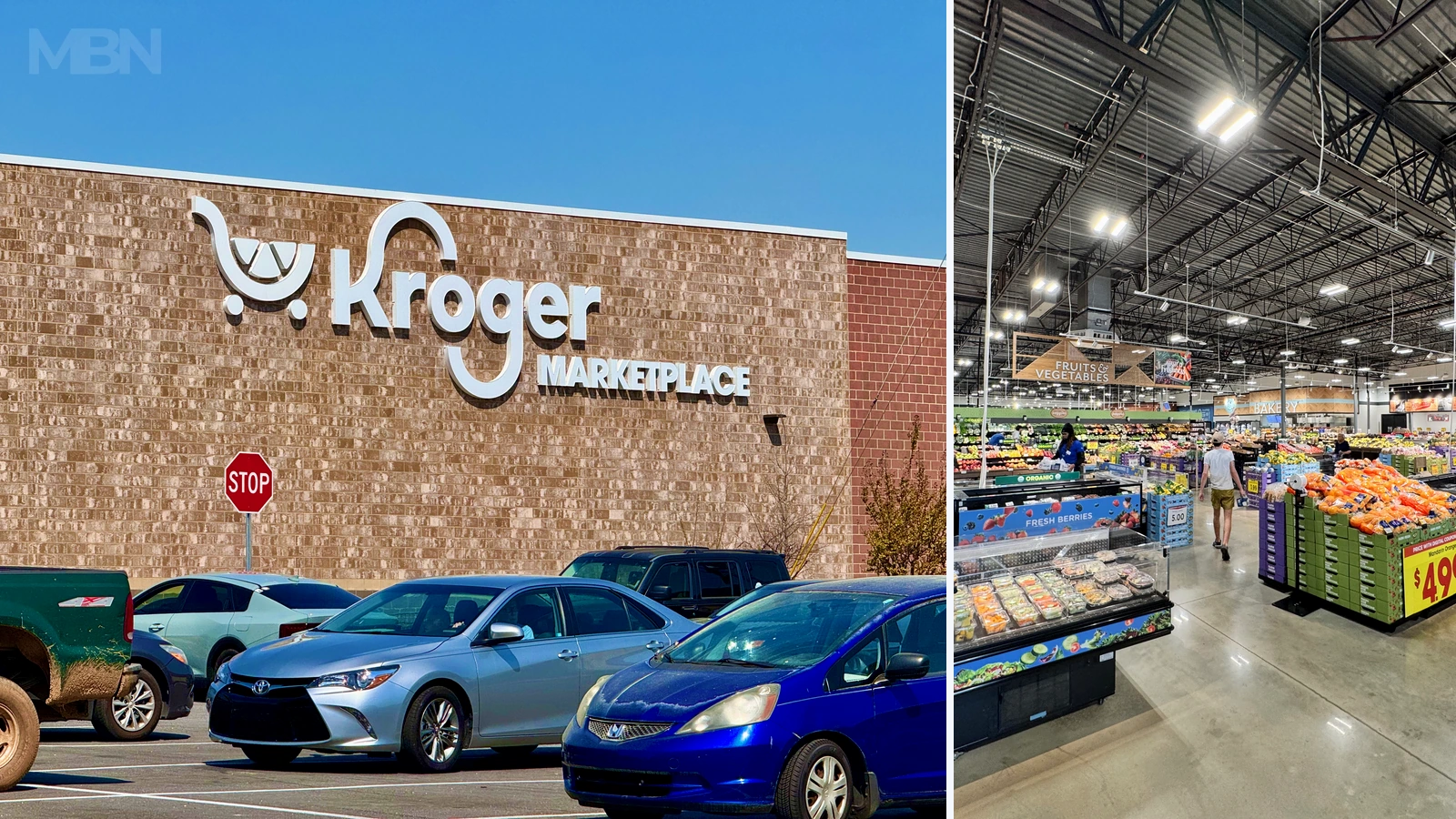
Kroger lowered its annual sales-growth forecast on September 11 while keeping its adjusted earnings target, showing how better profitability in parts of its business is helping offset weaker sales momentum.
The US grocer now expects identical sales excluding fuel to rise 0.2% to 0.8% in fiscal 2026, down from 1% to 2%. It still forecasts adjusted earnings of $5.10 to $5.30 per diluted share.
For the quarter ended August 15, Kroger reported sales of $34.6 billion, compared with $33.9 billion a year earlier. Identical sales excluding fuel increased just 0.2%.
Reported earnings per share rose to $1.05 from $0.91; adjusted earnings, which remove specified items, increased to $1.09 from $1.04. Those are different measures and should be compared on the same basis.
Why sales growth is difficult to read
Identical sales compare an established group of operations across periods. They are intended to give a clearer view of underlying trading than total revenue, which can change when a retailer opens stores, closes operations or sells businesses.
Even that comparison measures dollars spent, rather than simply the number of products customers buy. Changes in prices or in the mix of purchases can move it without an equivalent change in shopper traffic.
Reuters reported that CEO Greg Foran told analysts unit growth had slowed since the beginning of the year as customers remained under pressure. The news agency also highlighted the effect of lower negotiated prescription-drug prices on Kroger’s pharmacy revenue.
The company’s annual sales forecast includes an estimated 1.4-percentage-point drag from the Inflation Reduction Act.
Under that law, Medicare, the federal health insurance program, can negotiate prices for selected medicines. The first negotiated prices for ten drugs took effect on January 1, 2026. Lower prices can reduce the dollar value of pharmacy sales without implying that an equivalent number of customers have disappeared.
Online orders provide support
Kroger’s adjusted e-commerce sales grew 20%. That comparison excludes certain fulfillment-center exits, the sale of Vitacost and the discontinued Ship Marketplace business.
For readers assessing the result, the adjustment matters because it changes what is being compared. The figure is not a claim that every business previously counted in Kroger’s online operations grew by one-fifth.
Reuters reported that cost controls and higher-margin activities helped support the profit outlook. Foran’s priorities include simpler operations, purchasing improvements, competitive prices and faster delivery.
Delivering an online grocery order adds practical work: products must be picked, packed and transported. Sales growth alone does not reveal how much remains after those costs. The useful operating question is whether a retailer can handle more orders efficiently while keeping customers satisfied.
MBN’s coverage of what happens after customers return products explores another part of that retail calculation: a transaction can create costs well beyond the original checkout.
Kroger plans an investor update on October 20. That will give management an opportunity to explain how its operational changes can translate into stronger sales, alongside the earnings support already evident in its latest results.
