
London Mining

London Mining shares have little or no value, company says

Published: 08:33, October 8, 2014

As iron ore prices fall, London Mining plc warned on Wednesday that its stocks currently have ‘little or no value’. The news sparked panic selling which pushed the London-based company’s shares down by over 96% to lows of 12 pence. They later recovered to just 77% down.

The Ebola epidemic in Sierra Leone, where London Mining’s operations are concentrated, has introduced another significant challenge both to the strategic investor process that the firm started in May, and to the everyday operational performance of the business.

Regarding its short-term funding, London Mining said in a statement:

“While the lenders of the Company remain supportive of the process, they are not expected to provide any further short term funding which would be provided by a strategic investor if the discussions are successful. There can be no certainty at this time on the likelihood or timing of such an investment.”

London Mining, which owns the Marampa mine in Sierra Leone, is one of many smaller mining companies that emerged in West Africa during the commodities boom, when demand for iron ore was rising. The aim was to transform the region into a serious competitor to Brazil and Australia.
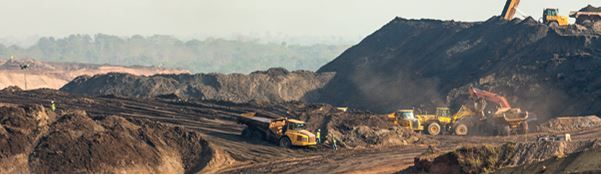
London Mining

London Mining’s Marampa mine in Sierra Leone. (Photo: London Mining)

However, with mining giants BHP Billiton and Rio Tinto extracting much cheaper ore, and pricing stubbornly staying below the $80-per-tonne mark, the smaller players have suffered.

As part of a financial rescue plan, London Mining’s larger rival African Minerals said in September that it was interested in selling a minority shareholding in its only mine.

Unless a new investor arrives soon, most investors see this as the end of the road for London Mining.

The Ebola outbreak makes it harder to move goods and workers. The epidemic will also make it much more difficult for the company to find a new investors.

Christian Nordqvist Avatar

Other News

Customer-created content was linked to brand perceptions in a survey of Pakistani shoppers

Nov 22, 2026

Shopping games can frustrate customers when rewards and rules are hard to understand

Nov 22, 2026

Text-message business training helped Kenyan entrepreneurs briefly, but gains faded

Nov 22, 2026

Food traceability labels raised stated interest, but ad test found no clear difference

Nov 22, 2026

Letting shoppers keep an item for a partial refund lifted later spending in a field experiment

Nov 22, 2026

Skincare claims that look scientific changed shopping choices in an online experiment

Nov 21, 2026

Crowded settings can make unfamiliar products less appealing in consumer experiments

Nov 21, 2026

Words that describe texture can affect online clothing choices, study finds

Nov 21, 2026

Impact measurement support helped Indian social enterprises grow in a field experiment

Nov 21, 2026

Lyft experiment found a premium ride option shifted some customers to cheaper fares

Nov 21, 2026

Online retailer improved pricing by testing how shoppers respond to rivals

Nov 21, 2026

Environmental reminders reduced return shipments in a fashion retailer experiment

Nov 21, 2026

When a discount is hard to claim, it can reduce sales of the product

Nov 20, 2026

A small step to claim a discount increased redemptions in a coffee campaign

Nov 20, 2026

Ad platforms can target likely buyers without creating the most extra sales

Nov 20, 2026

Sales contests worked better when employees competed in comparable groups

Nov 20, 2026

Social discounts encouraged existing grocery customers to buy more in an experiment

Nov 20, 2026

Free shipping and returns brought more shoppers back in a retail experiment

Nov 20, 2026

Learning about rivals’ robot use changed Italian firms’ investment plans

Nov 20, 2026

Automated lead nurturing does not improve every sales pipeline

Nov 20, 2026