
In his early 20s Nigel Farage, leader of the anti-EU party UKIP, said he was fobbed off by an NHS consultant about a swollen testicle, which later after a private consultation turned out to be testicular cancer.
Had he not resorted to private healthcare, his cancer would have continued advancing and would probably eventually have killed him, he believes.
According to Mr. Farage, he was “fobbed off one NHS doctor to the next,” who all failed to diagnose what he had.
He said that several NHS doctors examined him initially, registrars, locums “all that lot,” and they all concluded that he had a twisted testicle and would need to be operated on immediately.
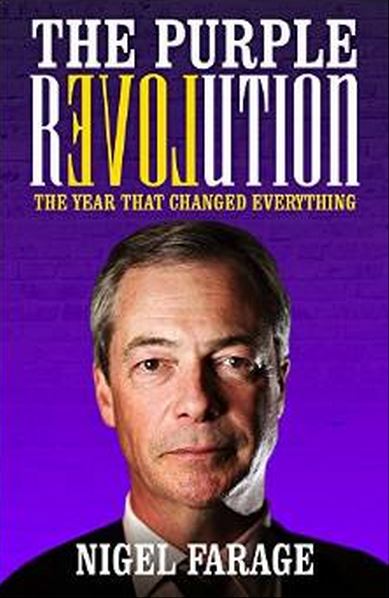
Nigel Farage’s memoirs – ‘The Purple Revolution’ – have been serialised by the Telegraph. (Image: Amazon)
An ambulance took him to a hospital in Farnborough, where more doctors carried out examinations. In his highly personal memoirs, The Purple Revolution, serialised in the Telegraph, he refers to the race of a doctor who he seems to blame:
“An Indian doctor told me that the Bromley doctors had got it all wrong: I had an infection. I was to go home and take a heavy dose of antibiotics. I did not need an operation after all. A few weeks went by and the pain was just as bad. All the time, my left testicle was getting markedly larger.”
A few weeks later his left testicle was “as large and a lemon and rock hard.” The same consultant told him to carry on with the antibiotics and sent him away.
He then discovered he had private health insurance through his employer and sought a second opinion in the private sector. A private GP referred him to a Harley Street surgeon who told him he had a tumour and would need to have the testicle removed.
NHS can let you down in some cases, Farage says
Mr. Farage wrote:
“What testicular cancer taught me is that the NHS will probably let you down if you need screening, fast diagnosis and an operation at a time that suits you.”
“In the NHS, the system is so battered and poorly run that unless you are really lucky, you will fall through the cracks. Without private health care I would probably be dead. If you can afford private health care, you should take it.”
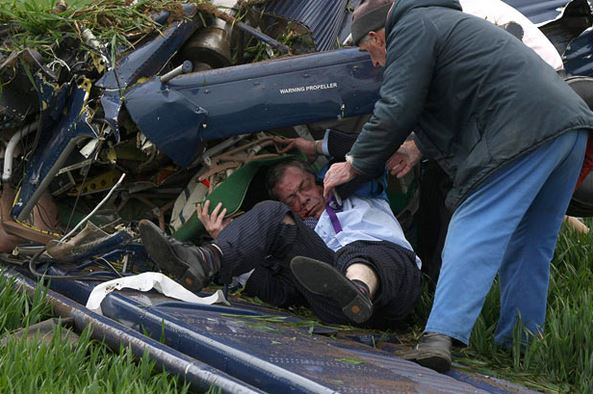
One of the three occasions Mr. Farage nearly lost his life. A light aircraft crash on election day in 2010.
NHS also saved Farage’s life
Mr. Farage also had praise for the NHS, which he describes as “astonishingly good at critical care.” He adds that once it saved his life. “I am certainly not taking any flak from gutless politicians who claim that I am no fan or supporter of the NHS,” he stressed.
He believes his experience with the NHS makes him “better qualified to criticise and defend our health care system than most politicians.”
“I know how sacred the NHS is to the people of Britain; everyone is frightened that it will be taken away. But the cost of that fear is that the political classes are terrified of even criticising it,” he added.
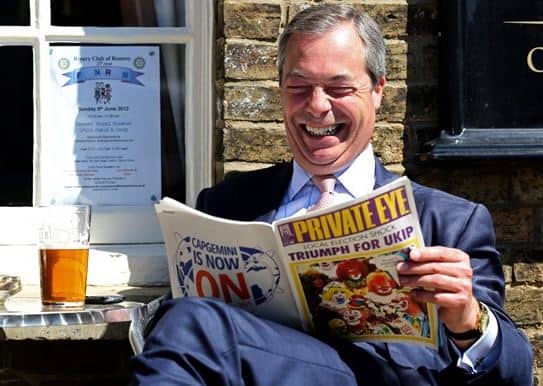
A growing number of voters identify more with Mr. Farage, who appears to do the things the average man in the street does, than with the leaders of the other three main parties.
A year after his cancer scare, in November 1985, following an afternoon of “steady drinking,” Mr. Farage nearly lost his leg when a car hit him.
On the day of the 2010 election he was involved in a light plane crash which he says left him with “the body of a 70-year-old.”
Having nearly lost his life on three occasions has made him much more of a risk-taker, he comments. “When you think your life is about to be taken away and you are given it back, you just want to get on and do things.”
Mr. Farage said UKIP would consider doing a deal with the Tories, but there would have to be a referendum on the UK’s EU status by Christmas 2015.
