
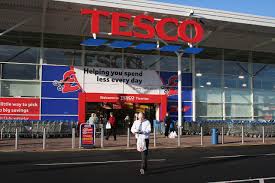
Tesco posted a yearly loss of nearly £6.4 billion for 2014, one of the biggest losses ever reported by a British company and far worse than what analysts had expected of £5 billion.
The retailer reported a trading profit of £1.4 billion for the last financial year, a 58.2% decrease year-on-year.
Like-for-like sales, excluding fuel and VAT, dropped by 1.7% in the fourth quarter.
UK like-for-like sales volumes increased for first time in over four years, driven by better availability, service and pricing; like-for-like sales performance improved to (1.0)% in Q4.
The company said that it experienced tough trading conditions overseas, especially in Korea, and performance worse than expected in Europe.
These are the first yearly figures since David Lewis became chief executive to turn the company around.
When Lewis replaced Philip Clarke as boss last September he had to deal with a £263 million accounting error, which is now being investigated by the Serious Fraud Office, as well as a £4 billion pension fund deficit.
Lewis has announced all the bad news in today’s report and use the results as a benchmark to judge the company’s progress.
He said:
“The results we have published today reflect a deterioration in the market and, more significantly, an erosion of our competitiveness over recent years. We have faced into this reality, sought to draw a line under the past and begun to rebuild, and already we are beginning to see early encouraging signs from what we’ve done so far.
“Over the last six months we have put customers back at the centre of everything we do. By focusing on the fundamentals of availability, service and targeted price reductions, we have seen a steady increase in footfall, transactions and, most significantly, volumes. More customers are buying more things at Tesco.”

Source: Tesco “PRELIMINARY RESULTS 2014/15”
Tesco and the other big four supermarkets have lost market share over the past couple of years to discount retailers Aldi and Lidl.
The supermarket industry in the UK has been in a price war to try and win back customers.
As a result of this, Tesco has significantly cut costs, shedding thousands of jobs, closing stores and shutting its head office in Cheshunt, Hertfordshire.
