
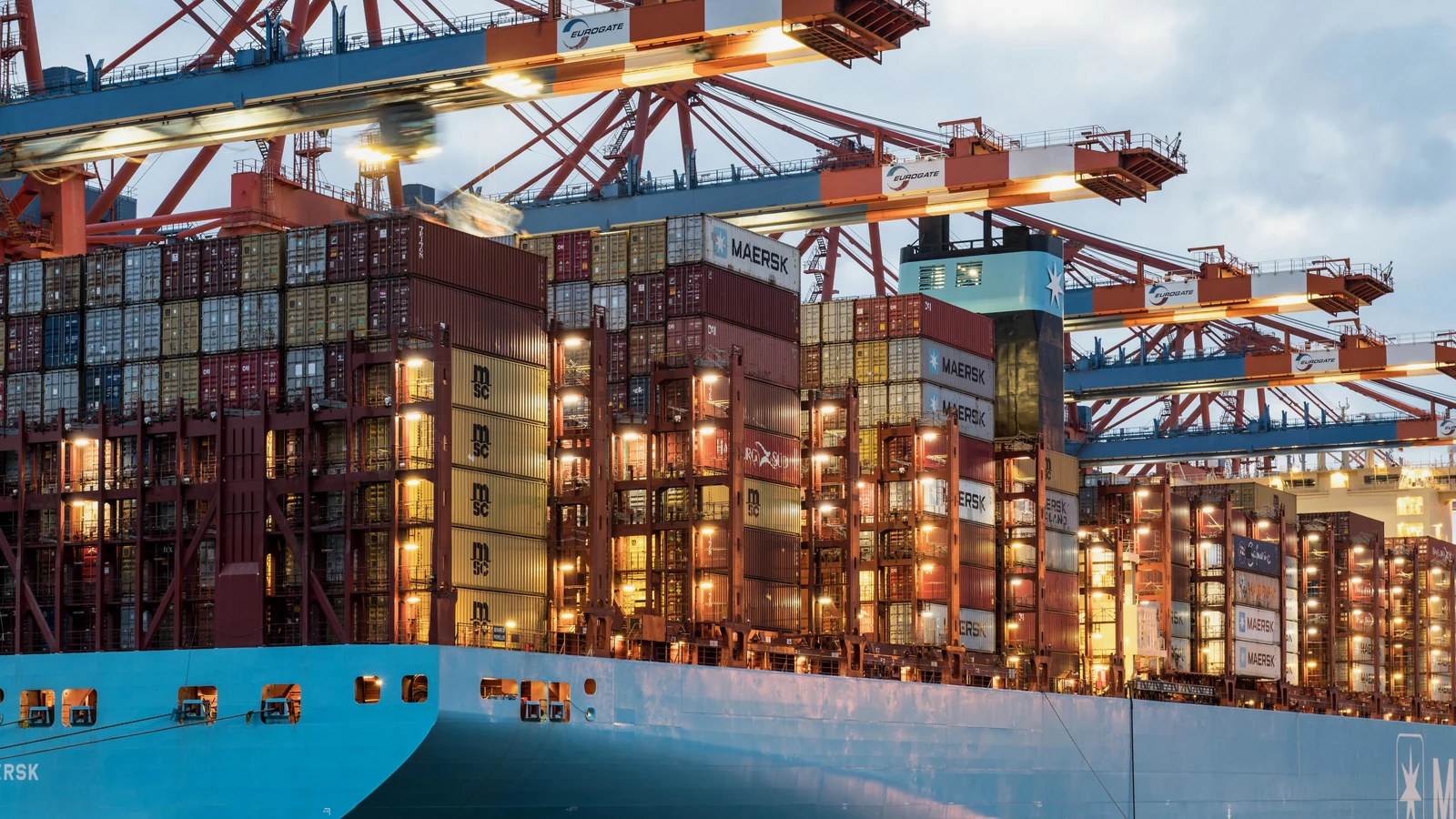
The euro area recorded a €16.1 billion deficit in goods trade with the rest of the world in August, as imports increased substantially faster than exports, according to Eurostat’s first estimates.
The shortfall widened from €1.7 billion in August 2025. Exports rose 9.9% year on year to €227.7 billion, while imports increased 16.7% to €243.8 billion, the 16 October release showed.
A trade deficit means the value of goods bought from outside the currency area exceeded the value sold to it. These figures exclude services and trade between euro-area members.
Machinery and energy weaken the balance
The machinery and vehicles balance moved from a €7.2 billion surplus a year earlier to a €0.7 billion deficit. The energy deficit widened from €21.3 billion to €26.7 billion.
After seasonal adjustment, which removes normal calendar-related trading patterns, exports fell 1.2% from July and imports rose 2%. On that basis, the deficit was €6.8 billion, compared with a €1.4 billion surplus in July.
The raw and adjusted balances answer different questions. Comparing August with the same month a year earlier limits some seasonal distortion; adjusted figures provide a better basis for examining the movement from July.
Trade values do not measure factory output
The totals are measured in euros. Changes can reflect prices and the quantity of goods traded, so faster import growth does not by itself establish that businesses bought an equivalent increase in physical supplies.
The trade figures also differ from the industrial production data reported by MBN. That indicator measures changes in output volume, rather than the money value of goods crossing a border.
The euro area’s recent rise in consumer inflation provides separate evidence of price pressure. It should not be treated as a direct explanation for the entire trade gap: consumer prices and international goods transactions cover different activities.
For manufacturers and importers, the relevant exposure depends on what they buy and sell, their contracts and their use of foreign currencies. A regional deficit cannot establish the profitability of an individual exporter.
Eurostat describes the estimates as provisional. Later submissions and revisions can change both the trade totals and the adjusted monthly comparison.
