

Online shopping carts containing a higher share of pleasure-oriented products were more likely to be abandoned in research combining transaction data with controlled experiments.
The study by Liat Hadar, Yael Steinhart, Gil Appel and Yaniv Shani examines a question that sits behind familiar checkout metrics: can the mix of items affect the decision to buy, even before shipping costs or payment problems enter the picture?
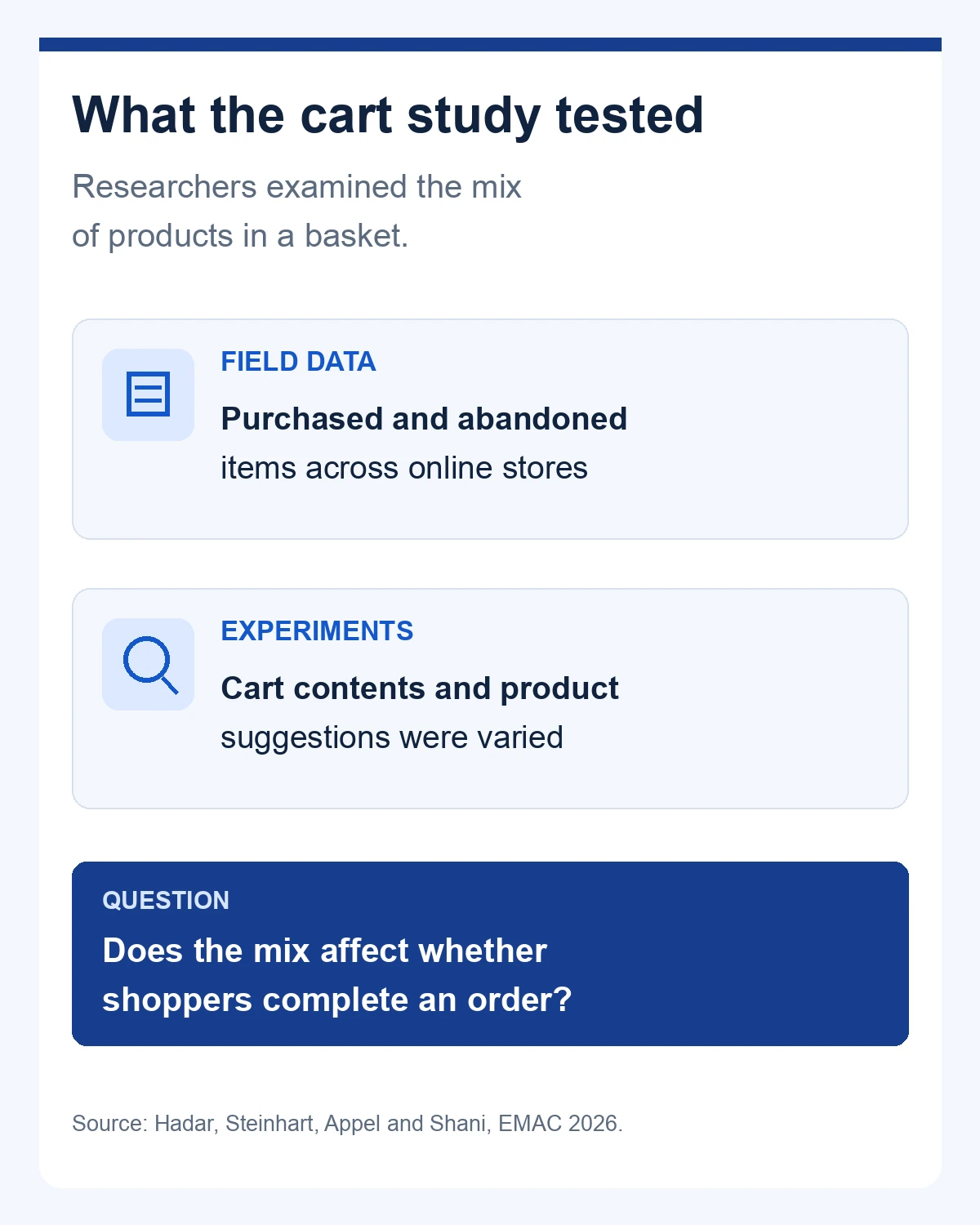
Across two field datasets covering nearly 15 million purchased or abandoned items and controlled studies, the researchers compared carts with different proportions of products associated with enjoyment and practical use. The field data identify a relationship; the experiments varied cart composition to test its effect in the settings studied.
Why the mix of products matters
The researchers call products bought mainly for enjoyment hedonic and those serving a practical purpose utilitarian. A box of chocolates and household cleaning supplies illustrate the categories, although a real purchase can provide both pleasure and utility.
The European Marketing Academy conference abstract reports that a higher proportion of hedonic products was associated with greater abandonment. The authors propose that a cart perceived as more indulgent can produce guilt, making shoppers less likely to complete a purchase.
An abandoned cart does not always represent a failed checkout. People may collect items to compare later, wait for payday or use the cart to see the total cost. The research does not establish that guilt explains every abandoned order.
Recommendations can change the context
In controlled studies, the researchers tested recommendations for practical products. The Columbia Business School account reports that considering a practical recommendation reduced guilt and abandonment of indulgent items, including in cases where the recommendation was not added to the cart.
That finding concerns the tested products and settings. It is not evidence that a retailer should always add a practical item, apply pressure at checkout or assume a shopper’s motive from their basket.
For a retailer, a careful test could compare relevant recommendations with the current experience using randomly assigned groups. Track completed orders and contribution after discounts, fulfillment costs and returns, not just clicks on suggested products. Let customers decline suggestions easily.
Our earlier reporting on cart reminders examined the timing of a follow-up message. Cart composition concerns a different stage, what customers see and consider before they leave.
Delivery costs, stock availability, payment options and trust still deserve attention. A useful checkout review starts by measuring where customers stop and testing one change at a time, while keeping the total price and terms clear.
