

Digital startups with a greater share of local users before a platform launch later attracted stronger growth in foreign visitors, according to research on more than 1,100 young companies.
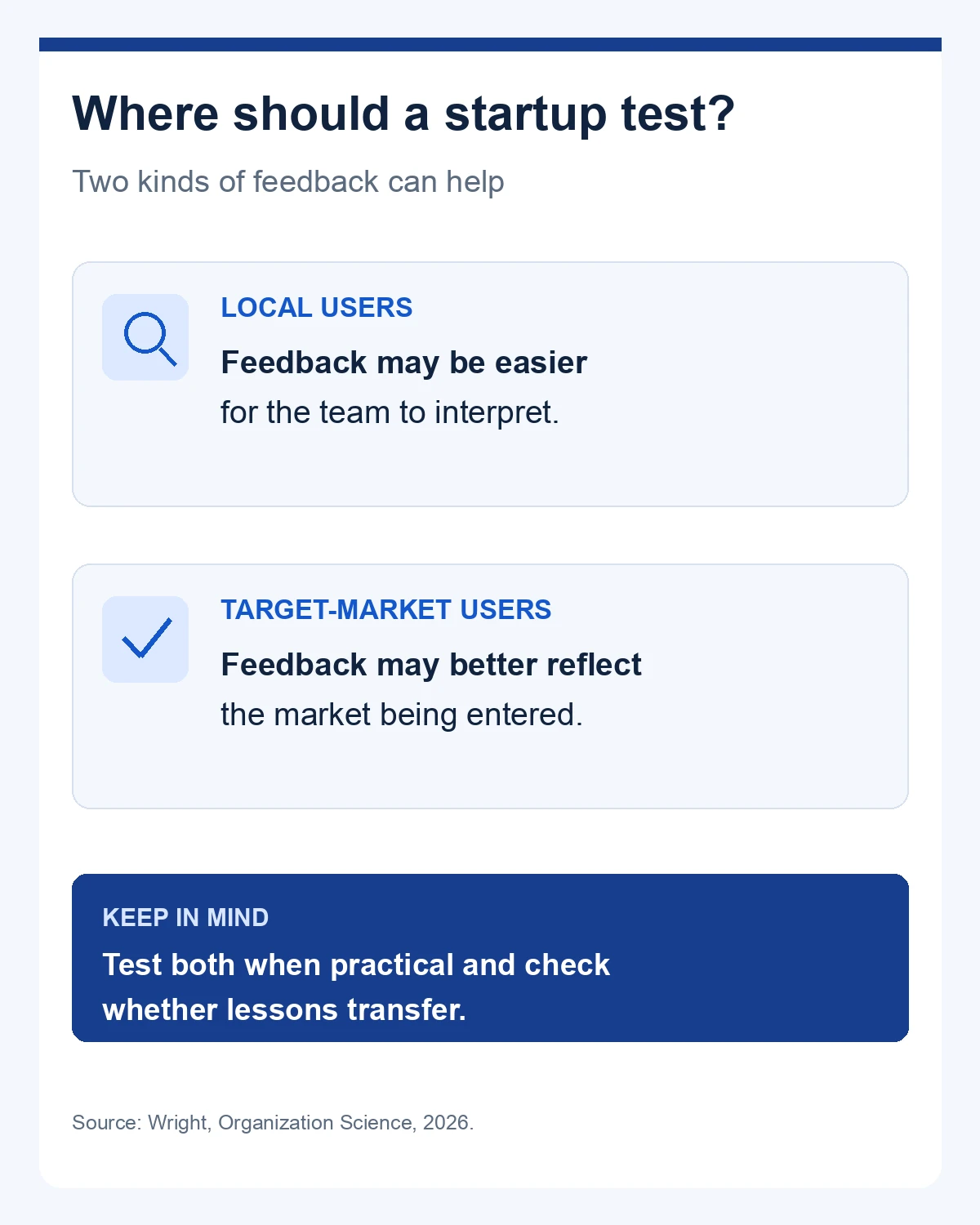
The finding highlights a tradeoff for founders preparing to enter another country. Feedback from a nearby customer may be easier to understand, but feedback from someone in the intended market may be more relevant to that market’s needs.
Nataliya Wright’s study in Organization Science examines how those competing advantages can affect early product development.
What the research measured
Wright examined 1,106 startups that presented digital products through a global product launch platform. The analysis used the timing of platform features as a source of variation and compared the initial mix of local and foreign users with later growth in foreign visitors.
Startups with a higher share of local users before launch experienced stronger subsequent growth in users outside their home country in the analysis. The pattern was stronger for startups in linguistically more homogeneous countries and in digital categories with more standardized products.
Website visits are not the same as paying customers, retention or profit. The sample also concerns digital ventures using one launch platform, so it cannot establish that every company will grow faster by starting locally.
Clear feedback versus transferable feedback
A founder may more readily understand comments from people who share a language or familiar social norms. That can help the team identify whether a product is confusing, unreliable or solving the wrong problem.
But the same product might encounter different expectations elsewhere. Payment habits, business processes, purchasing power and regulatory requirements can vary. A feature that works in one market may need changes before it serves another.
The researcher’s account of the study describes this as a balance between the clarity of feedback and its transferability. Standardized digital tools may travel more easily than products whose appeal depends heavily on local tastes.
How founders can use the finding
A software startup could use familiar users to find obvious usability problems, then ask prospective customers in its target country to complete the same tasks. Recording where each group struggles is more useful than simply asking whether they like the product.
Teams can check how people discover the service, whether they understand its price and whether they return. A small number of enthusiastic testers can reveal problems but cannot represent an entire market.
It also helps to distinguish advice from actual behavior. Our reporting on customers who help create products explains why positive feedback from close participants may not capture the full user experience.
Local testing is a starting point, not a substitute for learning from the market a business intends to serve. The useful question is which uncertainties can be resolved nearby and which require evidence from prospective customers abroad.
