
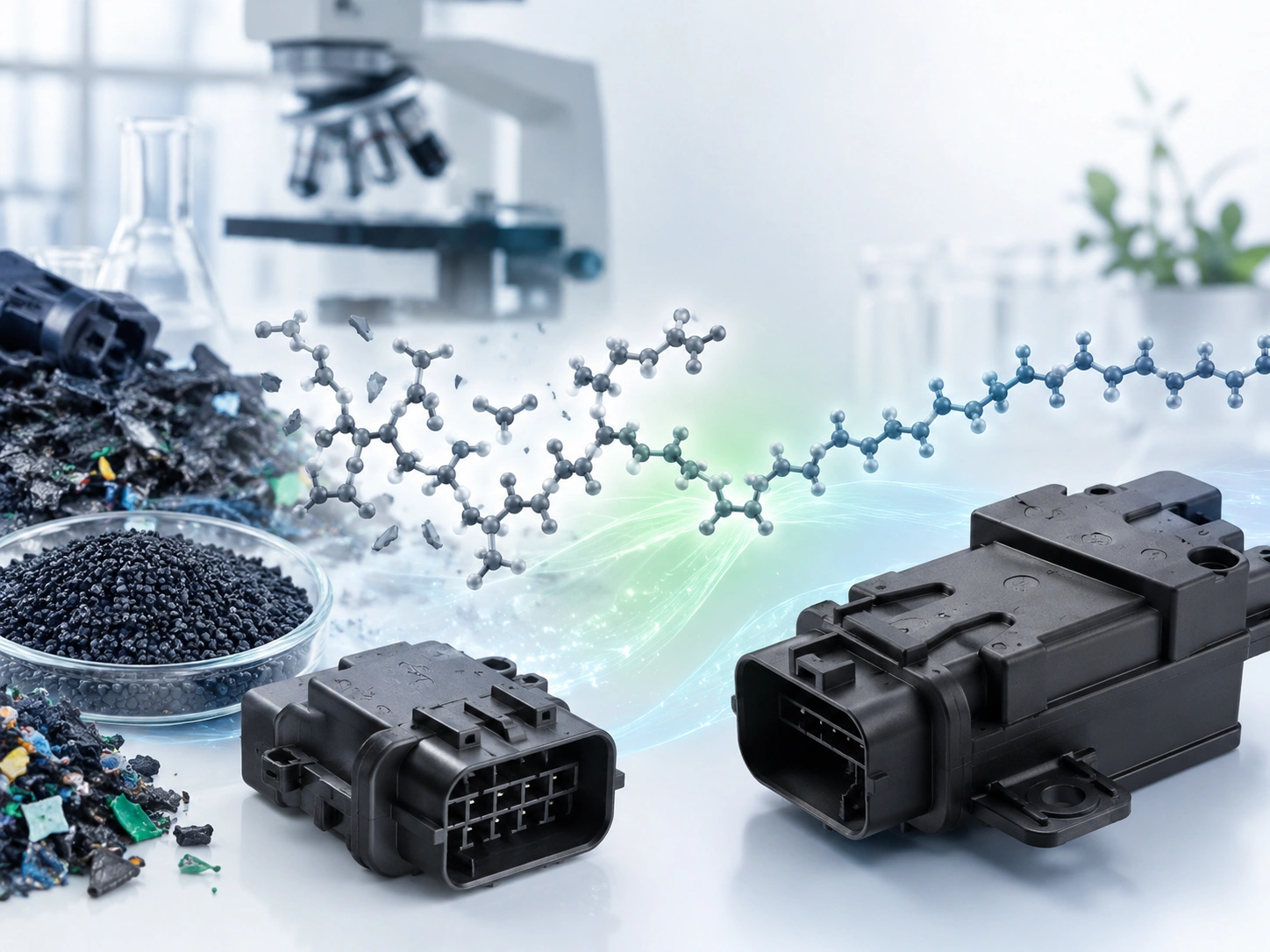
Researchers in Japan have developed a method that repairs damaged plastic at the molecular level, allowing it to regain almost all of its original strength.
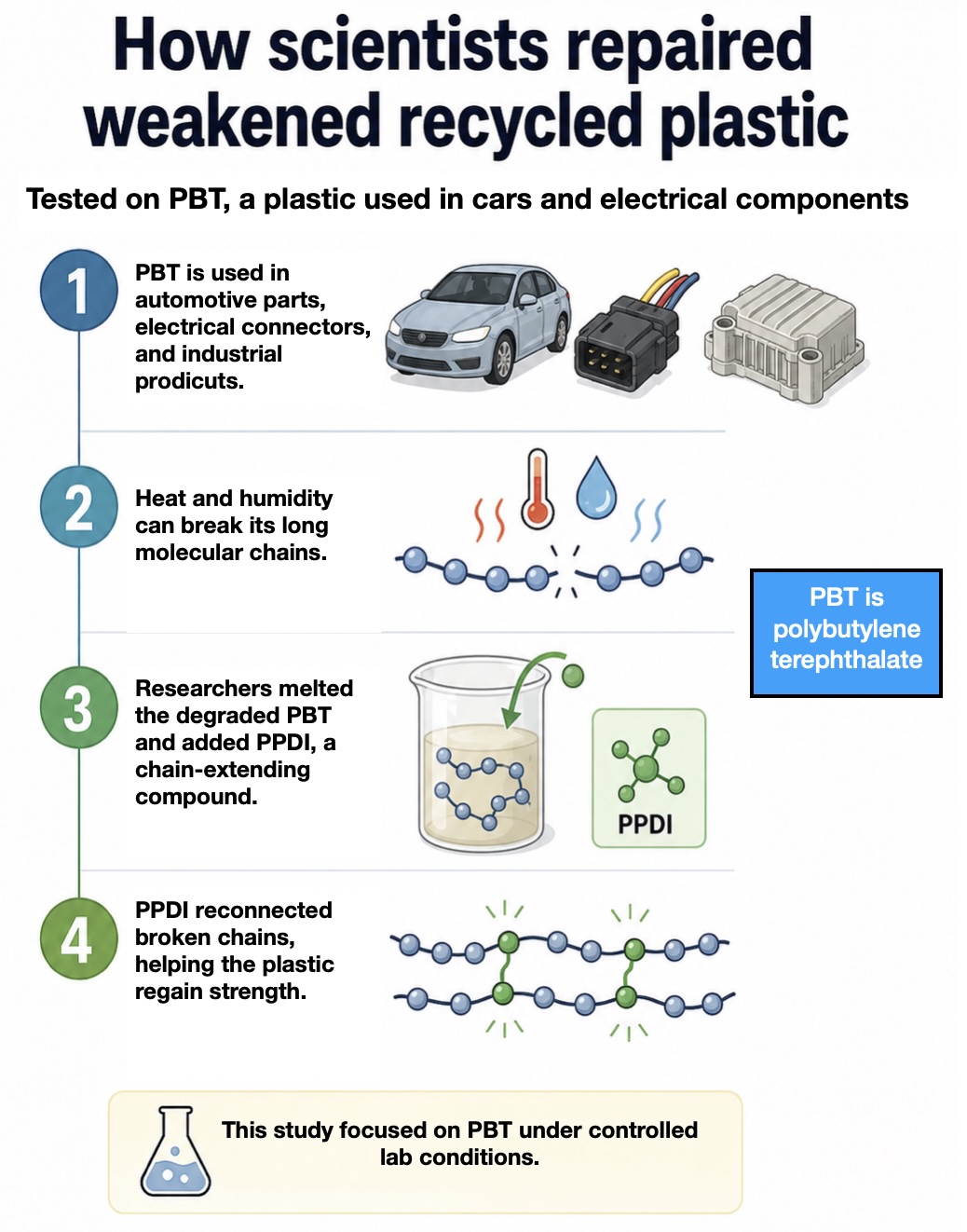
The treatment was tested on polybutylene terephthalate, commonly known as PBT. This durable engineering plastic is widely used in automotive parts, electrical connectors, and industrial products.
The research was conducted by Tohoku University and automotive supplier Astemo.
Why recycled PBT becomes weaker
Plastics such as PBT are made from long molecular chains. These chains help give the material its strength and flexibility.
Heat and moisture can gradually break the chains apart. This process can happen while a plastic component is being used, particularly in hot and humid conditions.
The damaged plastic can still be melted and reshaped. However, melting it does not automatically reconnect the broken chains. The recycled material may therefore be too weak or unreliable for demanding applications.
How the treatment works
The researchers deliberately exposed PBT to high-temperature and high-humidity conditions to weaken it. They then melted the degraded material and added a chain-extending compound called PPDI.
The compound reacted with the ends of the damaged molecular chains and connected them again.
Before treatment, the controlled aging process had reduced the plastic’s tensile strength by 38%. Tensile strength measures how much pulling force a material can withstand before breaking.
Under the best tested conditions, the treatment restored the PBT to 94% of its original tensile strength. This does not mean its strength increased by 94%. It means the treated material reached 94% of the strength recorded before it was damaged.
The treatment also restored much of the plastic’s original flexibility.
Why this could matter to manufacturers
One of the main obstacles to recycling engineering plastics is quality. Collecting and reshaping plastic is useful, but manufacturers also need recycled materials to be strong, predictable, and suitable for their intended products.
If the method can be used commercially, it could support closed-loop recycling. In such a system, plastic recovered from old automotive components could be used again in similar high-value products instead of being discarded or moved into less demanding applications.
This could reduce demand for newly produced PBT while helping automotive suppliers manage material costs and procurement risks.
The researchers also discovered a measurable relationship between the plastic’s molecular weight and its strength. In simple terms, molecular weight provides information about the length of its polymer chains.
This relationship could allow manufacturers to estimate how strong repaired plastic will be by examining its molecular structure. That may reduce some of the trial and error involved in developing recycled materials and make quality control more predictable.
The method still has important limitations
The study focused on PBT that was degraded under controlled laboratory conditions. It did not demonstrate the recycling of mixed plastic waste or large quantities of material recovered from old vehicles.
The findings also do not prove that PPDI will repair every type of plastic. The researchers believe the general approach could work with other thermoplastics that weaken through similar molecular chain damage, but each material would need to be tested separately.
Further work will also be needed to examine industrial-scale processing, production costs, quality consistency, and performance after repeated recycling cycles.
Astemo said it plans to work toward mass-production applications, including the possible use of recycled material in automotive electronic component housings and other products.
The study was published in Composites Part A: Applied Science and Manufacturing.
