
Global warming is the consistent rise in the Earth’s average temperature.
Global warming is not the same thing as climate change, which is defined as the change in our planet’s climate system over a prolonged period. However, global warming does contribute to climate change.
Since the last ice age the Earth’s average temperature has increased very slowly. But over the past two centuries the average temperature has increased at an alarmingly rapid rate.
Because of human activities that produce greenhouse gases, such as burning fossil fuels, which releases carbon dioxide into the atmosphere, heat is being trapped below the atmosphere.
In just less than 100 years the average temperature has increased by about 0.7 degrees Celsius (1.3 degrees Fahrenheit).
Over the next century scientists believe that unless something is done to cut down our carbon dioxide emissions then the planet’s average temperature may rise as much as another 2.8 degrees Celsius (5 degrees Fahrenheit).
Although this sounds like a small increase, small changes in the Earth’s average temperature causes large and potentially dangerous shifts in climate and weather, which have devastating effects.
In fact, global warming is already beginning to have an impact. The increase in the planet’s average temperature has already caused some areas to experience changes in rainfall, resulting in more floods or droughts, and more frequent and severe heat waves. In addition, the Earth’s oceans and glaciers have been affected, with oceans warming and becoming more acidic, ice caps melting, and sea levels rising.
The United States Global Change Research Program has said that “global warming is unequivocal and primarily human-induced”.
There are political measures aimed at tackling global warming, such as mitigation by emissions reduction, adaptation to its effects, building systems resilient to its effects, and possible future climate engineering.
Evidence of temperature change
The average surface temperature of our planet increased by around 0.74 degrees Celsius between 1906 and 2005. The second half of that period experienced a rate of warming that was almost double that for the whole period.
According to satellite measurements, since 1979 temperatures in the lower troposphere have increased between 0.13 to 0.22 °C per decade.
The warming is consistent with a range of observations that could not have occurred by mere chance, including rising sea levels, increased humidity, earlier timing of spring events, and the rapid rate of snow and ice melting.
Scientists at NASA’s Goddard Institute for Space Studies (GISS) and the National Climatic Data Center revealed that the years 2005 and 2010 were the warmest since the availability of instrumental measurements in the late 19th century.
The World Meteorological Organization (WMO) statement on the status of the global climate in 2010 said:
“The 2010 nominal value of +0.53 °C ranks just ahead of those of 2005 (+0.52 °C) and 1998 (+0.51 °C), although the differences between the three years are not statistically significant.”
Land temperatures have increased nearly twice as fast as ocean temperatures since 1979 (0.25 °C per decade versus 0.13 °C per decade respectively). The reason why ocean temperatures haven’t risen at the same rate is because it loses more heat by evaporation and has a larger effective heat capacity.
The average temperature in the arctic has been increasing at nearly double the rate of the rest of the world over the past decade. Although it is important to note that temperatures in the region are highly variable.
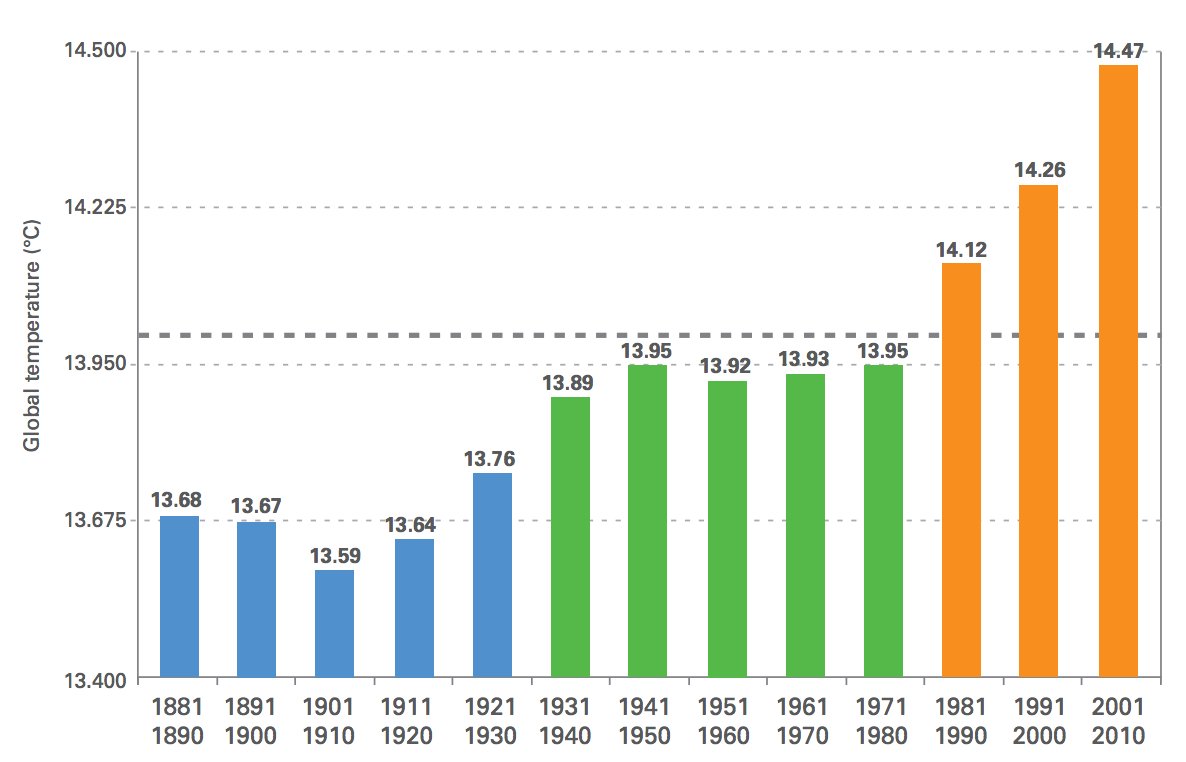
Decadal global combined surface-air temperature over land and sea-surface temperature (°C) obtained from the average of over three independent datasets. The horizontal gray line indicates the longterm average value for 1961–1990 (14°C).
Source: “The Global Climate 2001-2010” – World Meteorological Organization.
The causes of global warming
Global warming is mainly caused by an excess (abnormal amount) of greenhouse gases in our atmosphere. The major greenhouse gases are carbon dioxide (CO2), methane (CH4), and ozone (O3).
The primary cause of global warming is the build up of carbon dioxide (CO2), in our atmosphere. This occurs whenever we burn fossil fuels (such as oil, coal, or natural gas) for energy – as CO2 is released into the atmosphere.
Methane is a particularly potent greenhouse gas. It is abundant and a popular source of fuel.
Since the Industrial Revolution, a period in which significant changes occurred in agriculture, textile and metal manufacture practices, the amount of greenhouse gases in the atmosphere has soared.
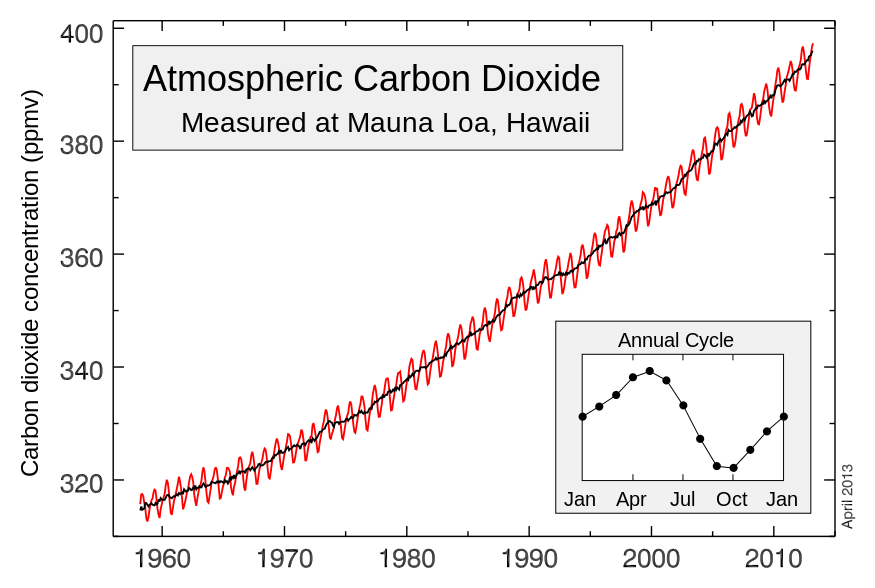
Since 1750 the concentrations of carbon dioxide and methane have risen by 36% and 148% respectively, according to the US Environmental Protection Agency. The levels of these greenhouse gases in our atmosphere is higher than at any time in the last 800 millennia.
Fossil fuel burning has been responsible for around 75% of the increase in carbon dioxide over the past two decades. The rest has been because of changes in land-use, namely deforestation.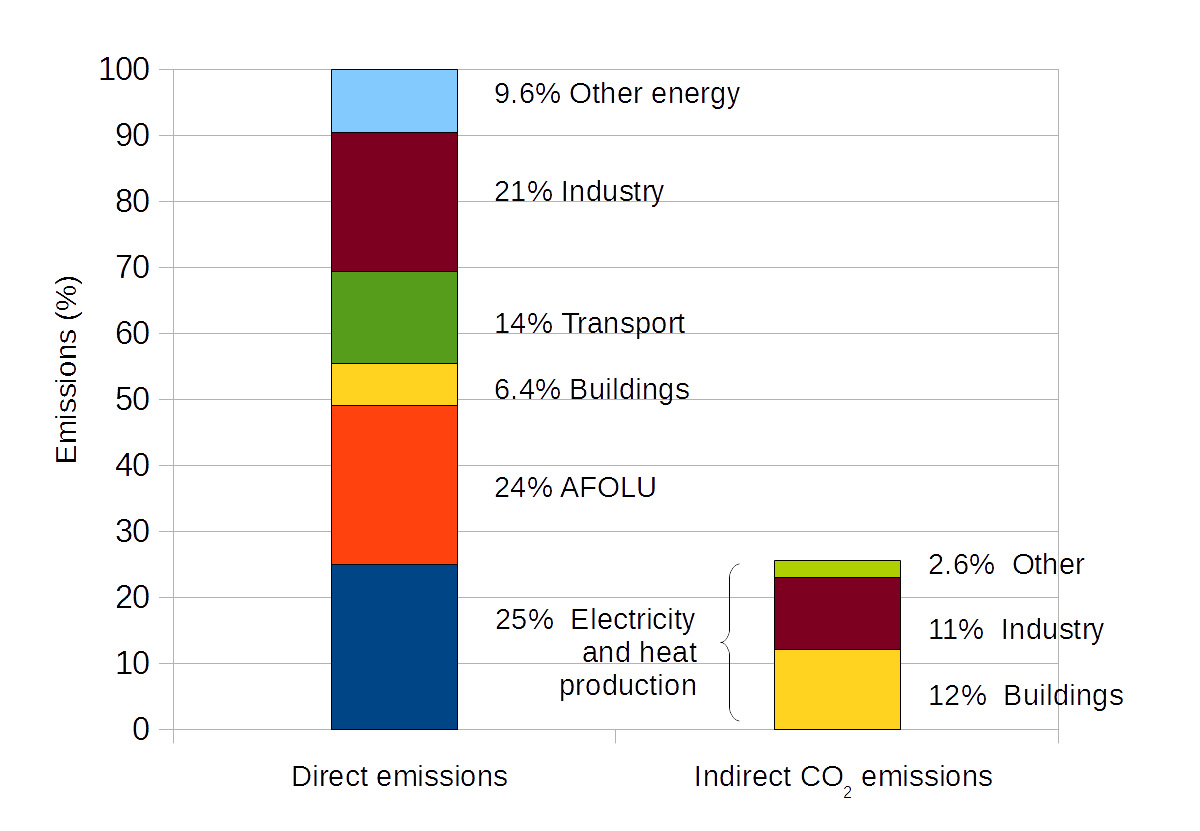
Greenhouse gas emissions by sector in 2010.
Gross domestic product per capita and population growth were the two main reasons for the increase in greenhouse gas emissions in the last three decades of the 20th century.
The Greenhouse effect is a process in which thermal radiation from a planetary surface is absorbed by atmospheric greenhouse gases and then re-radiated in all directions.
Some of this radiation is directed back towards the surface and the lower atmosphere. This causes the average surface temperature to be above what it would be in the absence of the gases.
The effects of global warming
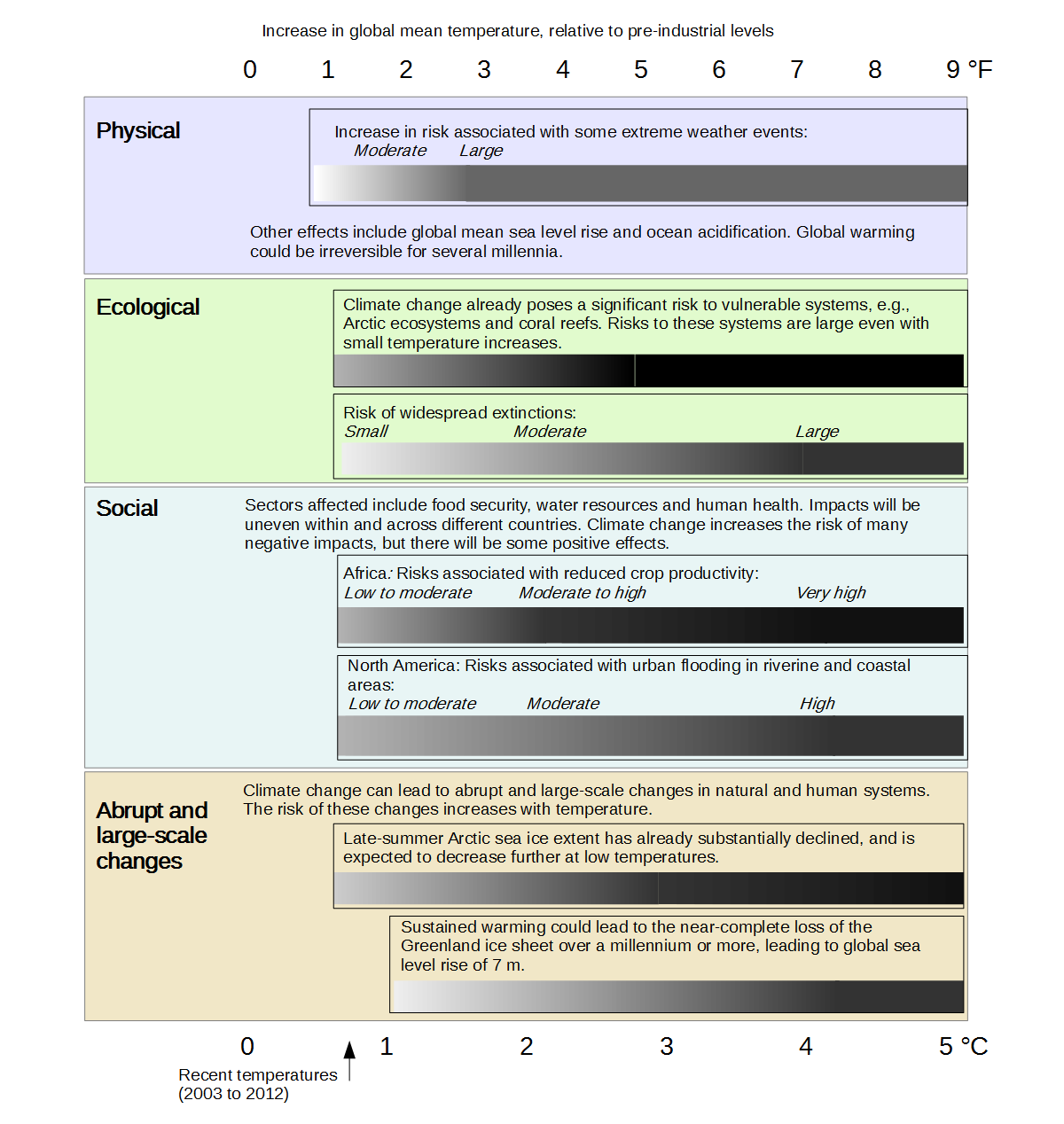
There are physical, ecological, social, and abrupt and large-scale effects of global warming. Some of these effects have already been observed, such as glacier retreat, the timing of seasonal events, and changes in agricultural productivity.
The future effects of global warming, and the degree of impact, depends on whether governments around the world implement policies such as cutting down greenhouse gas emissions.
Since the 1950s there have been fewer cold days and nights. However, hot days and nights have become more common. It is thought that human activities have caused these trends. As temperatures increase it is likely to cause increasing precipitation.
