
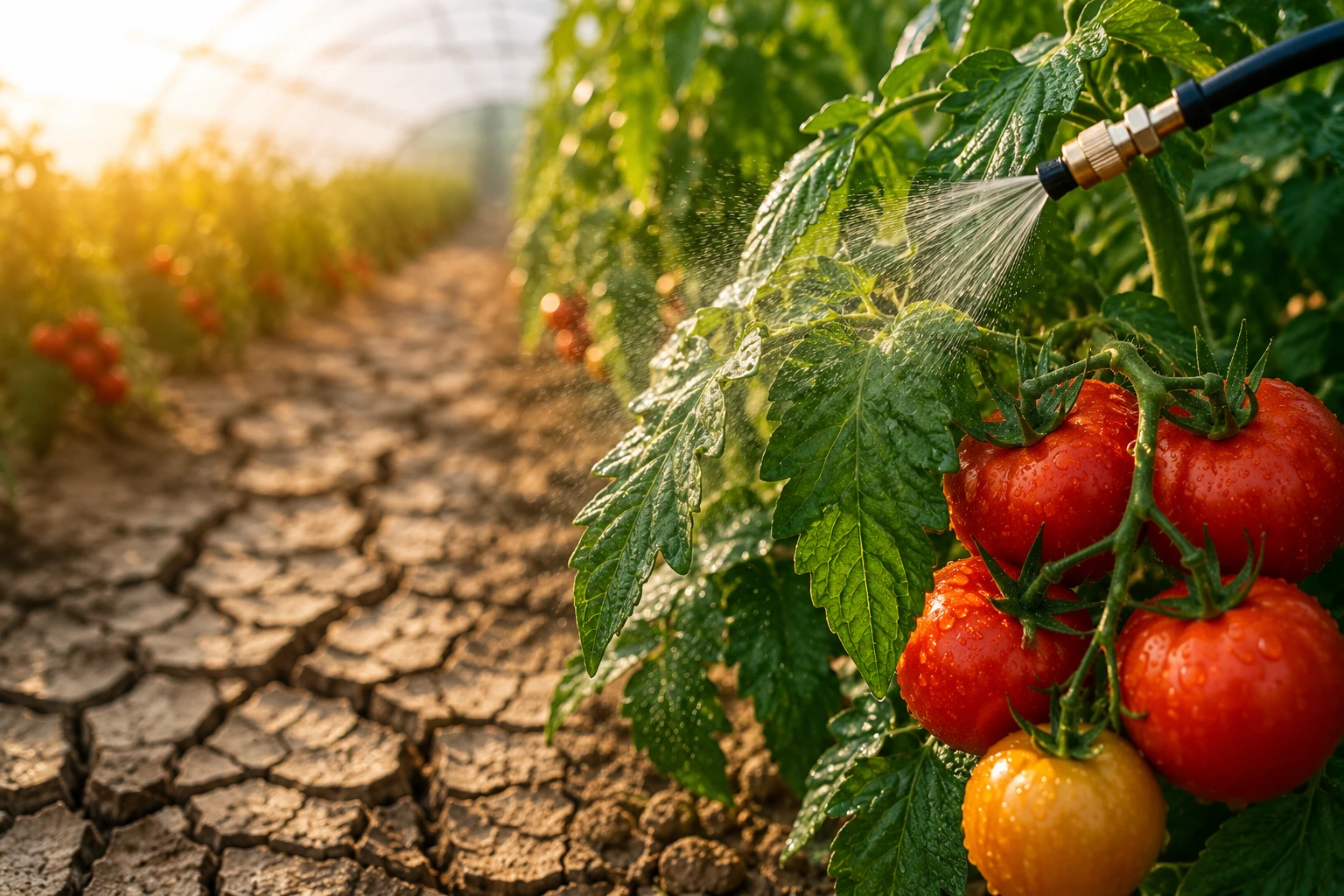
A greenhouse study found that a low-dose leaf treatment helped tomato plants remain healthier under severe salt stress. The commercial test will be whether it can improve harvests at a price farmers can afford.
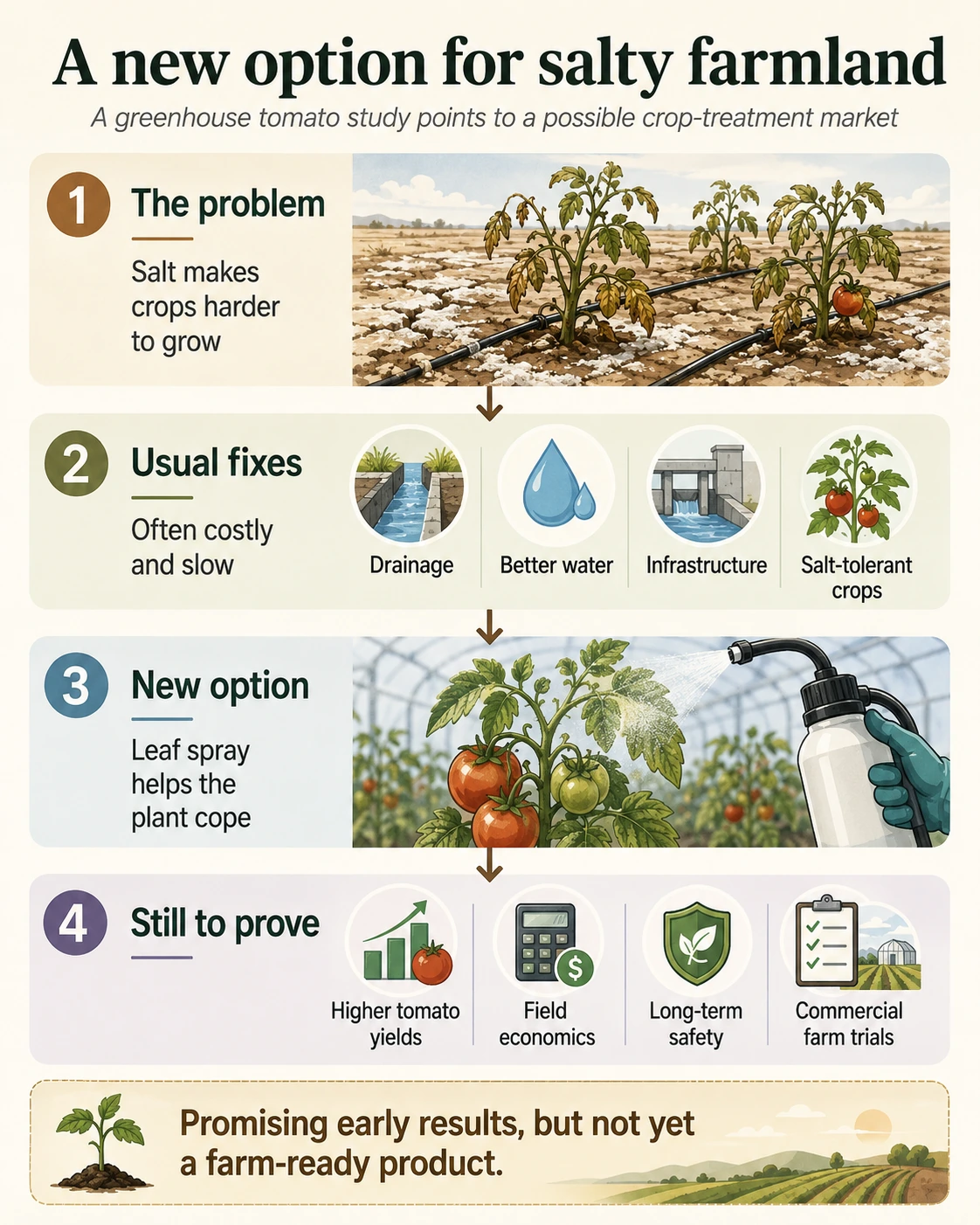
Salty farmland is expensive to manage. Farmers may need better drainage, more suitable irrigation water, new infrastructure or crop varieties that can survive difficult conditions. Those changes can take time and require significant investment.
A new study points to another possible approach: help the plant cope with the salt instead of trying to remove all of it from the land.
Researchers tested a leaf spray containing manganese oxide nanoparticles and chitosan, a natural material commonly made from crustacean shells. The results were published in the peer-reviewed International Journal of Phytoremediation.
The plants performed better under severe salt stress
The researchers applied the treatment to tomato plants growing under controlled greenhouse conditions.
Under the most severe salt conditions, treated plants performed better than stressed plants that did not receive the combined spray.
- Fresh shoot weight doubled
- Fresh root weight increased by 55.5%
- Total chlorophyll increased by 35.8%
- Carotenoid levels increased by 91.1%
These measures suggest that the treated plants continued growing and maintained more of the pigments needed for photosynthesis.
However, the study did not show that the plants produced twice as many tomatoes. It measured the fresh weight of stems, leaves and roots, rather than the number or value of tomatoes harvested.
A different way to manage salt-affected farmland
Salt makes it harder for plant roots to take up water. It can also interfere with nutrients and damage plant cells.
Most long-term solutions focus on the land or water supply. Farmers may improve drainage, change irrigation methods, use better-quality water or plant more salt-tolerant crops.
The spray takes a different route. It is intended to help the crop continue functioning while the salt remains present.
That could make treatments of this kind useful in places where rebuilding irrigation or drainage systems would be too expensive. They might also be used alongside existing soil and water management rather than replacing it.
The potential market is substantial. The Food and Agriculture Organization estimates that about 1.38 billion hectares, or 10.7% of the world’s land area, are affected by salinity.
FAO also estimates that salinity affects around 10% of irrigated cropland and 10% of rainfed cropland, although it says the global figures remain uncertain because data are limited.
The business case has not yet been proven
A University of Texas at El Paso research announcement described the treatment as low-cost and effective at small doses.
The study did not include a commercial cost analysis, however.
The final price would depend on the cost of producing the ingredients, the amount needed per acre, the number of applications and any safety or regulatory requirements.
Researchers also need to establish whether the treatment increases marketable tomato yields under real farming conditions. Results from a greenhouse can change when plants are exposed to rain, heat, pests, different soils and normal farming practices.
The use of nanoparticles will also require further research into where the material goes after spraying and what happens after repeated use over several growing seasons.
A possible new market for agricultural inputs
For agricultural suppliers, the study points to a possible product category: treatments that help crops tolerate damaged or difficult growing conditions.
Such products could appeal to farmers who cannot quickly replace irrigation systems or restore salt-affected land. Their value would depend on whether they protect enough of the harvest to cover the treatment cost.
The greenhouse results are encouraging, but the most important figures are still missing: tomatoes harvested per acre, the cost of each application and the results after several seasons.
Until those questions are answered, the spray remains a promising agricultural treatment rather than a farm-ready product.
