
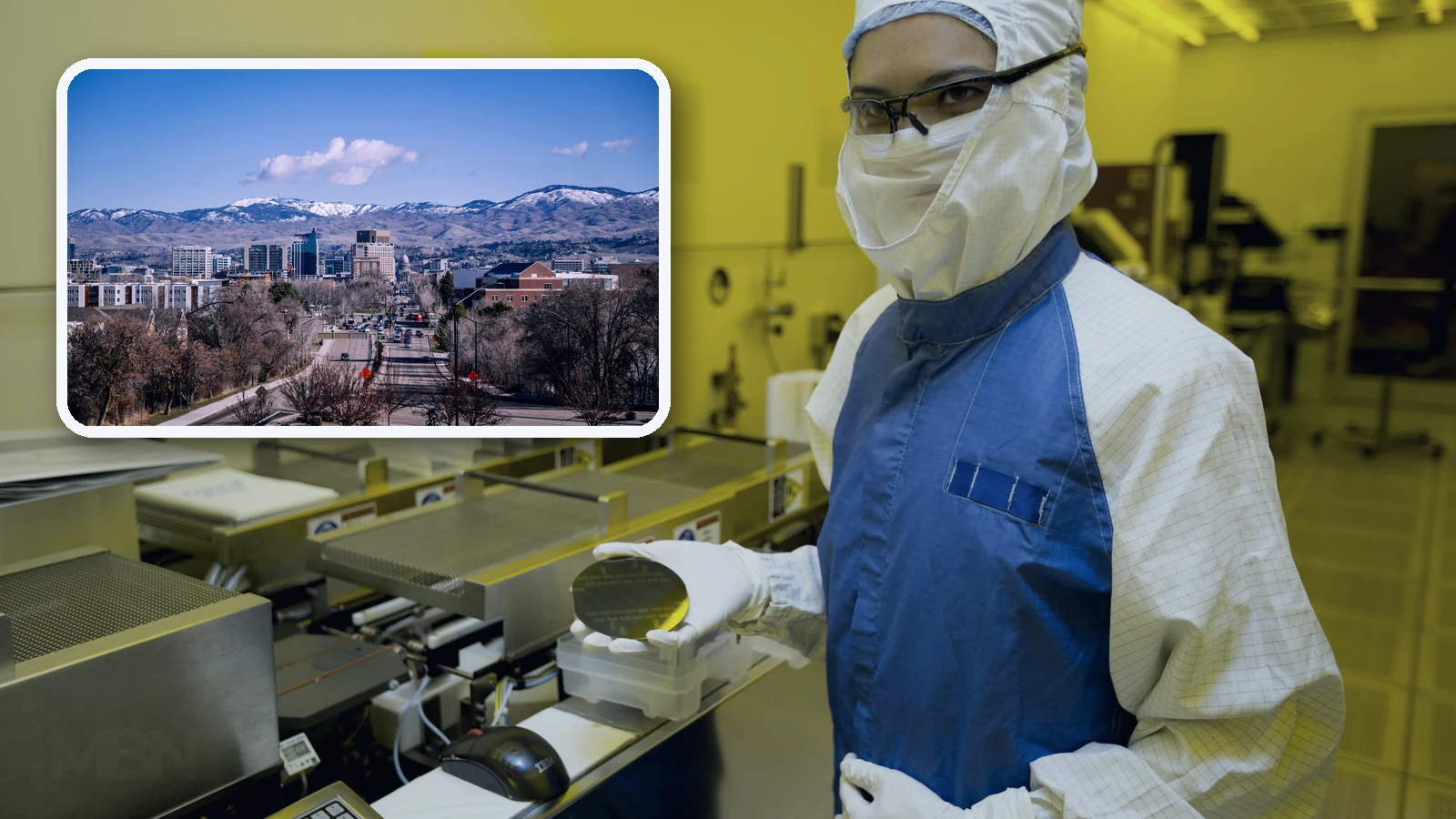
Micron Technology plans to invest $10 billion over the next decade in a Boise-based research network focused on memory, computing and future semiconductor manufacturing.
The US chipmaker expects to break ground on the network’s main facility in Boise, Idaho, in 2027. The building will have room for hundreds of researchers.
Chief executive Sanjay Mehrotra said Micron Research Labs would look “around the corner to the memory and compute systems the future will demand”.
The research will extend beyond Boise
The $10 billion is not solely a construction budget. Micron says the programme will also support university collaborations, satellite laboratories and work with customers, startups and other research partners.
Researchers will study new memory technologies, computer architectures, chip packaging and manufacturing methods. Packaging is the process of assembling and connecting chips so that they can operate together efficiently inside a system.
Micron’s main products include DRAM, which provides fast working memory, and NAND, which retains stored data when the power is switched off. Both are important in data centres, where artificial-intelligence systems need rapid access to large amounts of data.
The research programme is intended to examine technologies beyond Micron’s current product cycles. It is therefore different from adding equipment to an existing factory or announcing a specific increase in chip output.
Micron has not disclosed the spending timetable
Spread evenly, the plan would represent about $1 billion a year. Micron has not provided an annual spending schedule, so that calculation is only a guide to its scale.
For comparison, Micron recorded $1.25 billion in company-wide research and development expenses in its second fiscal quarter of 2026. The figures are not directly comparable because the ten-year plan includes a facility and outside partnerships, while quarterly research and development is an accounting expense across the company.
The investment reflects a longer-term contest with Samsung Electronics, SK Hynix and other memory-chip makers to improve speed, capacity and energy efficiency. Demand from AI data centres has made those advances more commercially valuable, but Micron will still have to turn research into products it can manufacture reliably and at scale.
The next firm milestone is the Boise groundbreaking, which Micron expects in 2027. The company has not disclosed an opening date or how the $10 billion will be divided among the facility, partnerships and satellite laboratories.
