
US President Donald Trump said he may let Nvidia sell a downgraded version of its new Blackwell AI chip to China. He told reporters on Monday that he’d consider a design that cuts performance by “30% to 50%,” framing it as a possible compromise.
Trump called the hypothetical product “an unenhanced version of the big one,” referring to Blackwell. He also hinted at another meeting with Nvidia CEO Jensen Huang to talk through that option.
Trump was characteristically blunt in describing the chip’s capabilities and how a deal might work.
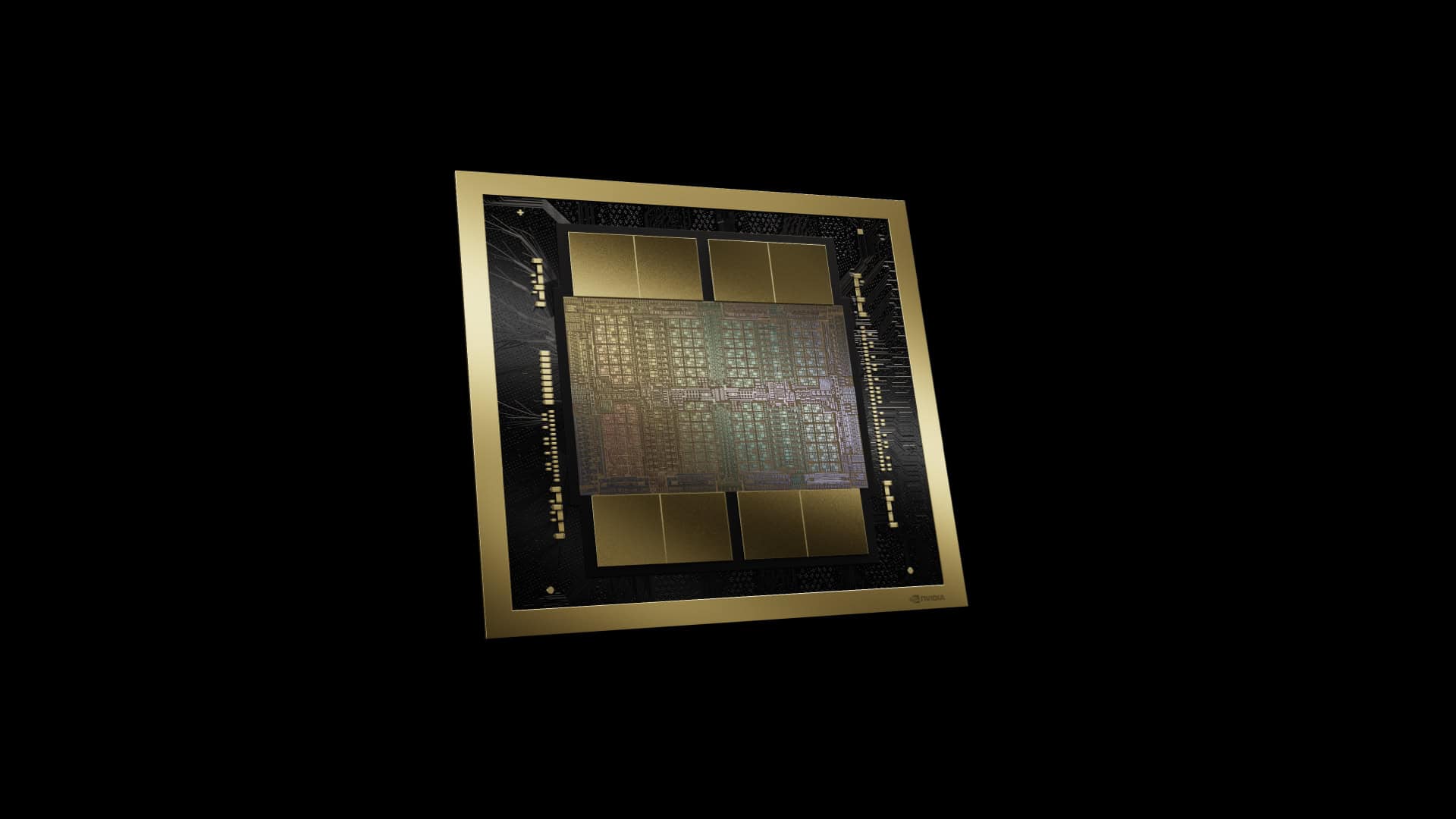
“The Blackwell is superduper advanced. I wouldn’t make a deal with that, although it’s possible,” Trump told reporters. “I’d make a deal a somewhat enhanced in a negative way. Blackwell, in other words, take 30% to 50% off of it, but that’s the latest and the greatest in the world. Nobody has it. They won’t have it for five years.”
The message was clear: a weaker chip could be on the table if it fits US rules.
You can see more of what he had to say in the video embedded below (from Bloomberg TV on X):
President Donald Trump says he'd consider letting Nvidia sell a scaled-down version of its Blackwell chip to China. “It’s possible I’d make a deal” on a “somewhat enhanced — in a negative way — Blackwell” processor, he said in a briefing with reporters. “In other words, take 30%… pic.twitter.com/G0Xv9scQQ2
— Bloomberg TV (@BloombergTV) August 11, 2025
The news comes as the White House recently cleared a separate arrangement that let chipmakers Nvidia and AMD resume some China sales. Both chipmakers will give the US government 15% of revenue tied to those shipments. Nvidia’s H20 and AMD’s MI308 are the products involved.
The risk flagged by experts
Blackwell sits at the core of today’s strongest AI systems. Under current restrictions, it’s too advanced for China. Nvidia’s H20, based on the older Hopper generation, is the most capable chip the company can ship there right now.
Saif Khan, former director of Technology and National Security at the White House National Security Council under former President Joe Biden, was quoted by Reuters as saying: “Even with scaled-down versions of flagship Nvidia [chips], China could spend and buy enough of them to build world-leading, frontier-scale AI supercomputers. This could directly lead to China leapfrogging America in AI capabilities.”
Put simply, “nerfed” parts can add up. With enough units, China could still build frontier-scale AI machines. That’s the heart of the concern: volume can offset per-chip limits.
But, would a sanctioned, scaled-down Blackwell change the pecking order overnight in China’s data centers?
It may not be that simple
US chipmaker plans to restart sales already face headwinds in China.
According to an exclusive Bloomberg report, Beijing has reportedly been telling state enterprises and private firms to avoid Nvidia’s H20 chips in sensitive or government-related work.
The reported guidance, which isn’t said to be a formal ban, may still complicate Nvidia’s efforts. What this could mean for Blackwell chips remains unclear, though any Chinese skepticism toward the H20 could carry over to a downgraded Blackwell too.
