
Vintage products tend to combine age, recognizable links to an earlier era and scarcity, according to research examining more than 2,000 items across 16 product categories.
The distinction matters to resale businesses because an old product, a secondhand product and a new product made to look old are not necessarily the same thing.
Maren Hoff and Silvia Bellezza developed their framework using interviews, surveys, experiments and product data gathered from vintage fairs, stores and online retailers. Their research appeared in the Journal of Consumer Research in 2026.
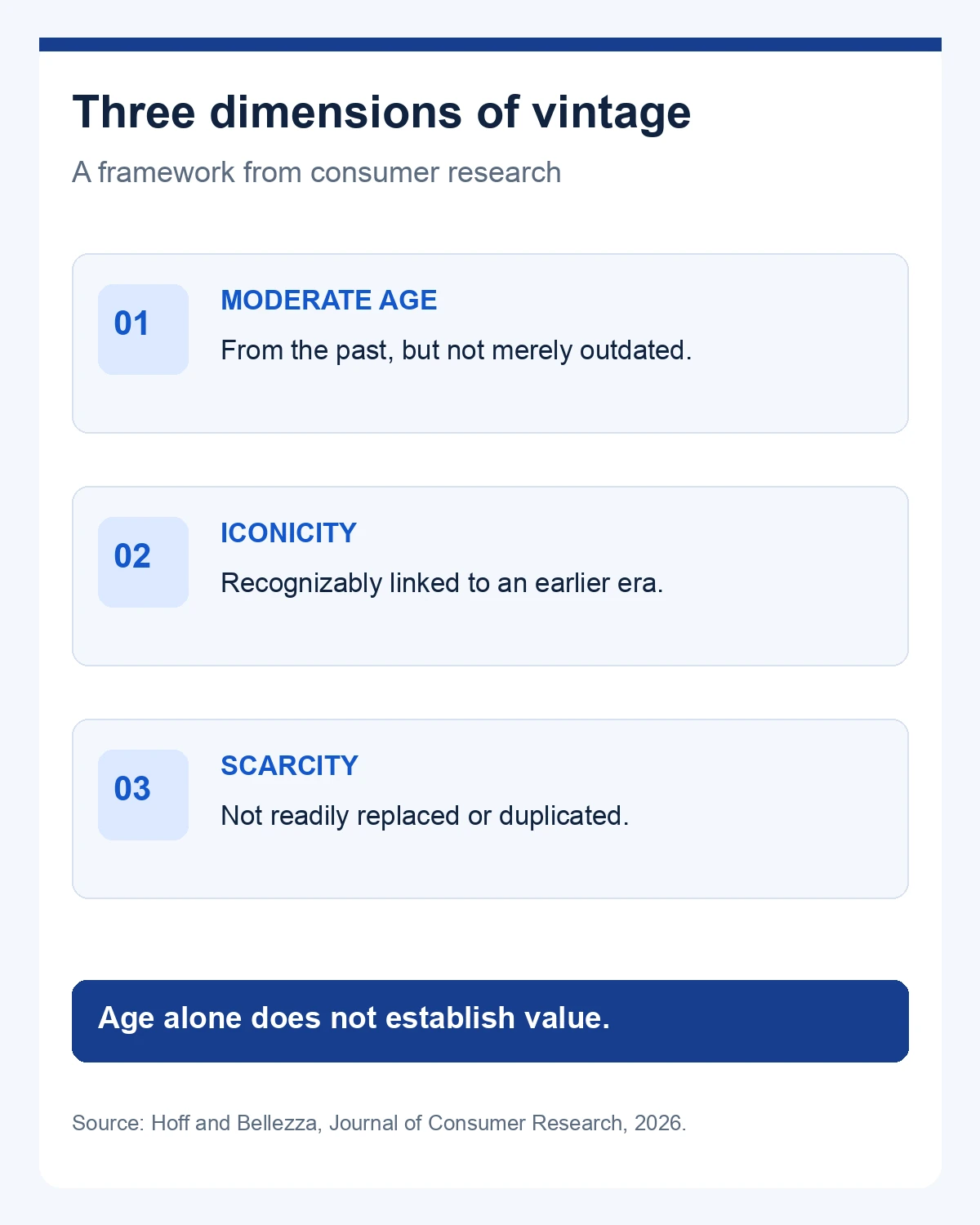
Three characteristics of vintage
The researchers describe vintage as a combination of moderate age, iconicity and scarcity. Moderate age means an item comes from the past but is not simply outdated. Iconicity means it evokes a recognizable period. Scarcity concerns the difficulty of finding or replacing it.
The age associated with vintage can vary by category. An older games console and an older dining table have different product cycles, and an age threshold alone cannot establish authenticity or value.
In the researchers’ framework, a recently owned shirt may be secondhand without being vintage. A newly made jacket inspired by an earlier style may be retro without being an original from that period. Antique is another related term with its own conventions.
What retailers can explain
A seller can help shoppers by identifying what is known about an item’s date, maker, condition and provenance, the history of its ownership or origin. If the date or origin is uncertain, saying so gives a buyer more useful information than an unsupported claim.
Photographs of labels, wear and repairs can help customers evaluate a purchase. A size measurement can be more useful than a label alone when sizing has changed over time. Return terms and delivery costs should also be clear.
The study found that emphasizing age, iconicity and scarcity could improve responses to vintage products more than to new products in the settings examined. That does not guarantee a premium price or justify describing an ordinary item as rare.
Used is not automatically low impact
Buying a previously owned item can extend its useful life, but the environmental effect depends on factors such as whether it replaces a new purchase, transport, cleaning and how long the item is used. A vintage label by itself is not proof of a particular emissions saving.
The study provides a way to understand consumer perceptions, not an independent life cycle assessment of every resale transaction. Retailers making environmental claims need evidence for those claims.
As with other product descriptions, the most useful information is specific. Our report on ingredient wording shows how language can affect customer interest even when the underlying product is unchanged.
For vintage sellers, clear evidence about the object itself can help customers decide what they are buying and whether its history matters to them.
