

Growth changes what a restaurant needs from its POS. A second location, a new delivery app, or a catering menu each brings more orders, more menu updates, and more staff to train. A system that worked well at one location can start slowing service down once volume picks up. The five platforms in this guide handle growth in different ways, from adding order channels to running several locations to building a POS around a specific service model.
How These Platforms Were Chosen
The ranking is based on publicly available information: user reviews, case studies, feature details from official websites, and ratings from trusted software directories. Every platform on the list has a proven record of serving food service businesses.
What a Growing Restaurant Needs From Its POS
Every part of service runs through the POS, from taking the order to closing the check. As a restaurant grows, small weaknesses in that system show up more often and cost more each time.
Short training time. Restaurants hire often. A POS that takes hours to learn brings that cost back with every new hire, while a simple interface gets new staff working sooner.
Stability during busy shifts. More orders mean more pressure at peak hours. When tickets pile up on a Friday night, the POS has to stay fast and keep running.
Speed and reliability. Faster transactions help tables turn sooner, and a reliable system means fewer lost orders. Over time, that adds up to more covers, more revenue, and a team that trusts the tools it works with.
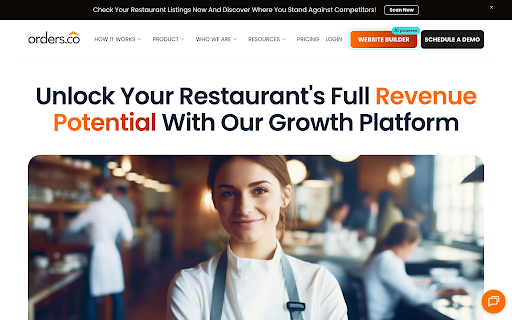
How Does Orders.co Support Restaurants as They Grow?
Orders.co brings POS, online ordering, delivery apps, kitchen operations, loyalty, and marketing together in one system. When orders start coming from more places, DoorDash, Uber Eats, Grubhub, ezCater, direct website, phone, and dine-in orders all flow into one centralized system, so staff can manage orders in one place regardless of the source. Menu items, prices, modifiers, availability, and sold-out items are managed centrally, with updates pushed across connected delivery platforms and direct ordering channels.
What Orders.co Handles as the Operation Scales
More order channels: Orders from third-party apps and the direct website arrive automatically. Phone and traditional dine-in orders require staff entry.
More menu updates: Menu changes appear within seconds on the POS and direct ordering websites, and within seconds to several minutes on third-party platforms.
More locations: Independent restaurants get simplicity, affordability, and fewer systems to manage. Multi-location groups get the same capabilities plus centralized control. Each location manages its own delivery strategy, set as In-House Delivery, AI Dispatch Automatic, or a specific third-party provider.
Consistent reporting: X and Z reports, top-seller data, and Sales by Provider reports give the same reporting structure across locations. For accounting and tax purposes, restaurants should use the official reports from the applicable marketplace.
Busier kitchens and dining rooms: A KDS can be paired with the POS, with Orders.co support configuring which categories and items are routed to the kitchen screen. KDS software is included with advanced plans; hardware is separate.
Catering growth: Catering orders are identified by the system so AI Dispatch can route delivery requests to DSPs appropriate for catering.
Repeat customers: Restaurants get a commission-free branded ordering website with loyalty and coupons. Automated SMS and email campaigns reach inactive customers every 11 days, with AI deciding what each customer receives, and they run with minimal ongoing attention.
Dispute management: Uber Eats and DoorDash chargebacks are centralized, with Advanced service automatically initiating disputes after 24 hours and escalating rejected disputes by email and phone.
Support and setup: True 24/7 live support is available through phone, chat, and ticketing, with Level 1–3 escalation. Onboarding typically takes 2–7 days.
What Operators Say
Reviews point to easier order management, useful automation, and a straightforward interface. Operators value handling POS transactions, online orders, delivery channels, menus, marketing, and loyalty without several separate systems. Smaller teams find the automated SMS and email campaigns especially useful.
- Shift 4 Dine
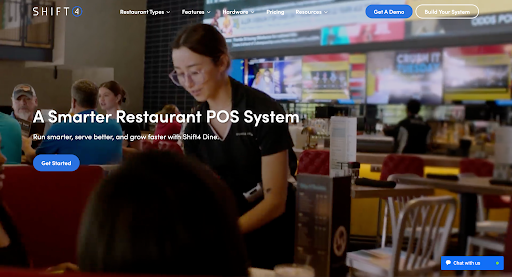
How Does Shift 4 Dine Support Restaurants as They Grow?
Shift 4 Dine is backed by a parent company with over 25 years in commerce technology and NYSE-listed stability, which matters when a restaurant commits to a long-term POS setup. The platform covers the full hardware picture: command center terminals, mobile ordering tablets, kitchen display systems, and self-service kiosks. All of it comes with a lifetime warranty and free replacement for malfunctions or damage.
What Shift 4 Dine Handles as the Operation Scales
More hardware: Command center terminals, mobile ordering tablets, kitchen display systems, and self-service kiosks are all part of the platform.
Equipment failures: Hardware is covered by a lifetime warranty with free replacement for malfunctions or damage. This matters most for operators running multiple locations, where equipment failures are costly.
New location setup: Certified onsite installation handles the setup.
Support during service: Round-the-clock in-house support is available without relying on third-party contractors.
Long-term stability: The parent company brings over 25 years in commerce technology and NYSE-listed stability.
What Operators Say
Users consistently mention cost savings and improved operational flow across multiple locations. Reliability stands out most in reviews, and operators appreciate knowing that if something breaks, it gets handled fast and without extra cost.
- Toast
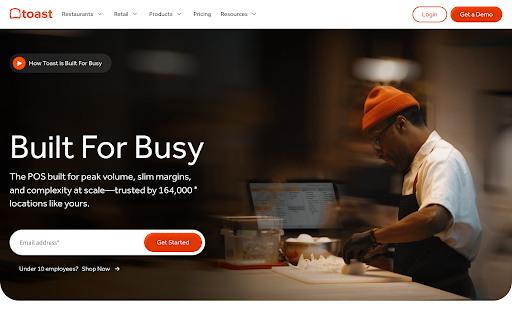
How Does Toast Support Restaurants as They Grow?
Toast was founded in 2011 and is now used in roughly 120,000 US restaurants. The platform runs on Android and covers POS, online ordering, payroll, scheduling, and inventory management. It connects front-of-house, back-of-house, and delivery channels in a single platform.
What Toast Handles as the Operation Scales
More channels: POS and online ordering connect front-of-house, back-of-house, and delivery channels in one platform.
More staff: Payroll and scheduling are built into the same system as the POS.
Inventory: Inventory management is part of the platform.
More tools: An ecosystem of over 200 connections with food service brands lets operators add what they need.
Internet outages: The Toast Router keeps orders and payments running even when the internet goes out.
Higher volume: Among operators with five or fewer locations, Toast powers more of America’s top high-grossing restaurant concepts than any other POS system.
Industry recognition: Toast has received NEVCA Hottest Startup recognition.
What Operators Say
Reviews focus on reliability and the depth of features available without bolting on additional tools. Operators appreciate having payroll and scheduling in the same system as their POS. For restaurants that want one vendor to handle most of the operational stack, Toast delivers.
- Focus
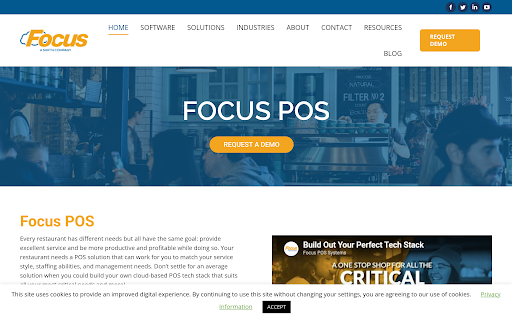
How Does Focus Support Restaurants as They Grow?
Focus POS has been in the food service space since 1990. Its approach is built around customization: restaurants pick the features they actually need rather than paying for a fixed bundle. Major brands such as Smoothie King, Cold Stone Creamery, Popeyes, Arby’s, and KFC use the platform alongside independent restaurants.
What Focus Handles as the Operation Scales
Specific workflows: Restaurants get a POS that fits how they operate instead of adapting to a one-size approach.
Complex menus and service models: Deep customization is particularly useful for hospitality businesses with unique service models or complex menu structures.
Changing feature needs: Operators build a tailored POS stack rather than accepting a standard package.
Local support: A dealer-based support model gives operators in-person service from someone local, not a remote help desk.
Independent to enterprise: The platform serves independent restaurants as well as enterprise brands.
What Operators Say
Operators value the personalized support that comes through the dealer network, and the ability to build a tailored POS stack gets mentioned regularly. That flexibility, paired with 30-plus years of industry experience, gives operators confidence in a platform that knows food service.
- Clover
How Does Clover Support Restaurants as They Grow?
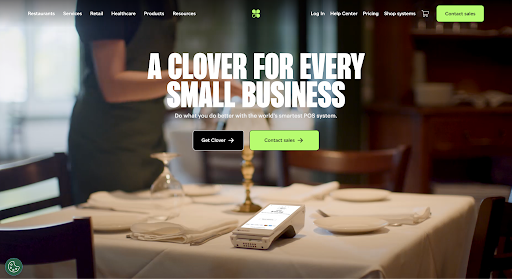
Clover runs on affordable Android hardware with an open app marketplace that lets operators add third-party tools as their needs grow. The platform processes over 2 billion transactions annually across hundreds of thousands of merchants. For food service businesses, it offers pricing tiers and tools structured specifically for restaurant operations.
What Clover Handles as the Operation Scales
Adding tools over time: The open app marketplace lets the platform grow alongside the business without requiring a full system swap.
Hardware choices: Affordable Android hardware comes in a range of options.
Counter or table service: Dedicated pricing tiers are available for Counter Service and Table Service operations.
Inventory and staff: Inventory tracking and staff management tools are designed for restaurant workflows.
Flexibility: Operators aren’t committed to a single locked-in ecosystem.
Industry recognition: Clover won the gold medal for Best POS Innovation at the PYMNTS.com Innovator Awards.
What Operators Say
Users point to easy setup and the ability to customize functionality through third-party apps. Smaller restaurant and café operators appreciate the range of hardware options and the straightforward payment processing. The industry awards back up what customers report about Clover’s performance in food service environments.
How We Evaluated Restaurant POS Platforms
Building the Initial Candidate List
We began by collecting restaurant POS platforms from a mix of software directories, industry publications, customer review sites, and publicly available case studies. Both established providers and smaller platforms with strong restaurant or regional footprints were included.
We also reviewed each company’s website to understand its core offering, restaurant-specific functionality, hardware options, integrations, and overall market positioning. At this stage, the focus was on creating a broad pool rather than deciding which platforms belonged at the top.
Reviewing Restaurant Experience
The next step was to determine how much real experience each provider had in food service. Platforms with little evidence of restaurant use were removed from consideration.
Customer reviews played an important role here. Instead of relying on overall star ratings, we looked for recurring feedback about usability, reliability, customer support, payment processing, integrations, and day-to-day restaurant operations. Platforms with very limited or inconsistent feedback were given less consideration because there was not enough evidence to evaluate them fairly.
Comparing Product Claims With User Experience
Features listed on a product page do not always tell the full story. For that reason, we compared company claims with feedback from actual users and other publicly available sources.
Statements related to reliability, support, system performance, integrations, and operational capabilities were checked against reviews and documented customer experiences. When user feedback repeatedly contradicted a provider’s marketing claims, that difference was considered during the selection process.
Considering Industry Recognition
Awards, media coverage, and other forms of third-party recognition were reviewed as additional indicators of credibility.
For example, recognition such as Toast’s NEVCA Hottest Startup mention and Clover’s PYMNTS.com innovation award provided useful context. However, awards alone were not enough to earn a place on the list. Restaurant adoption, customer feedback, product capabilities, and documented industry use carried more weight.
Confirming Restaurant-Specific Evidence
The final review focused on whether each platform could demonstrate a meaningful presence in the restaurant industry.
We looked for evidence such as restaurant-specific product pages, kitchen display systems, tableside ordering, online ordering capabilities, delivery integrations, restaurant customer reviews, and case studies involving identifiable food service businesses.
This helped separate platforms designed around restaurant operations from general payment or retail systems that simply include restaurants among the industries they serve.
What to Consider When Choosing a Restaurant POS System
The right POS system will depend on how your restaurant operates, how many orders you process, and what you expect the platform to manage beyond basic payments.
Restaurant Experience: Consider whether the provider has built its platform specifically for restaurants or adapted a broader retail product for food service. Restaurant-focused providers are more likely to understand workflows involving kitchens, tables, tips, modifiers, and delivery orders.
Features and Integrations: Review the tools included with the platform and how well they match your service model. Kitchen display systems, online ordering, tableside payments, delivery integrations, inventory tools, and reporting may be important depending on how your restaurant operates.
Total Cost: Look beyond the advertised monthly subscription. Hardware purchases, terminal fees, payment processing rates, add-ons, installation costs, and contract requirements can significantly affect the actual cost of the system.
Reporting and Performance Data: A useful POS should provide more than sales totals. Reporting on order volume, transaction times, table turnover, product performance, and other operational metrics can help restaurant teams identify problems and make better decisions.
Payments and Compliance: Review how the platform approaches payment security and PCI DSS requirements. Depending on the restaurant, support for tipping, alcohol-related workflows, multiple locations, and franchise operations may also be important.
Final Thoughts
Restaurant POS platforms can look similar when compared only by feature lists, but meaningful differences often appear once they are used in day-to-day operations.
The platforms included here take different approaches. Orders.co emphasizes online ordering and digital restaurant operations, Toast offers a broad ecosystem of restaurant tools and integrations, while Shift4 Dine combines restaurant software with its payment and hardware infrastructure.
The most suitable option will depend on the restaurant’s service model, transaction volume, number of locations, existing technology, and plans for growth. As ordering channels and operational requirements become more complex, choosing a system that fits the restaurant’s actual workflow becomes increasingly important.
