
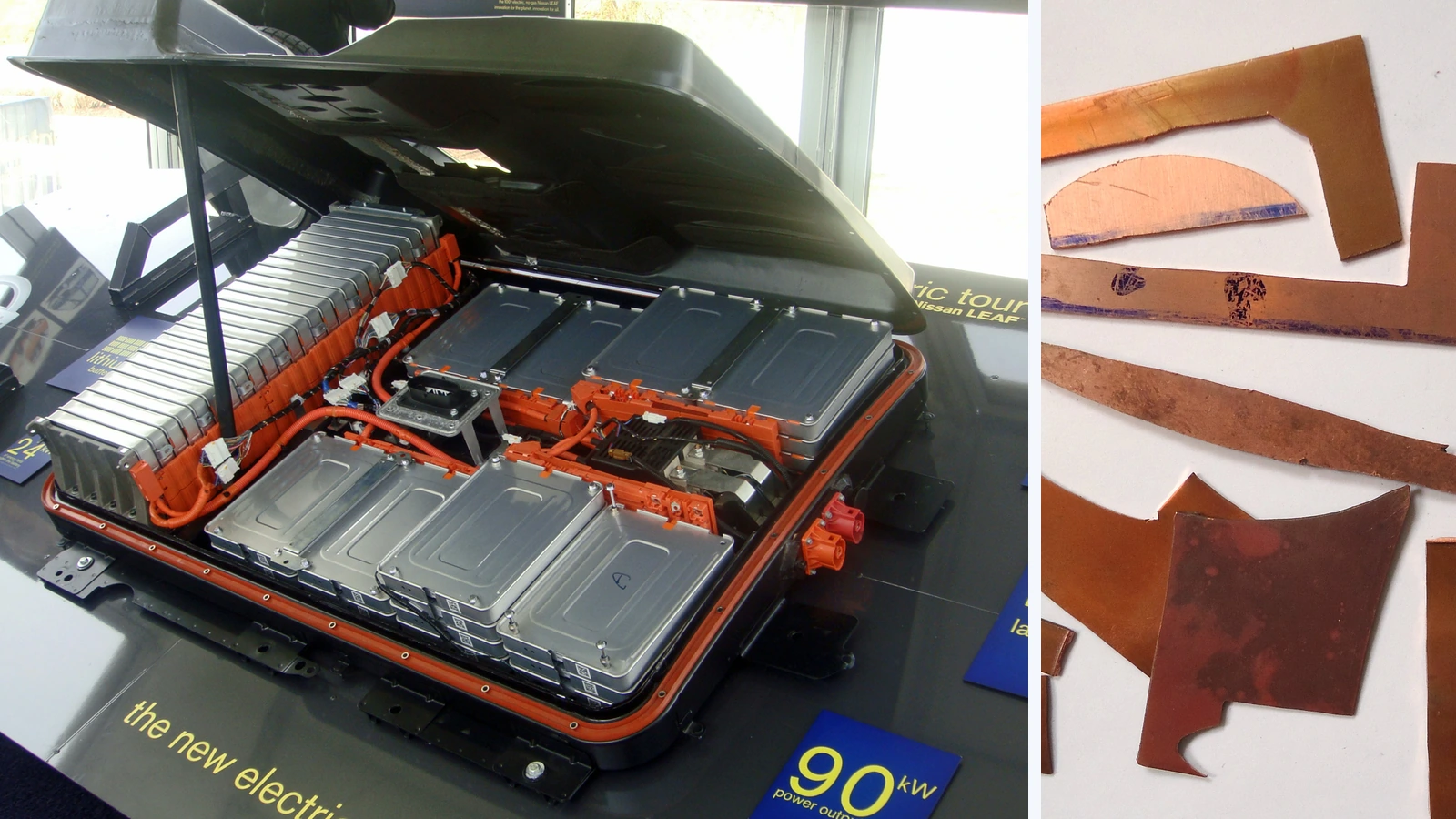
Sumitomo Metal Mining has completed battery-recycling facilities in Japan with annual feedstock capacity equivalent to about 10,000 metric tons of battery cells. The project is designed to recover nickel, cobalt, lithium and copper, giving the company a route from discarded batteries back to materials for new ones.
The company held a completion ceremony on September 11 at its Toyo site in Saijo, Ehime Prefecture. The project also uses its nickel refinery in nearby Niihama. In its September 14 announcement, Sumitomo said the facilities were undergoing trial operation.
The stated capacity measures the battery-cell equivalent of material the system can process. It is not annual recovered-metal output, and the announcement did not establish that the plants were operating at that rate.
Japan’s New Energy and Industrial Technology Development Organization, known as NEDO, reported on the ceremony on September 28. It said the project receives support through the Green Innovation Fund.
A route from waste batteries to new materials
The process starts with black mass, a concentrated material produced by making used batteries safe, crushing them and separating their contents. It contains metals that require further treatment before manufacturers can use them again.
Sumitomo’s original construction announcement described a combination of high-temperature smelting and refining in liquid chemical solutions. The two stages separate and recover metals from material containing impurities.
The company’s completion statement identifies a lithium-recovery process developed with Kanto Denka Kogyo. Recovered nickel and cobalt are sent as a high-purity mixed solution to Sumitomo’s Isoura plant for use in cathode materials, the positive-electrode materials in batteries.
That gives the recycler a downstream manufacturing route. Collection, metal recovery and battery-material production are separate operations, and the business depends on connecting all three.
Securing material extends beyond Japan
Sumitomo Metal Mining is also examining a supply route from Australia and New Zealand. In May, it signed a memorandum of understanding with Sumitomo Corporation for a feasibility study covering battery collection, local preprocessing and shipment of black mass to Japan.
The proposed arrangement would collect used lithium-ion batteries containing nickel and cobalt in the two countries, process them locally and connect the resulting material to Sumitomo’s refining operations in Ehime.
A feasibility study examines whether a business can work. The May agreement did not announce an operating international collection network or guarantee future supply volumes.
Supply agreements matter because a plant can be physically complete before enough suitable material reaches its gates. Transport, preparation and the price paid for that material affect how much margin remains after processing.
Recycling capacity is growing ahead of used-battery supply
The International Energy Agency’s Global EV Outlook 2026 says global recycling capacity already exceeds available feedstock. Most batteries installed in electric vehicles and stationary storage systems in recent years are still being used.
Production scrap, generated while making batteries, consequently remains an earlier source of material than vehicles reaching retirement. The IEA expects end-of-life batteries to become the leading source in the mid-2030s.
We examined this timing problem in our earlier coverage of the wait for used EV battery packs. Growth in new electric-car sales does not immediately create a matching supply of batteries for recycling.
The IEA also says lower-cost battery chemistries can weaken the economics of businesses that depend on selling recovered metals. Lithium iron phosphate batteries, for example, do not provide the nickel and cobalt available from some competing chemistries.
NEDO’s September update identifies stable collection, reliable refining and a market for recovered materials as requirements for a functioning recycling system. Sumitomo now has completed processing facilities; its trial operations and collection arrangements will determine how much of that capacity becomes regular production.
