
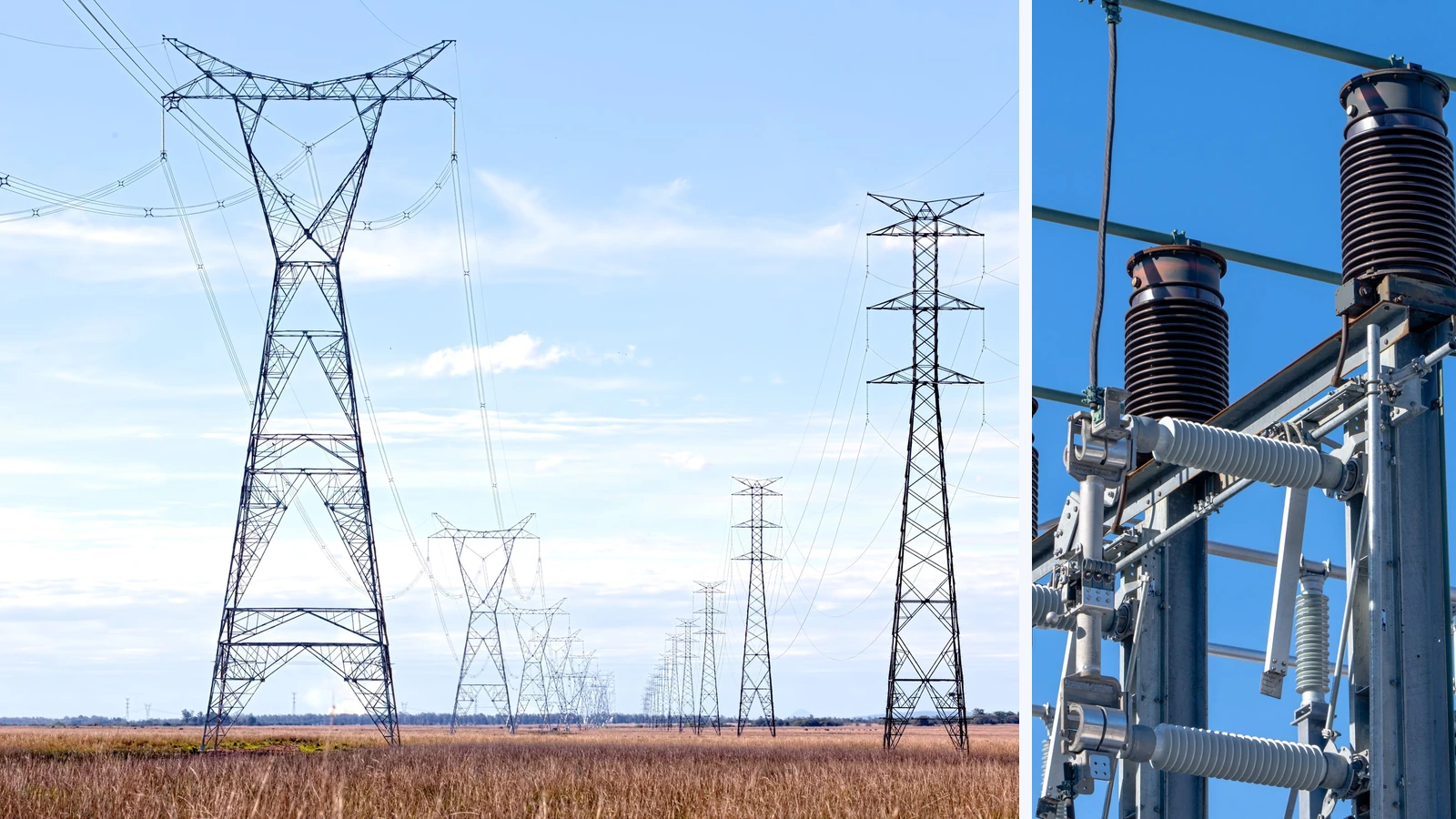
Existing electricity networks could accommodate up to 330 gigawatts of additional generation, storage and demand through better monitoring and power-flow controls, according to the International Energy Agency. Its September report puts the cost of connecting an equivalent amount through network expansion at about $100 billion.
The estimate describes potential connection capacity. A gigawatt is one billion watts of power, not a measure of electricity generated over a year. The extra capacity has not already been connected.
In Modernising Grids in the Age of Electricity, published on September 21, the agency argues that these measures can relieve some constraints while utilities build new lines. Many can be installed within months, although their usefulness depends on the equipment and conditions at each location.
Connection delays have an economic cost
A grid connection gives a factory, power plant or data center a route to send or receive electricity. A project may have financing, land and customers lined up but still be unable to operate at its intended scale until that route is available.
As we explained in our earlier coverage of data-center connection delays, having enough electricity generated across a country does not guarantee that the local network can deliver it to a particular site.
The IEA’s assessment of demand and infrastructure says electricity consumption has grown at roughly twice the rate of overall energy demand over the past decade. Cooling, industrial activity, electric vehicles and data centers all contribute.
Its current-policy scenario points to a need for roughly 30% more grid capacity by 2035. New renewable power plants are also frequently located far from the businesses and households they supply, increasing the need to move electricity between regions.
Network congestion occurs when the available routes cannot carry the power that would otherwise flow through them. Operators may have to reduce output at one generator and use another elsewhere. Those actions can raise the cost of supplying customers, even when generation itself is plentiful.
Weather and switching can release spare capacity
One approach is dynamic line rating, which adjusts a line’s operating limit using information about actual conditions. Electricity heats a conductor, while wind and cooler air help it lose that heat. Better measurements can show when a line can safely carry more current.
The IEA’s review of grid-enhancing technologies also describes power-flow controllers that redirect electricity toward less heavily loaded routes. Another method, known as topology optimization, uses switching to alter the network’s configuration and ease congestion.
Each has limits. A line with spare capacity achieves little if the transformer at its end is already constrained. Rerouting power requires an alternative path with room to accept it. Hot, still weather can reduce a line’s safe operating limit.
These are engineering decisions about the whole network. Counting the gains from several tools separately can overstate the result when they all draw on the same spare capacity.
Utilities already have operating examples
National Grid has installed Smart Wires power-flow controllers at substations in northern England. In a May 2024 account of the program, it said the installations were releasing more than 2 GW of north-to-south transfer capacity.
The company estimated around £390 million in savings over seven years from lower congestion costs and avoided construction spending. That was a projection across a period, not a sum already returned to customers.
National Grid also described work on software to coordinate the controllers and identify where additional devices would be most effective. Installing equipment is only part of the job: planners and control-room staff need to use it consistently.
New wires still have to be built
The IEA’s analysis of digital tools places monitoring and reliable data beneath more advanced applications. Operators need to know what their equipment is doing before software can recommend how to use it differently.
Artificial intelligence can assist with forecasting, inspections and simulations. Human operators remain responsible for system security and must retain the ability to intervene.
For businesses waiting to connect, the benefit depends on whether a tool addresses the bottleneck affecting their project. Spare capacity elsewhere is no substitute for a usable route to their premises.
Where demand requires substantially more physical capacity, better controls can buy time but cannot provide an unlimited substitute for new lines, substations and transformers.
